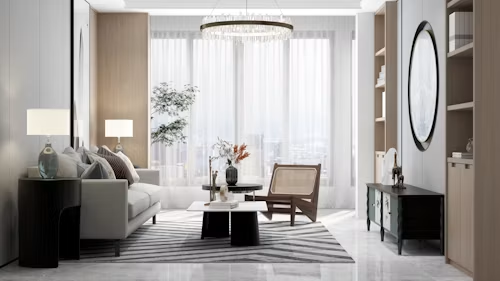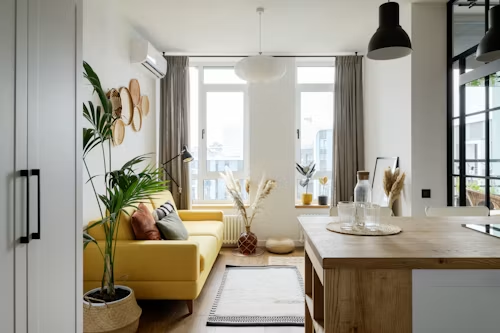

A considered console can create a landing place, mark a transition and bring useful storage into an open room.
In an open-plan home, the hardest-working furniture is not always the largest. Console table ideas can help retailers and interior designers show how one slim piece can make an entry, dining edge or living area feel more settled without blocking the room. The key is to start with the role the table needs to play, then choose its position, scale and styling around that job.
This guide is for furniture retailers, interior designers and home-furnishing buyers planning cohesive living collections. It focuses on placement and visual balance rather than a one-size-fits-all formula.
Key takeaways
- Use a console to mark a transition or create a practical drop zone, not simply to fill an empty wall.
- Check walking routes, door swings and nearby furniture before settling on a position.
- Keep the tabletop styling edited so the console remains useful and visually light.
Give the console a clear job
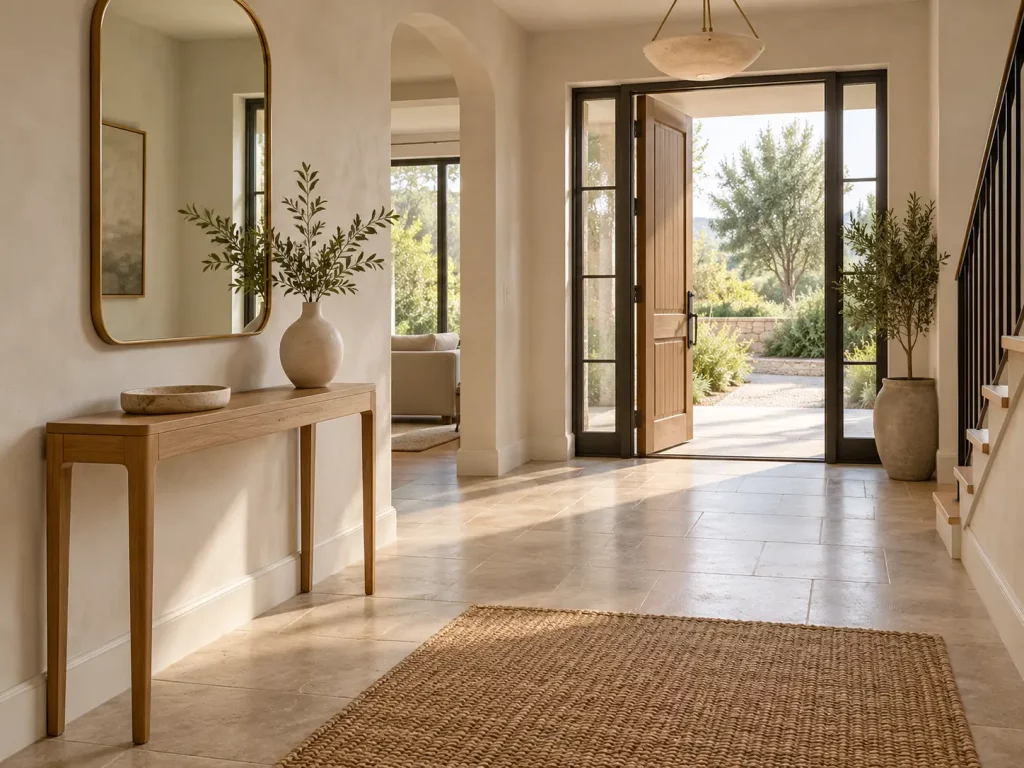
A console table works best when its function is easy to understand at a glance. In an entry, it can hold a small tray for keys and a lamp or object that welcomes the eye. Behind a sofa, it can soften the back of the seating and provide a surface for books or ambient lighting. Along the dining zone, it can support serving pieces or display objects while helping the area read as its own part of the larger room.
The same table may suit more than one room, but a product display should make the intended use visible. Show the console in a believable setting and keep nearby objects in scale. A beautiful vignette is less convincing if it leaves no usable surface or suggests that the furniture belongs only in a staged photograph.
Use placement to shape the room
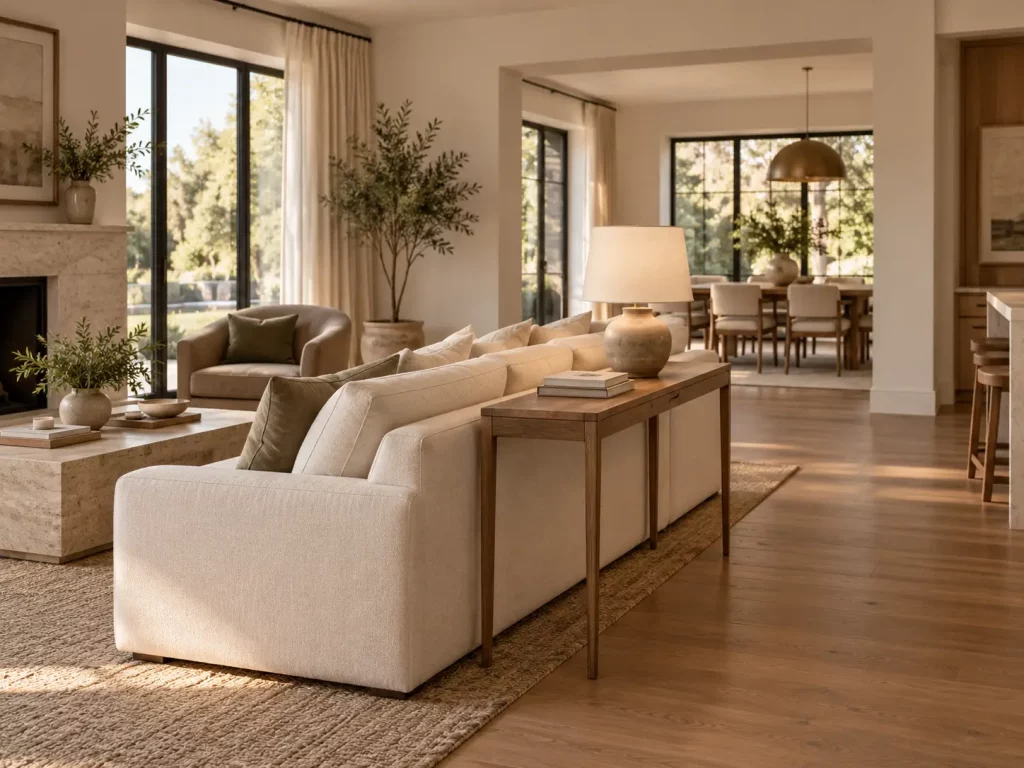
In an open-plan layout, a console can define a zone without building a barrier. Placed behind a sofa, it gives the living area a clear edge while preserving sightlines. Against an entry wall, it can create a pause between the front door and the main living space. Near a dining area, it can connect the dining furniture to the surrounding room through a shared finish or material note.
Before choosing the exact position, map the everyday movement through the room. Consider door openings, chair pull-back space, access to storage and the path people take between the entrance, kitchen and seating. The console should sit outside those routes; if people have to turn sideways or move an accessory to pass, the placement needs another look.
A quick placement check
- Confirm the wall or sofa-back location is wide enough for the piece to read as intentional.
- Check that doors, drawers and nearby chairs can still move freely.
- Leave the main walking route clear, including the space people need to approach and leave the console.
- View the arrangement from the entry and the main seating position, not only from the camera angle.
Balance proportion and visual weight
A console should relate to the furniture around it without competing for attention. Compare its length with the sofa, wall or dining piece it sits beside. A narrow top with a simple frame can feel discreet in a compact passage, while a heavier base or textured finish may hold its own behind a substantial sofa. The right choice depends on the architecture and the collection, so evaluate the full grouping rather than an isolated product photo.
Height also changes how the arrangement feels. A table that sits noticeably above or below the nearby sofa back can look accidental unless the difference is deliberate. Use a room mock-up or a simple side-by-side comparison to judge the silhouette, then confirm real dimensions before publishing product imagery or specifying a project.
Material and finish help connect the console to adjacent furniture. Repeating one finish can make a room feel coordinated, but exact matching is not the only route. A shared undertone, frame detail or edge profile can create a quieter relationship while allowing the pieces to have distinct personalities.
Style the surface without losing its function
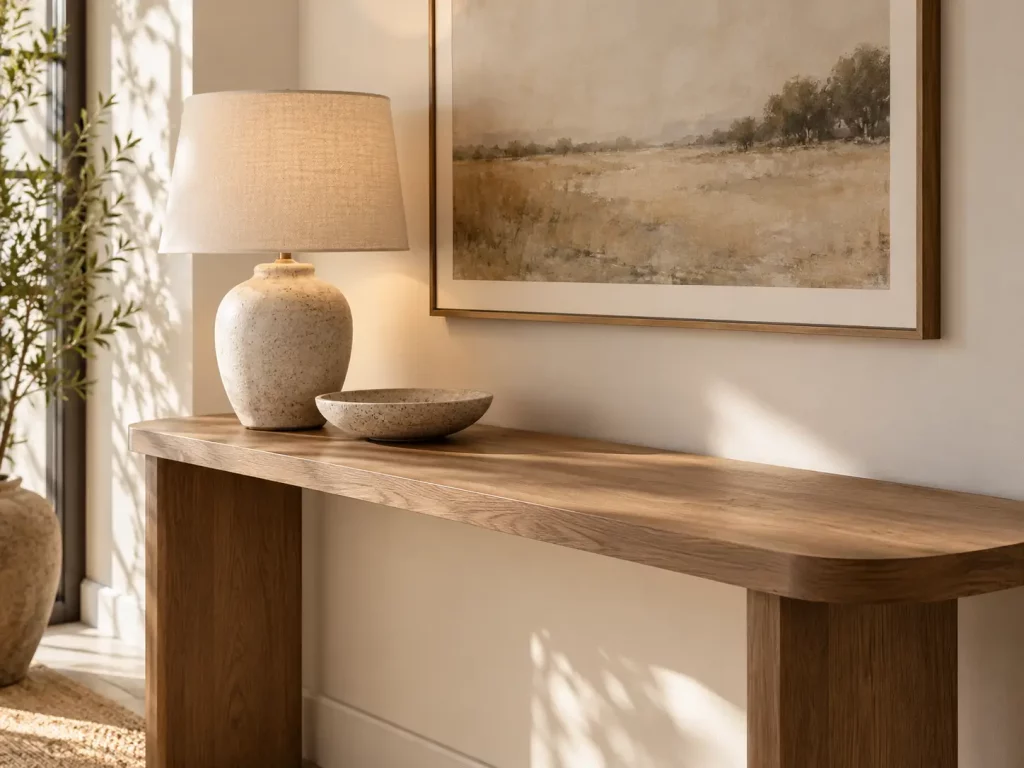
Start with what the household or project needs to set down. Then add a small number of objects that bring height, texture or light: for example, a lamp, a shallow bowl and one framed print above. Vary the shapes, but keep enough open surface for daily use. At an entry, that may mean leaving room for a tray; behind a sofa, it may mean keeping lamp cords and controls accessible.
Storage changes the styling brief. If a console includes drawers or a lower shelf, show how those features can reduce tabletop clutter. If it is open underneath, use the negative space as part of the composition rather than filling it automatically. A rug, basket or accent stool can work in some rooms, but only when clearance and circulation remain comfortable.
Build a useful product story for a collection
For retailers and designers, the strongest console-table presentation connects the product to a room problem. Pair it with the sofa, dining table, mirror or lighting that clarifies its use. Offer more than one setting when the same silhouette can transition from entry to living space, while keeping the product dimensions and finish information easy to find.
Hometree’s console collection can be explored alongside its broader Hometree range. A coordinated assortment gives buyers room to show how individual pieces work together while leaving customers flexibility to adapt the look to their own floor plan.
Frequently Asked Questions
Where should a console table go in an open-plan home?
Common placements include an entry wall, behind a sofa or beside a dining area. Choose the location based on the function you need, and check that doors and walking routes remain clear.
How do I style a console table without making it look cluttered?
Begin with the items the surface needs to hold. Add a few objects with varied heights or textures, then leave open space for everyday use. Drawers or a lower shelf can keep smaller items off the tabletop.
Can a console table go behind a sofa?
Yes, when the table fits the sofa and does not interfere with circulation. Compare their lengths and heights, and make sure lamps, cords and controls remain accessible.
What should buyers show in console table product imagery?
Show the piece in a realistic room context, include a clear view of its profile and storage, and provide confirmed dimensions and finish details. Avoid styling that hides useful design features.
Conclusion
Thoughtful console table ideas begin with a simple question: what should this piece make easier or clearer in the room? Give it a practical role, place it outside the main circulation path, and use proportion, finish and restrained styling to connect it with nearby furniture. For a considered living collection, explore Hometree’s console range and related products, then plan the grouping around the room it is meant to serve.