
Selecting a furniture manufacturer represents a crucial choice that affects product quality, shipment reliability, and ongoing market strength. Numerous purchasers start by emphasizing cost alone. However, they soon face challenges like uneven quality, postponed deliveries, or restricted options for customization.
A better method involves viewing the manufacturer as a full-fledged production ally. This means checking aspects like creative design skills, material oversight, workflow organization, and quick response to needs. Hometree stands out as a producer that combines these features into one cohesive operation. With more than ten years in furniture making, it delivers options that go past basic assembly. These cover idea creation, quality checks, and worldwide distribution.
The next seven key suggestions tackle the main worries in global procurement. Each part creates a stronger guide for picking a producer that matches enduring business goals.

Evaluate Manufacturing Experience and Industry Expertise
Past involvement shapes how well a producer deals with tricky making tasks. It shows skill in handling supply changes, keeping to timelines, and fitting various buyer needs.
A company with a solid track record of running over time often proves steady making setups and polished methods. Hometree has run a furniture plant since 2010. It centers on pieces for living rooms and dining areas. At the same time, it keeps growing its lineup. This covers tables, chairs, cabinets, and matching accessories.
Joining worldwide trade shows also signals active role in the field and grasp of market shifts. Steady presence at such international gatherings helps a producer keep up with fresh style trends and client hopes. A vendor with this kind of reach tends to supply goods that fit broad global rules.
Assess Design and Product Development Capabilities
Skill in design holds a vital spot in making products stand out. In busy markets today, furniture choices depend on more than just use. Looks and fit for various room setups matter just as much.
A solid setup for design and growth starts with idea outlining. Then comes computer-based shaping and real sample building. At every step, checks cover build strength, user comfort, choices of materials, and ease of making. Hometree keeps a focused group for design and another for sample creation. Thus, it turns basic ideas into practical items ready for production.
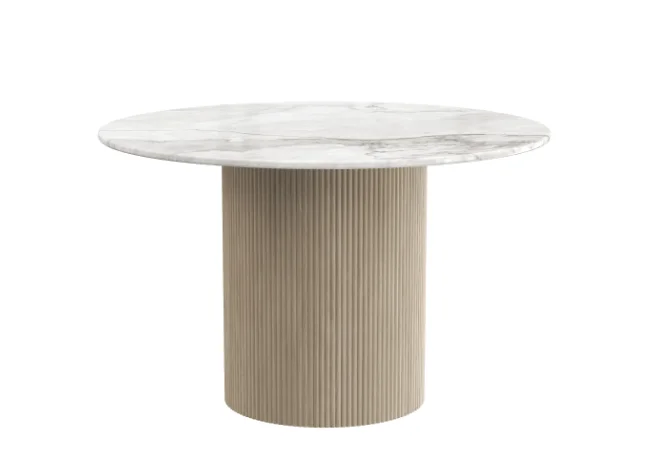
Take the Dining Table Marble AYP186 as one clear case. It shows a style method that mixes plain looks with tough use. The marble top resists warmth and scratches on the surface. Plus, its smaller size and soft corners make it work well in current eating areas. Products like this highlight how style and practical use blend right from the start of growth.
Verify Material Quality and Sustainability Standards
Picking materials shapes how long items last, how safe they stay, and how well they perform against costs. Uneven supplies frequently cause build problems, finish flaws, or shorter life for the goods.
A dependable producer sets up firm rules for getting materials and checking them. Hometree draws from many types, such as real wood, MDF, metal, glass, leather, and firm foam. Every kind fills a clear role, from holding up the frame to boosting the look.
Focus on green practices counts too. Choosing wood certified by FSC and other eco-friendly options helps follow global rules. It also cuts harm to the surroundings. This fits well for areas with tough laws on imports.
Control over materials gets stronger through steady details and tests. As a result, each group of supplies hits the same level of work quality. That proves key for big orders.
Examine Production Capacity and Delivery Efficiency
Making output ties directly to how reliably shipments arrive. Holdups in building can break supply lines and hurt sales timing, above all during key buying seasons.
A smartly planned plant splits tasks into focused units. These might handle metal work, fabric covering, putting together, and boxing up. Hometree runs with teamed groups that oversee each part smoothly. This setup lets tasks happen side by side.
Adding an ERP tool boosts planning sharpness and use of supplies. Through orderly handling of starting materials and build schedules, the plant holds firm shipment periods. Usual times for making standard runs fall between 30 and 45 days.
This kind of setup cuts down on unknowns. Therefore, purchasers can set up stock and sales plans with firmer trust.
Review Quality Control and Inspection Processes
Checking quality proves vital for keeping evenness in high-volume runs. Lacking a clear check method, even smartly planned items might miss the mark.
A full quality check covers several points. Starting supplies get looked at before and after factory entry. This stops flaws from moving forward into the build. While making happens, exact rules apply to sizes, frame solidity, and outer layers.
Hometree uses tough check rules. These include limits on size differences, evenness in shade, and needs for outer smoothness. Every item has to pass set levels for cleanness, join precision, and full work ability.
The last check makes sure boxing offers enough shield for travel. Thus, it lowers chances of harm and keeps item quality right up to arrival.
Consider Customization and Flexibility
Buyer needs now lean toward tailored and varied goods. Off-the-shelf items often fail to suit exact wants of places or buyer groups.
A producer with bendy making skills can tweak supplies, sizes, and outer looks to fit client asks. Hometree backs tailoring via block-based style setups. These let quick changes happen without big jumps in making costs.
Such bendiness helps a lot for sellers reaching many paths, like stores, online sales, and business setups. The power to adjust goods while keeping make speed gives a strong edge in the market.
Tailoring reaches into teaming on styles too. Through close work with clients, producers can craft items that match set market spots and price plans.
Evaluate Service System and Long-Term Partnership Value
A robust service setup aids clear talk and lasting teamwork. It links client asks to the making flow and makes sure problems get fixed fast.
Hometree keeps a skilled sales group that links clients to making units. This build lets true reading of needs and cuts error chances.
Support after sales forms another key piece. A solid producer offers help with shipping, tech fixes, and item care. Steady aid means buyers run smoothly even post-shipment.
Lasting ties often grow from reliable service work. Producers that join global scenes actively and keep steady contact stand ready to back business rise over time.
FAQ
Q1: What Is the Key Factor When Selecting a Furniture Manufacturer?
A: Past making work paired with steady production setups holds great importance. These elements lower dangers tied to quality, shipments, and talks.
Q2: How Can Material Quality Be Evaluated Effectively?
A: Supply quality gets checked by looking at get rules, check steps, and the spread of supplies used in making.
Q3: What Delivery Time Should Be Expected for Bulk Orders?
A: A common shipment period spans 30 to 45 days. This depends on order scale and make details.
Q4: Why Is Design Capability Important in Furniture Manufacturing?
A: Design skill sets product edge, fit for markets, and power to shift with buyer tastes.
Q5: Does Customization Affect Production Efficiency?
A: With block systems in place, tailoring rolls out without major hits to make speed or expense.