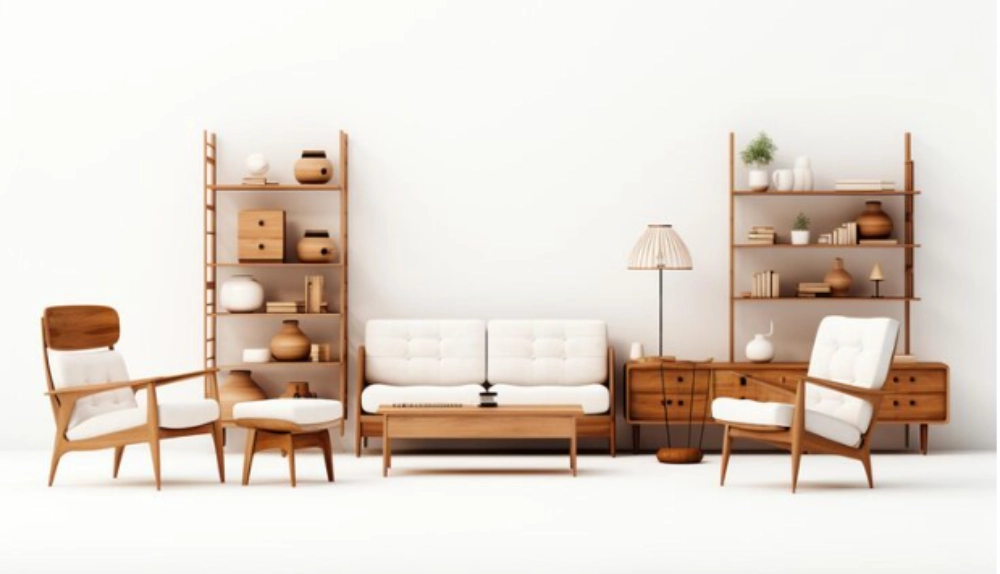

A well-designed living room rarely comes from buying more furniture. It usually comes from making better decisions early. Many people only notice problems after everything is in place. A sofa blocks movement. A table feels too large. The room looks full but still feels uncomfortable.
These issues are rarely random. They often come from the same mistakes repeated in different homes. If you look at how experienced furniture manufacturers approach design, the pattern becomes clearer. Some factories that have been focused on living room furniture for years, such as Hometree, do not start with products. They start with structure, proportions, and how people actually use the space. From design drawings to prototypes and then to production, every step is adjusted based on real usage.
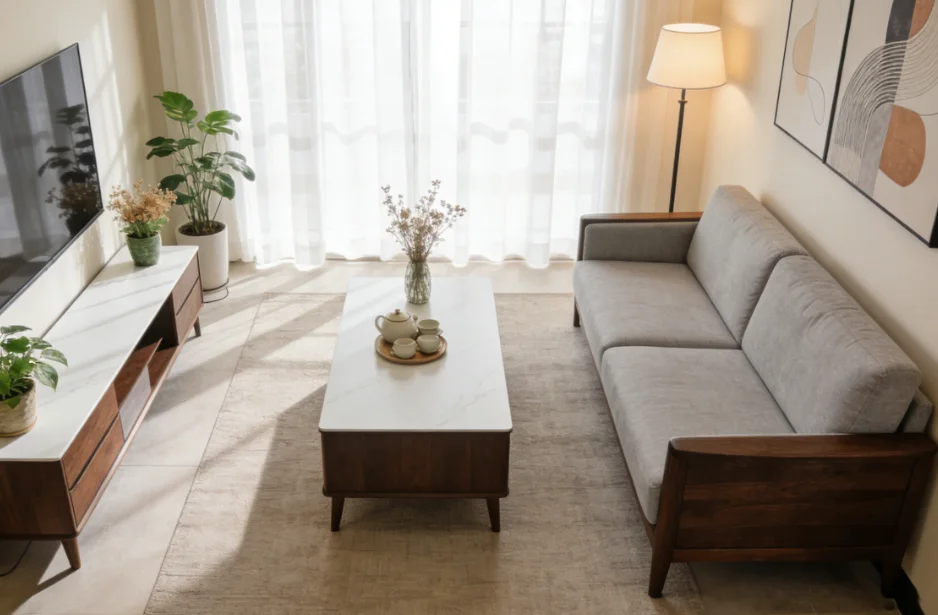
Prior to selecting furniture, the arrangement ought to form clearly in one’s thoughts. However, plenty of living rooms falter precisely because elements get added gradually without a defined path.
One frequent scenario involves a couch oriented toward no distinct center, with armchairs shoved to the sides, and routes for walking slicing through lounging zones. Consequently, the environment appears fragmented.
Begin by identifying a central feature. This might involve a television, a window view, or simply a low table. Next, position seating options around it. Additionally, ensure adequate clearance for passage, generally between 60 and 80 cm.
During actual furniture preparation, arrangement gets viewed not as mere adornment but as foundational support. For this reason, in genuine project examples, items often get organized initially within three-dimensional models prior to any manufacturing. Such practices prevent expensive errors down the line.
Illumination frequently receives attention only at the close, yet it profoundly influences the appearance and sensation of one’s furniture.
Relying solely on an overhead fixture renders the space flat and uninviting. Textures lose their richness. Upholstery appears lackluster. Meanwhile, timber patterns fade into obscurity.
Incorporate multiple levels. Employ a primary fixture for general illumination. Position a standing lamp close to lounging spots. Use compact fixtures to foster a welcoming mood.
Within item creation processes, illumination integrates closely with furniture choices. Surfaces such as glass, metal, or cloth undergo evaluation under varied light settings before choices solidify. As a result, certain areas convey warmth, while others remain bland, despite comparable furnishings.
Disproportionate sizing ranks among the most frequent concerns, and spotting it proves simple to miss.
Bulky items render the area cramped and hard to navigate. Conversely, diminutive components create awkward voids and disrupt overall harmony.
Take measurements upfront. Subsequently, assess ratios carefully.
Consider this basic guideline: a low table typically spans roughly two-thirds the width of the couch. Furthermore, maintain sufficient clearance for smooth circulation around it.
In production settings, measurements receive precise oversight. Minor variations can impact how components align within an environment. That level of care for ratios should similarly direct personal selections.
Flexible features usually enter the picture late, although they define the everyday comfort of the setting.
A tiny carpet visually severs the lounging section. Without pillows or varied fabrics, the space seems incomplete and stark.
Select a carpet that links primary seating elements together. At minimum, the forward portions of the couch and armchairs ought to rest upon it.
Incorporate pillows featuring diverse fabrics. For example, seating with firm foam maintains form through extended periods and delivers clear benefits over time.
This approach seems secure at first, but it seldom yields a welcoming atmosphere.
The environment turns stiff and unyielding. Lounging spots end up spaced too widely. Natural zones for discussion fail to emerge.
Shift certain pieces toward the center. Even modest shifts prove effective. Experiment with creating an open ring or a gentle U configuration.
In authentic living room configurations, particularly within expansive areas, furnishings often get drawn from walls to form engagement regions. This arrangement promotes a more organic feel, even if it initially appears less orderly.
Individuals typically concentrate on ground-level areas. Consequently, wall surfaces remain underutilized.
The setting appears unfinished and sparse. Options for storage grow restricted. Visible clutter accumulates on open areas.
Introduce shelving, enclosures, or mounted features. Upright storage solutions provide visual equilibrium and enhance practicality.
Numerous furniture approaches embed vertical organization from early stages, especially in confined settings where each inch counts significantly.
Disorder usually arises not from excess possessions but from inadequate spots to store them.
Routine objects linger on surfaces and seating. As a result, the area swiftly descends into disarray.
Opt for items incorporating integrated compartments. Enclosures, buffets, and versatile units assist in maintaining order.
Producers collaborating with enduring customers routinely incorporate storage within designs from the start, drawing from observed routines rather than looks alone. This explains why certain environments remain tidy with minimal upkeep.
Prior to any commitment, taking a moment to review a straightforward list proves beneficial. This practice averts the majority of potential issues.
Assess the dimensions of the area precisely. Establish the central element. Outline the arrangement. Consider ease of use. Ensure ample space for navigation.
In expert procedures, these actions occur well before manufacturing commences. Overlooking them in personal settings frequently results in those same preventable errors.
Varied dimensions bring distinct challenges.
Oversized elements rapidly occupy the volume. Excessive numbers of items lead to congestion. Deep, weighty fabrics further shrink the perceived size.
Populating areas aimlessly fosters bewilderment. Absence of defined sections leaves the space vague. An array of mismatched aesthetics disrupts unity.
Expertise plays a crucial role here. Producers serving international markets routinely tailor designs to suit diverse lifestyles and spatial scales, ensuring their arrangements feel more applicable in practice.
An effective living room stems not from accumulating more furnishings but from achieving equilibrium.
Strategic preparation outweighs mere acquisition. Ratios hold greater importance than volume.
When selections prioritize foundational aspects, fabrics, and practical application, the environment grows more livable. Experienced providers emphasize the full sequence, spanning from conceptualization to fabric oversight and concluding reviews. Each aspect shapes the enduring quality of the space.
Feel free to reach out for personalized suggestions, design support, or product recommendations tailored to your needs. Whether you are working on a small balcony or a large backyard, thoughtful planning always leads to better results.
Q1: How Do You Know If Furniture Size Is Right For Your Room?
A: Measure your space first. Compare it with furniture dimensions and leave enough room for movement.
Q2: Should All Living Room Furniture Match Exactly?
A: No. Pieces should coordinate in style and scale, but they do not need to match perfectly.
Q3: What Is The Ideal Layout For A Living Room?
A: Arrange seating around a focal point and keep clear pathways for movement.
Q4: How Important Is Material Quality In Furniture?
A: Very important. It affects durability, comfort, and how the furniture performs over time.
Q5: Can Small Living Rooms Still Feel Spacious?
A: Yes. Use fewer pieces, lighter colors, and better layout planning to avoid crowding.