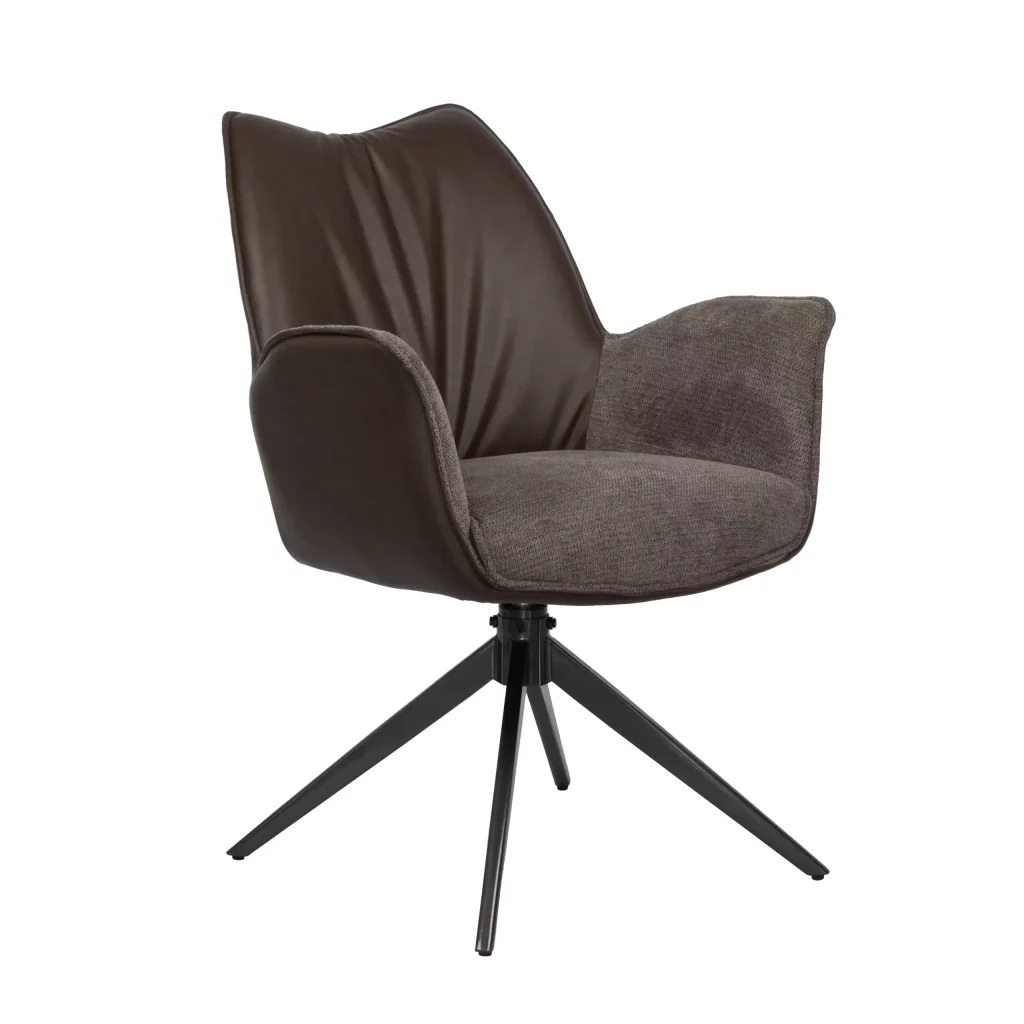

hometree | Buyer guide
A 360-degree label says that the seat is intended to turn; it says nothing about return action, resistance, stability or behaviour beside a dining table. Inspect the sample as a place to sit, move and leave. Rotation, base contact, clearances, upholstery movement and the production specification all belong in the same approval decision.
The first review should also identify the intended user and setting. A residential dining chair, a restaurant chair, and a project chair in a shared space may face different patterns of entry, turning, cleaning, and movement. Write that context into the brief before deciding what “acceptable” means. It keeps the sample review connected to the real use case without pretending that a visual inspection proves a service-life rating. See the published product specification for the current model description.
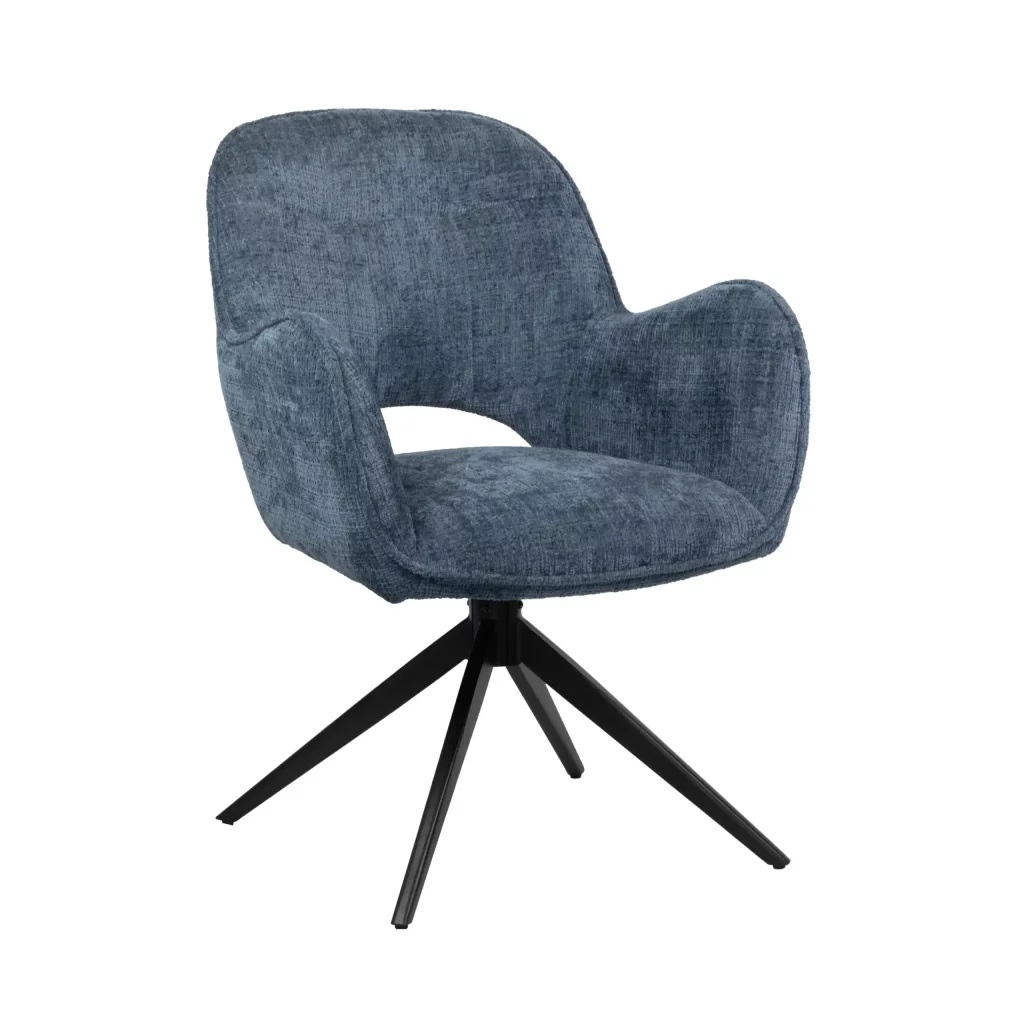
The supplier’s official product description for the chairs does not mention any of the features that we have discussed above such as auto-return, a lock, maximum load-bearing weight, etc. Hence all these features have to be verified with the supplier against the approved specification. Just because a chair says it is a ‘swivel’ chair does not mean that it has all the features above.
Define what the swivel is expected to do
Write down what motion you expect the swivel to do. Does the seat keep turning round in both directions forever? Does it stop somewhere? Is it supposed to stay where you leave it or does it go back in front of you? The above actions are all different so you must state what action or actions you require and demand that the supplier provide you with a sample that demonstrates the required action or actions.
Don’t try to reverse-engineer the internal workings of the swivel chair but it is essential that the supplier explains the connections made, components held in place and components that can be changed with alternative ones to allow you to determine if the approved version has been built correctly.
Test it in the real table layout
Test how much space a swivel chair takes. Test how close you can place a swivel chair to a table leg, to a wall and to other chairs. Test sitting down, turning to the table, reaching for items on a shelf or in a cabinet and getting up again from different directions and angles.
It is not sufficient to refer to generic ‘standard’ dimensions. The clearance needed between the back of a chair and a wall and between chairs placed either side of a table and in end positions against a wall or against a leg of the table will vary from one room to another. The best way to test this is to use the actual dining table in question and set up sample place settings to test the space required by the swivel chair and to measure the relevant clearances.
Check stability throughout movement
On a level, firm floor, sit centrally, turn slowly in both directions, pause at several positions, lean slightly and stand. Listen for scraping, clicking, looseness or a sudden change in resistance. Watch for base lift, rocking or a seat that twists independently of the frame. These are sample checks, not a substitute for a formal safety or durability test.
Just because a product looks good does not mean that hidden defects will not surface through repeated use. One sample does not establish production consistency and therefore test cycles and pass points need to be discussed with suppliers prior to commencement of production against the approved specification.
Outline expected use in the brief for hospitality or shared dining spaces. If the chair is expected to be subjected to repeated turning, such as reversals, approached from different directions or even dragged across floor surfaces, then additional checks may be required. Outline a repeatable test scenario and pass criteria for the supplier to work to.
Look at upholstery and frame after movement
During the turning test, note any bunching, trapping or rubbing of any seat edge, back, piping or trim. Also note any temporary changes to the fabric such as loosening of tension or alteration to alignment of folds during repeated turning of the chair. A short demonstration in the showroom does not test for long-term abrasion resistance.
Check the legs for sharp edges. Are all legs of equal height? Are there any gaps between joints? Surface damage such as scratches or dents to the black metal frame must also be checked. Also check how the chair behaves on different floor types, such as hardwood, laminate and carpet, and what type of floor protectors are required for this chair. What material are they made of and how are they fixed?
Make the approval record repeatable
Capture the configuration and acceptance criteria
Front, side and rear views of the sample to be approved together with underside views should be photographed. Label the pictures with the respective chair model name as well as the date of the sample approval. Also, document the approved fabrics as well as the frame finish. Measure and note all relevant chair dimensions. A short video should also be recorded, for example by recording the turn of the chair next to the approved table, showing the respective furniture configuration, including upholstery, frame, mechanism, floor fittings and packaging.
Record the specific criteria to be checked and how they will be observed in terms of what is acceptable and what is not. Examples include no unintended base lift, no contact between table and chair in the approved configuration, and no damage of any sort. Repeat the test for a number of samples and check for consistency of performance.
Link the sample to production control
Make sure the approval of samples is recorded against the corresponding purchase specification for the seat. This should list model number and version number, mechanism or construction type, fabric type, frame type, legs, dimensions etc. It’s also good practice to outline the tests that have been carried out to approve the sample and who authorized the approval of the sample. Also note any open points and areas of discussion that are still to be addressed.
Don’t assume that because one chair looks like another, they will have the same clearances between seat pan, base and fabric. List all models in your proposed order and run the appropriate inspection tests on each one.
Hometree’s surface inspection descriptions as published are a buyer’s review of production surface inspection. They are not a definitive way to set up tests for endurance of products like swivel chairs. Hence any repeat testing will need to be arranged with the supplier and approval given against strict pass criteria laid down by the buyer.
Review the design and development process and the product inspection process when aligning order-specific criteria.
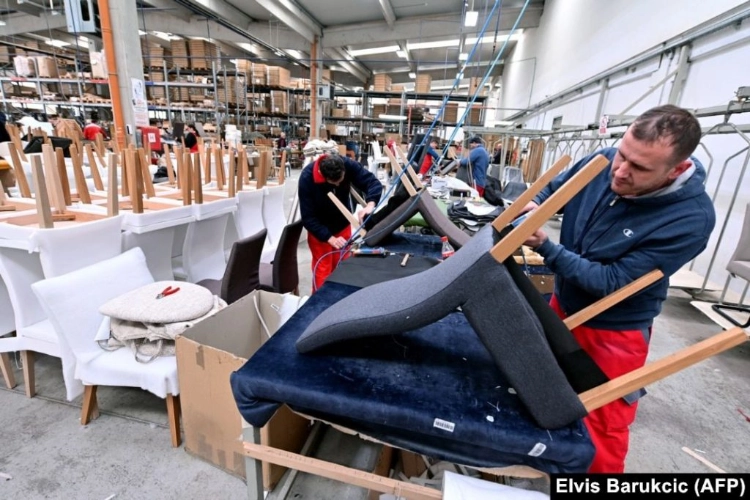
Close the approval and retain the reference
Approve only when the required motion is clear, the chair fits the actual table layout, the base remains stable and the upholstery and frame show no unacceptable contact or damage. Store the measurements and video with the order so another reviewer can reproduce the decision.
Remember that a 360-degree swivel is something that makes sitting down easier, but when we talk about approval of a label, we have to remember that there are many other factors that determine the comfort and durability of a dining chair as well as its safety. The chair’s mechanism, construction, floor fittings, table and even the way it will be used all have to be approved. So, try to keep your wording as close to the approved sample as possible.
A 360-degree swivel might make approaching and sitting in a dining chair easier but the label alone is not a guarantee of comfort or performance. Treat the samples as functional objects and test them as you would test a chair in a real room, e.g. place it in the intended position, turn it, etc. Based on these tests write up the results in terms of production criteria that can be used for the approval of the respective furniture.
For current product or order details, contact hometree through its contact team and confirm the applicable specification in writing.
Frequently Asked Questions
Should an auto-return function be assumed from a 360-degree swivel description?
No. Full rotation and automatic return are different functions. Require the desired behaviour in the specification and demonstrate it on the sample.
Can dining-chair clearance be approved from chair dimensions alone?
No. Put the sample at the intended table, mark neighbouring chairs and observe a real sit-turn-stand sequence.
What should define acceptable swivel feel in the approval record?
Record starting effort, travel, stopping behaviour, play and unusual noise under a stated floor and user sequence. Avoid an undefined word such as ‘smooth’.
When should a swivel dining chair be sampled again?
Re-sample after any change that could affect motion, fit, stability, upholstery contact or the frame and feet.
How should buyers compare multiple swivel-chair samples?
Use the same floor, table, sequence, measurements and observation notes for every sample, then compare the records rather than relying on memory.