
A practical guide to matching school desks and chairs with the way a classroom is used
Good classroom furniture layout planning starts with the learning activities, not with a row count. A room used for teacher-led instruction has different needs from one that shifts between individual work, paired tasks, and small-group projects. For school buyers, facility teams, and education furniture distributors, the goal is to select desks and chairs that support the daily pattern of the room while keeping movement and reset time manageable.
A practical plan begins by listing the most common classroom activities, then choosing furniture formats and arrangements that can support them. This guide outlines a simple way to evaluate desk configuration, circulation, storage, flexibility, and product fit before placing an order.
Start With the Teaching Pattern
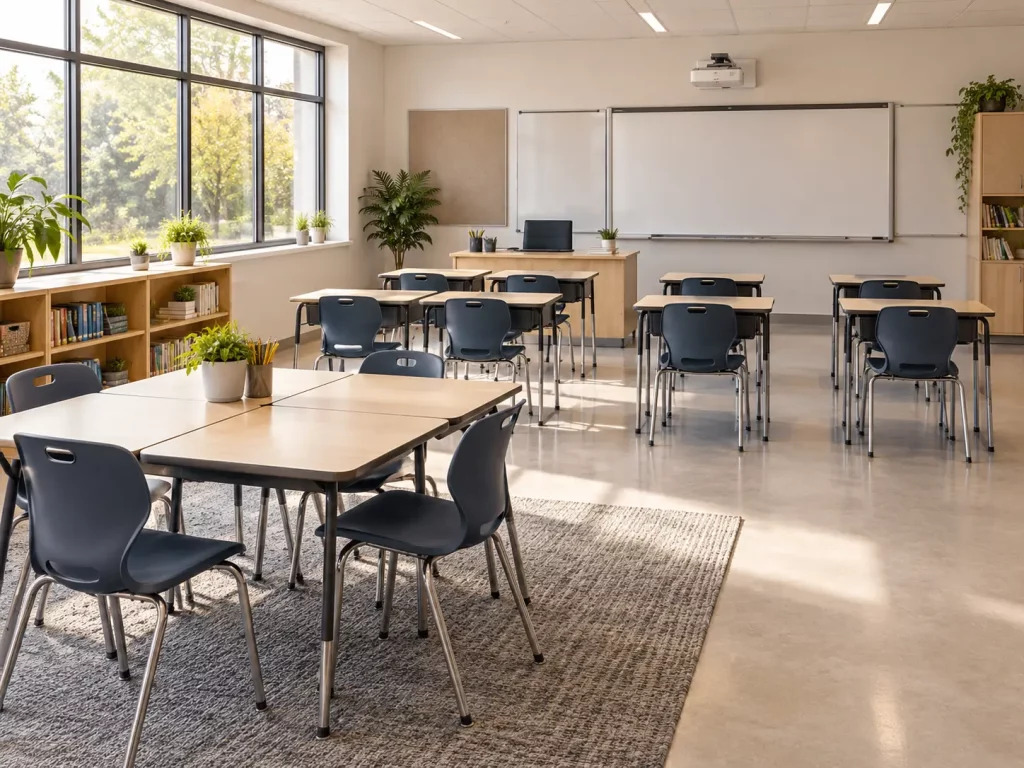
Before comparing desk models, map a typical lesson. Note when students listen, read or write independently, work in pairs, move between stations, or gather around a shared activity. The layout should make the most frequent tasks easy and still allow the teacher to change the room when the lesson calls for it.
For direct instruction, forward-facing desks can make it easier for students to orient toward the teaching area and for the teacher to scan the room. For discussion or collaborative work, small clusters can help students share materials and talk to one another. Neither arrangement is right for every class; the useful question is how often the room needs to change and who will move the furniture.
Choose Desk Formats for the Activity
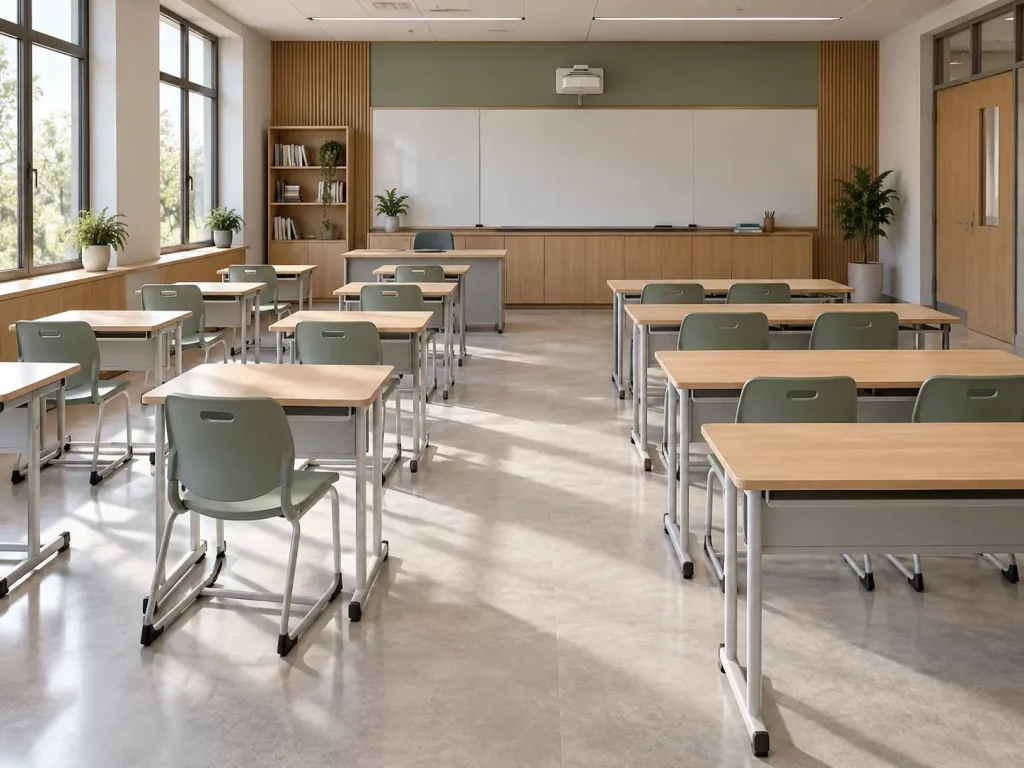
Individual desks support independent work
Separate desks give students a defined work surface and let a room manager adjust spacing or grouping. They can be useful where lessons often switch between individual focus and paired discussion. When reviewing an individual desk, consider the usable top area, where books and supplies go, and whether the chair can be positioned without blocking nearby movement.
Shared desks can make paired work more natural
A two-seat desk creates a natural working pair and can simplify a room plan when students regularly share a table. The trade-off is that partners share a surface and the desk group is less flexible than separate units. Hometree’s double-seat school desk and chair set is one example of this format; buyers can use it to discuss the room size, storage needs, and student grouping they have in mind.
Adjustable options need a clear purpose
An adjustable product can help address different user sizes or room requirements, but buyers should define who will adjust it and how often. Review the adjustment method, stability, maintenance, and instructions with the people responsible for daily classroom setup. Flexibility is most useful when it is simple enough to be used consistently.
Plan Movement and Teacher Access
A layout needs clear routes for students entering, leaving, and reaching shared supplies. Check the paths between desks, doors, storage, teaching areas, and any activity stations. The teacher should be able to move through the room and reach students without repeatedly asking others to shift their chairs.
Walk through the plan from several points of view: a student seated at the back, a student carrying books to a desk, and an adult supporting a learner at the work surface. This quick review often reveals blocked paths or corners that looked acceptable on a floor plan. Confirm the final distances against the school’s own accessibility and safety requirements.
Treat Storage and Reset Time as Part of the Layout
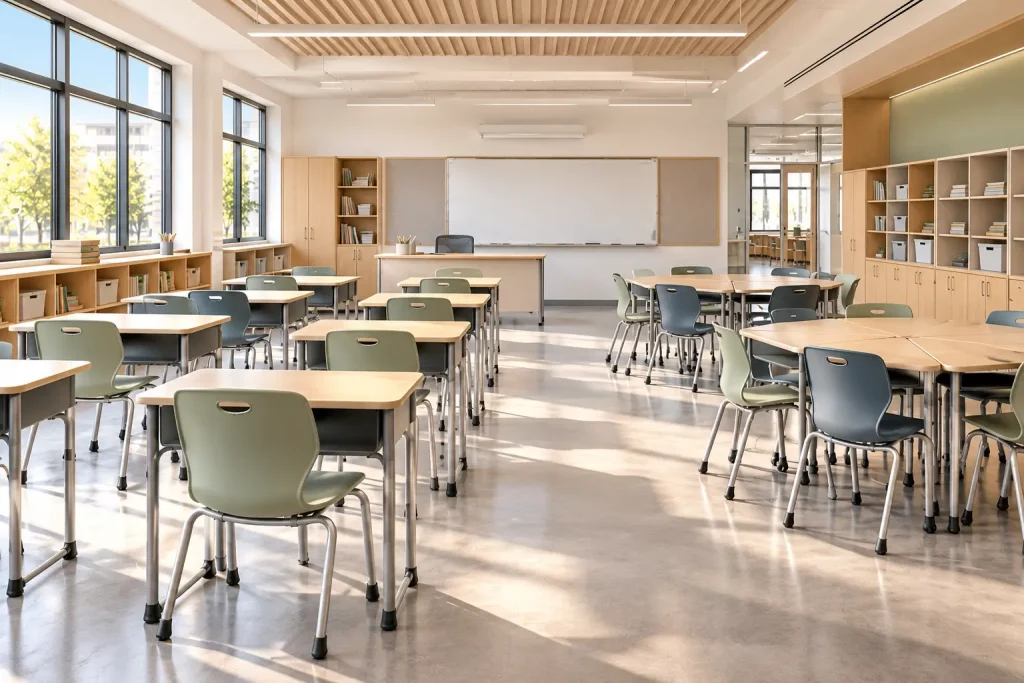
Books, stationery, shared learning materials, and personal items all need a place. Storage built into or placed beside a desk can reduce trips across the room, but it also affects how much floor area remains available. Decide which items should stay at each seat and which should be stored centrally.
Consider how the room returns to its starting arrangement after group work. If desks are heavy, difficult to grip, or awkward to align, a flexible plan may take too long to reset. A good layout is one that staff can maintain during a normal school day, not only one that looks tidy in a photograph.
Review Materials, Maintenance, and Delivery
School furniture is handled often, so buyers should match materials and construction to the planned use and cleaning routine. Review tabletop surfaces, chair components, frame construction, edge details, and the ease of wiping or replacing parts where relevant. Ask how the sample represents the production specification and what inspection points are agreed before an order moves forward.
Packaging and delivery affect how quickly a classroom can be prepared. Confirm carton configuration, assembly requirements, hardware labeling, and how items should be moved from the delivery point to the room. Hometree describes its design and development process as including review of product appearance, materials, structure, components, colors, and packaging before finalization.
A Classroom Furniture Planning Checklist
- List the activities the room supports in a typical week.
- Decide where individual, paired, and group work take place.
- Check desk surfaces, chair fit, storage, and adjustment needs.
- Walk through routes between doors, work areas, supplies, and teaching zones.
- Confirm who will move furniture and how the room will be reset.
- Review sample approval, maintenance, packaging, assembly, and delivery details.
Frequently Asked Questions
How do I choose a classroom desk layout?
Start with the most frequent teaching activities and student tasks. Choose an arrangement that supports those routines, then verify circulation, visibility, storage, and the time required to reset the room.
Are individual desks or shared desks better for classrooms?
Individual desks allow more flexible grouping, while shared desks can suit classes that often work in pairs. The better fit depends on lesson patterns, available floor area, storage, and how much furniture is expected to move.
What should school buyers check in a desk and chair sample?
Review the dimensions, usable work surface, seating position, stability, material finish, storage access, and ease of cleaning. Also confirm that the sample matches the specification and construction intended for production.
How can a classroom remain flexible without becoming difficult to manage?
Use a small number of repeatable arrangements and select furniture that staff can move and realign easily. Clear storage and an agreed reset routine help keep flexibility practical.
What should be confirmed before ordering school furniture?
Confirm the room plan, product dimensions, materials, quantities, finish, assembly method, packaging, delivery plan, and the school’s own safety and accessibility requirements. Document any details that remain open before production.
Design the Room Around Its Real Routine
The most effective classroom furniture layout planning reflects what students and teachers actually do throughout the day. Start with activities, select desk formats that support them, and check movement, storage, maintenance, and room reset before finalizing the order. If you are planning a school furniture project, contact Hometree Furniture to discuss the classroom needs and product options.