

Choosing restaurant furniture suppliers takes more work than comparing a few catalogs and asking for the lowest price. The furniture will be moved, cleaned, bumped, and used by different guests every day. Small problems that look harmless in a sample can become expensive once hundreds of chairs arrive.
A reliable restaurant furniture supplier should be able to match the furniture to your layout, give clear material details, develop a workable sample, control bulk production, and protect the goods during delivery. These five factors help you compare suppliers on the same basis before placing a bulk restaurant furniture order.

1. Does the Supplier Know What Your Restaurant Needs?
Before discussing fabric colors or frame finishes, you need to give the supplier a clear use case. A chair for a quiet dining room will not face the same conditions as one used in a busy café, hotel breakfast area, or quick-service restaurant.
Match the Furniture to Your Layout and Daily Operation
Start with the room rather than the product catalog. Share the table height, aisle width, planned seat count, and available floor area. Chair width affects how many people you can seat. Seat height changes the space between the chair and tabletop. A large curved back may feel comfortable, but it can also take up more room than expected.
Cleaning also matters. Tell the supplier how often staff will wipe the chairs, whether food and drink spills are common, and whether the furniture needs to be moved at the end of each day. These basic details make it easier to choose from the available restaurant furniture collection without ending up with a design that looks right but works poorly.
Set the Order Conditions Before Comparing Prices
Send the same information to every supplier. Include quantity, target price, material preference, colors, packaging needs, expected delivery date, and any market requirements. A quotation for a lighter frame and basic upholstery cannot be compared fairly with one based on thicker metal, better foam, or stronger cartons.
This is one of the common mistakes when choosing furniture suppliers. Buyers sometimes compare only the final unit price, even though the specifications behind each offer are different. A clear request makes the real cost easier to see.
2. Are the Materials and Structure Ready for Frequent Use?
Once the layout and order requirements are clear, the next step is checking what the furniture is made from and how to select durable furniture for frequent use. The words “metal frame” and “upholstered seat” give you very little useful information on their own.
Check the Parts That Carry the Daily Load
For a dining chair, pay close attention to the legs, frame joints, welding points, seat support, fasteners, and floor glides. Ask for the metal tube dimensions, wall thickness, coating method, and stability test. The frame should sit evenly on the floor without rocking.
The upholstery needs the same level of attention. Ask about materials and craftsmanship, including fabric composition, abrasion resistance, colorfastness, foam density, seam construction, and cleaning instructions. Hometree’s furniture material guide covers common options such as metal, wood, MDF, foam, PU, fabric, velvet, glass, and other furniture materials. This gives buyers a better starting point when discussing how to choose durable furniture for a restaurant setting.
Use Dining Chair HTC0002 as a Product Reference
Dining Chair HTC0002 is a practical model to consider for modern dining projects. It uses an upholstered seat with metal construction, a curved profile, a diamond-quilted back, and black legs. The neutral appearance can sit comfortably in modern, simple, or slightly upscale dining interiors without forcing the whole room into one narrow style.
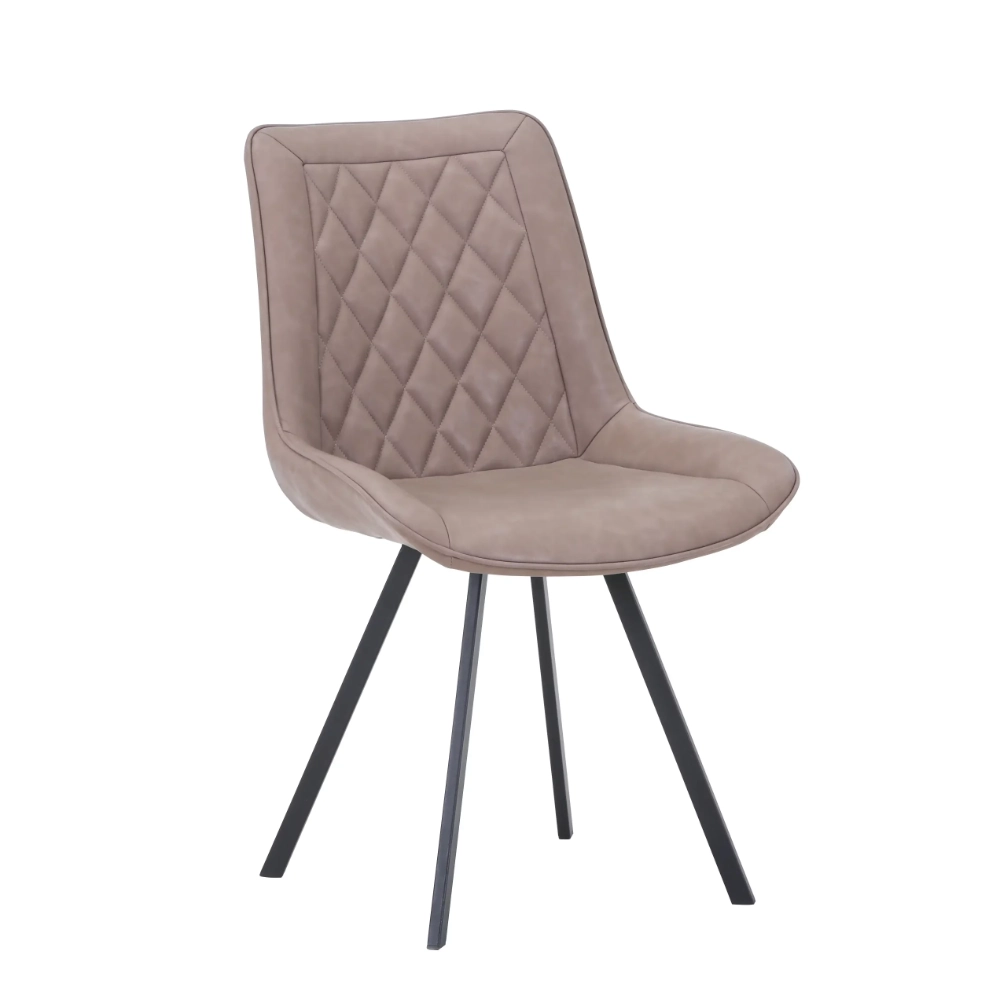
The official product details list two pieces per carton, an MOQ of 200 pieces, and a volume of 0.24m³. Those figures help you make an early estimate for carton quantity, storage, and shipping space.
The model should still be checked against your own project standard. Before approval, confirm the seat height, overall dimensions, weight capacity, fabric wear level, cleaning method, fire requirements, floor protection, and stability test. A good restaurant furniture sourcing guide should help you ask these questions rather than label every dining chair as suitable for every commercial space.
3. Can the Supplier Turn Your Requirements Into a Reliable Sample?
A supplier may offer a suitable existing product, but a sample is still important. It gives you something real to inspect before a large amount of material and production time is committed.
Put Every Important Detail Into the Sample Brief
Your brief should state the dimensions, seat height, upholstery, foam, frame finish, color reference, packaging method, and target market. Reference photos are useful, but they are not enough. Photos do not show exact measurements, material thickness, or how the chair should feel when used.
A supplier with a clear design and development process should be able to move from drawings and material choices to a physical sample, then record the changes made during approval. If you change the frame, upholstery, or carton, the supplier should tell you how that change affects cost, production, or shipping.
Work With a Factory That Can Connect Design and Production
Hometree has operated a furniture factory since 2010 and focuses on living room and dining room furniture. Its work is divided among design, prototyping, production, quality control, and sales teams. This setup matters because a dining chair must pass through several hands before it becomes a repeatable bulk product.
The prototyping team checks the shape, ergonomics, structure, and production feasibility. The production team then breaks the approved item into workable parts for metal processing, upholstery, sewing, assembly, and packing. Buyers who need color, upholstery, structural, or packaging adjustments can also review the company’s furniture sample development and mass production capabilities.
That is more useful than receiving a good-looking sample with no clear plan for making the same chair hundreds of times.
4. Can Bulk Production Match the Approved Sample?
Sample approval is not the end of the selection process. It is the standard that bulk production must follow. This is where reliable restaurant furniture suppliers separate themselves from factories that are good at making only one display piece.
Ask How the Factory Controls Consistency
Common bulk-order issues include uneven legs, visible welding marks, loose fittings, color differences, crooked stitching, stains, surface scratches, and weak cartons. These problems may appear small on one chair. They become obvious when the chairs are lined up across a restaurant.
Ask the supplier to explain the checks used for raw materials, work in progress, finished furniture, and packaging. The approved sample, signed specification, material sample, and color reference should all remain available during production.
Hometree’s product inspection process includes checks on dimensions, warpage, color, hardness, surface treatment, fittings, cleanliness, weight, hole position, and packaging. These are practical inspection points because they deal with the details buyers can see and measure.
Check Capacity, MOQ, and Repeat-Order Control
A low price has little value if the factory cannot meet the quantity or delivery date. Ask how much capacity is available during your production window and whether the proposed schedule includes time for material preparation, manufacturing, inspection, packing, and loading.
Repeat orders deserve attention too. A restaurant group may open locations in stages or replace damaged furniture later. Ask whether the same upholstery, coating, frame specification, and hardware can be kept on record. Dining Chair HTC0002 has an MOQ of 200 pieces, so it is better suited to a planned bulk order than an urgent request for a few replacement chairs.
5. Can the Supplier Handle Packing, Delivery, and Later Support?
The product can leave the production line in good condition and still arrive damaged. Packaging, labeling, loading, and communication are part of the order, not small jobs that should be discussed at the last minute.
Review the Carton Before Mass Packing Begins
Ask for carton dimensions, units per carton, gross weight, assembly instructions, hardware lists, and internal protection details. Chair legs, backrests, upholstery, and exposed edges need protection from rubbing and pressure.
Packing more chairs into a smaller space may reduce freight cost, but there is a limit. If the chair must be taken apart too much, installation becomes slower and missing hardware becomes more likely. A packaging sample or drop test can reveal these problems before the whole order is packed.
Agree on Updates and Responsibility
Set clear points for production updates, inspection, packing approval, and loading. You should know who handles a delayed material, failed inspection, missing part, or damaged carton. Spare hardware can also be included with the shipment, especially when the order will be installed across several locations.
Good after-sales work starts before delivery. It depends on saved specifications, clear inspection records, and a supplier that can trace the order instead of asking you to explain everything again.
Conclusion
Choosing restaurant furniture suppliers becomes easier when you follow the order in which the work actually happens. First check whether the product fits your restaurant. Then confirm the materials and structure. Approve a complete sample, review how bulk quality will be controlled, and finish with packaging and delivery terms.
Dining Chair HTC0002 gives you a useful product reference because its upholstery, metal construction, neutral style, MOQ, and packing details suit a planned dining furniture purchase. Still, the final choice should be based on your layout, cleaning routine, local requirements, and approved sample.
For sample development, production planning, delivery service, or a quotation based on your project details, you can contact Hometree before confirming the order.
FAQ
What Should I Ask Restaurant Furniture Suppliers Before Ordering?
Ask about materials, dimensions, frame construction, upholstery, MOQ, sampling, testing, production time, inspection, packaging, loading, spare parts, and after-sales support.
Should I Request a Sample Before a Bulk Restaurant Furniture Order?
Yes, because a sample lets you check comfort, stability, dimensions, color, material, workmanship, assembly, and packaging before mass production starts.
How Can I Check Whether a Restaurant Dining Chair Is Durable?
Check the frame material, leg joints, welding, seat support, foam density, fabric wear resistance, stitching, surface finish, floor glides, load capacity, and stability.
Is the Lowest Price the Best Choice for Restaurant Furniture?
No, because a lower quotation may use different materials, lighter construction, weaker packaging, or fewer inspections, so you should compare suppliers with the same written specification.
Is Dining Chair HTC0002 Suitable for a Bulk Dining Project?
Dining Chair HTC0002 can be a practical choice for a planned dining project because it combines upholstery with metal construction and has an MOQ of 200 pieces, but you should confirm the dimensions, wear requirements, cleaning method, tests, and local standards before ordering.