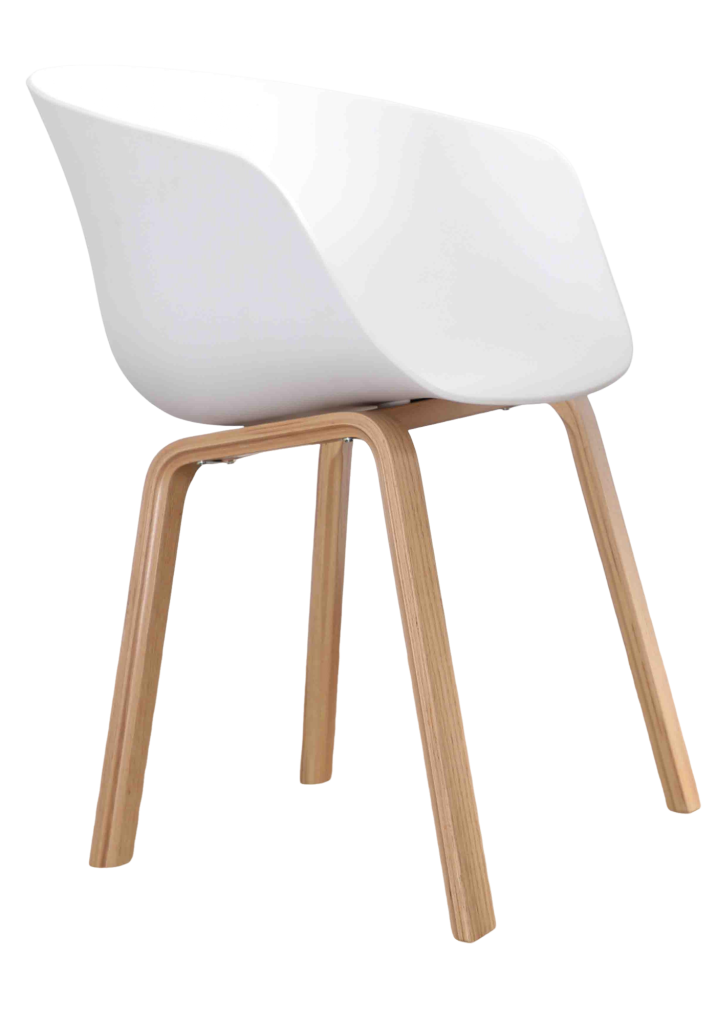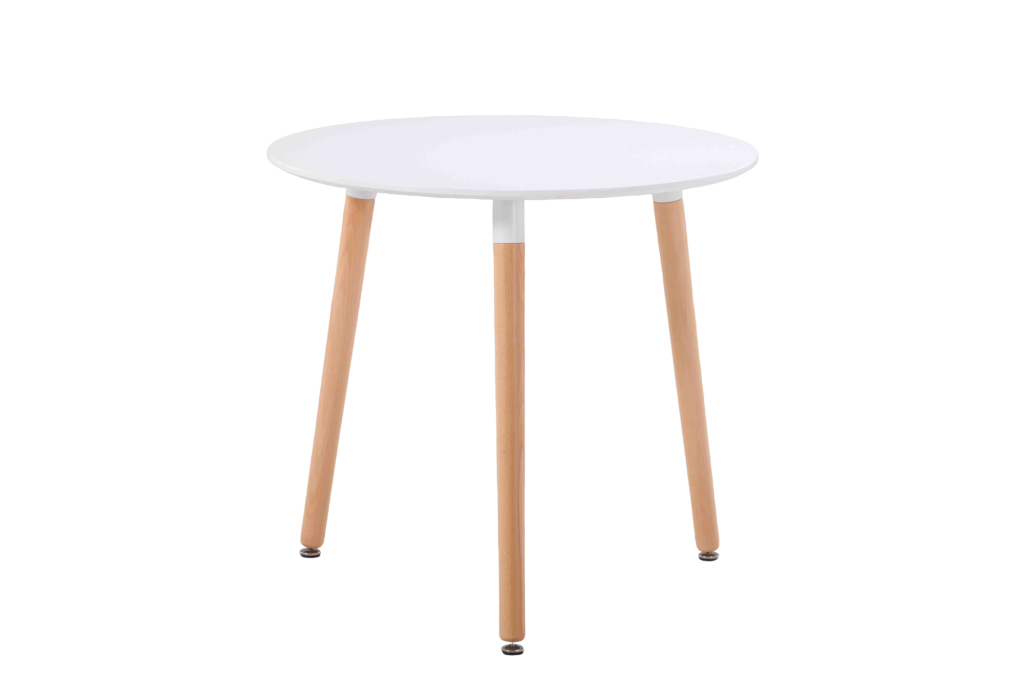

Choosing a white label furniture manufacturer by looking at a few product photos and comparing prices is risky. It is also very common.
The real question is not whether a factory can make one good-looking chair. You need to know whether it can make the same chair again and again, keep the material and finish stable, pack it properly, and deliver it on a schedule that works for your business.
Before you place an order, it is worth checking the customization scope, sample quality, material specification, bulk production control, MOQ, packaging, lead time, and repeat-order support. These things sound basic, but most sourcing problems come from one of them being left unclear at the start.
A lot of problems start before the first quotation is even sent.
You may say you need a white label chair. The factory may hear “use our current chair and change the label.” You may actually mean a new fabric, another frame color, your own carton printing, a different seat height, and a few small changes to the structure.
Those are not the same job.
Write down the product details before you ask for a price. It does not need to be a complicated technical document. Basic information is enough at this stage: size, material, color, finish, function, packing request, expected quantity, and target market.
The Dining Chair HTC0710 gives a simple example. It measures 615 × 645 × 875 mm and uses fabric with a metal structure. It also has a 360° swivel function.
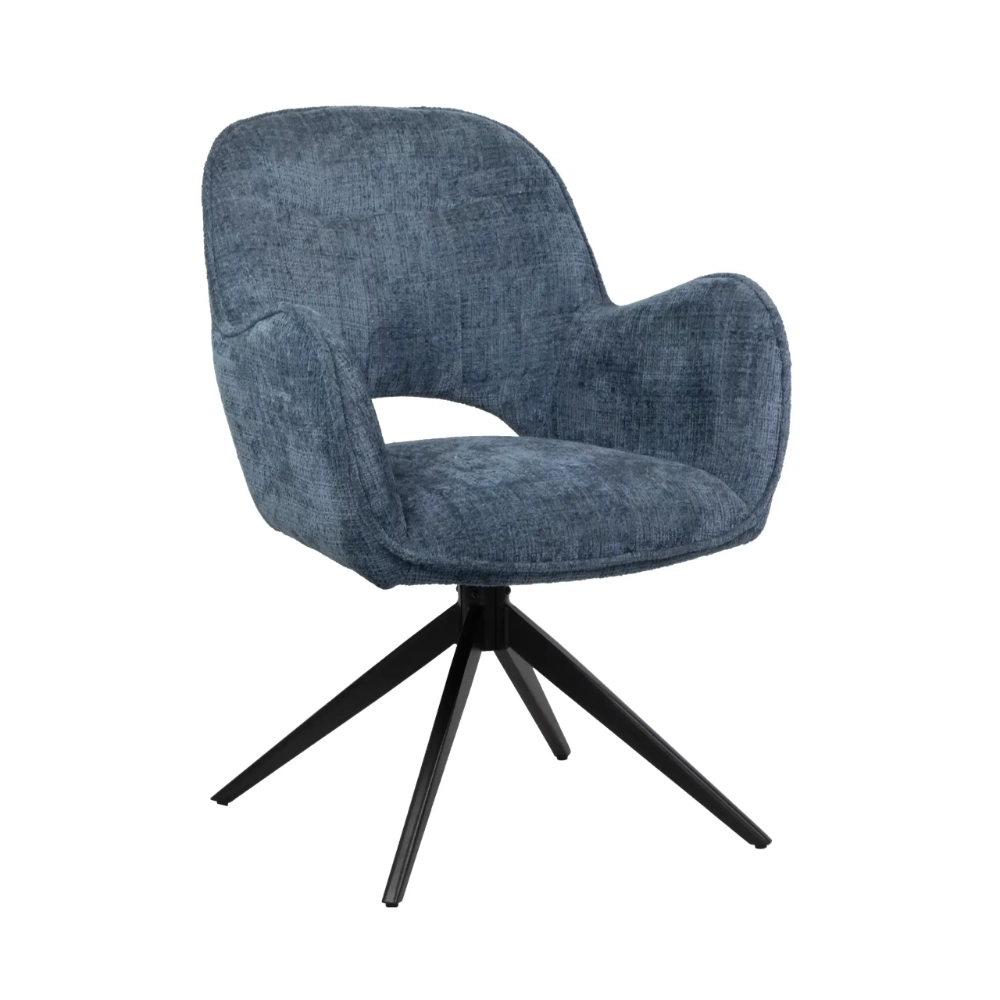
If you want to use a chair like this for a white label program, the discussion should be specific. Can the fabric color change? Is another texture available? Can the metal finish be adjusted? Will a change affect MOQ? Does a new carton need to be made?
You will get a much more useful quotation when these points are clear.
“Custom furniture” can mean very different things from one factory to another.
Changing a fabric is usually easier than changing a frame. A new finish may be manageable with an existing production process. A new dimension, new mechanism, or structural change may require another sample and more development work.
Ask where the standard product ends and custom work begins.
You should also ask what changes may affect tooling, sample cost, MOQ, and production time. This is one of the most useful checks when selecting a custom furniture factory because it tells you whether the supplier is giving you a real production answer or simply saying yes to everything.
Price is important. Nobody buying furniture in volume can ignore it.
But a low unit price does not always mean you bought well.
A chair that saves a few dollars at the factory can cost more later if the carton is large, the finish varies, parts arrive damaged, or you need to sort the goods before shipping them to customers.
When you compare suppliers, put more than the unit price on the sheet.
Look at MOQ, packing quantity, carton volume, sample charges, possible spare parts, inspection needs, shipping volume, and replacement terms.
Dining Chair HTC0710 has a listed MOQ of 200 pieces. It packs two pieces per carton, with a listed volume of 0.259 m³. Those numbers matter because they affect how much stock you need to take, how much warehouse space you use, and what the shipment may cost.
This is where a furniture buying guide needs to stay practical. A product is not finished from your side when it leaves the production line. It still has to be packed, loaded, shipped, stored, sold, and sometimes reordered.
Another common mistake is cutting materials only because you want a lower quote.
That can work for the wrong product and fail badly for the right one.
A chair used every day needs different construction from a decorative side chair that is only used now and then. Upholstery, foam, metal thickness, fittings, surface treatment, and moving parts all affect furniture reliability.
Check the supplier’s material control process and ask plain questions. What material is actually being used? What specification will be written into the order? Can the same material be supplied again for the next batch?
You do not always need the most expensive material. You do need a material that fits your price level and the way the end customer will use the product.
A sample is not just for taking photos or showing to your sales team.
It is your best chance to find problems while they are still cheap to fix.
For a custom furniture factory, sample work also tells you a lot about communication. If small details are missed during sampling, they are unlikely to become easier when hundreds of pieces are on the production line.
Do not stop at “the chair looks fine.”
Sit on it. Measure it. Turn it. Check the fabric. Look at the stitching. Check whether the legs sit evenly on the floor. See how the parts fit. Open the carton and look at how the product is protected.
For Dining Chair HTC0710, the swivel is an obvious inspection point. The 360° movement should be smooth. The base should feel stable. The seat should not lean or shake. Fabric application should be neat, and the finished size should stay within the approved requirement.
Packing should be reviewed at the same time. A good chair in a weak carton is still a bad shipment.
This is the part buyers sometimes miss.
You approve one nice sample, send the purchase order, and assume production will simply copy it. Sometimes it does. Sometimes the sample and bulk order slowly drift apart.
Materials, dimensions, colors, fittings, surface finish, structure, and packaging need to be recorded after sample approval.
Hometree has been making furniture since 2010, with work covering living room and dining room products. Its teams handle design, prototyping, production, quality control, and sales. For a buyer, the useful part is not the company description itself. It is the way a product moves from an idea to a sample and then into production.
The design and development process includes drawings, models, physical samples, materials, structure, components, colors, and packaging. That is the sort of workflow you want to see when you are trying to find a reliable custom furniture manufacturer.
One good sample proves that the factory can make one good sample.
It does not prove that 500 pieces will look and feel the same.
This difference is easy to overlook because most suppliers send their best sample. Bulk production is where you see how well the factory controls daily work.
Bulk-order problems are often small.
The fabric on one batch may be a little darker. Metal coating may feel different. Stitching may move slightly. Hole positions can shift. Parts may still assemble, but not as smoothly as before.
When six chairs are placed around one table, small differences become much easier to notice.
Ask for specific inspection points rather than a general promise about “strict QC.” Size, color, surface treatment, fittings, cleanliness, hole position, weight, and packing are all more useful because somebody can actually check them.
These details also answer a question buyers often have about how much the manufacturer really matters for furniture reliability. In bulk orders, the answer is: quite a lot.
Appearance is only half the job with products that move.
A swivel chair may look completely normal but feel loose after a few turns. It may make noise. The base can be slightly off-center. Fasteners may not be tightened evenly.
Dining Chair HTC0710 works well as a reference here because the swivel function gives you another production point to check besides the fabric and metal frame.
A clear product inspection process should cover both visible finish and actual function. If you can agree on these checks before production starts, quality discussions later are much easier.
Some buyers spend most of their time talking about the product and leave commercial details until the end.
That is usually when they discover the MOQ is too high, the carton is too large, or the production schedule misses the selling season.
These points should come up much earlier.
Low MOQ sounds good, especially for a new line, but it should fit the whole order.
If you want five colors and only a small total quantity, production can become less efficient. If you take too much stock just to reach a better price, cash sits in the warehouse.
Use your own sales forecast.
The listed MOQ for Dining Chair HTC0710 is 200 pieces. If you expect to sell 40 pieces a month, that means something very different from a product that sells 400 pieces a month. The number itself is not good or bad. It needs to fit your turnover.
Furniture freight can change a product’s cost quickly, so packaging deserves more attention than it usually gets.
Ask how many pieces go into one carton. Check protection around the legs, seat, and moving parts. Confirm labels, hardware packs, instructions, and any printed carton requirements.
Dining Chair HTC0710 is listed as two pieces per carton with a volume of 0.259 m³. That gives you enough information to start talking about loading and storage before the order is signed.
For custom-made furniture, a 30–45 day delivery range may be used for many projects, but the final schedule still depends on quantity, material availability, production load, and product changes. Confirm the date for your actual order, not for a typical order.
For basic questions around production and purchasing, the furniture FAQs page can also be useful before you send an inquiry.
A first order gets a lot of attention from both sides.
The second order tells you more.
You need to know whether the same fabric, color, dimensions, packing, and product standard can be repeated months later. That is especially important for a white label furniture manufacturer because your customer sees your name on the product, not the factory’s.
Ask what production information is kept after shipment.
Are the approved sample and material references still available? Are packing details recorded? If a fabric is no longer available, how early will you know? If there is a quality problem, who follows it?
Good communication is not about receiving fast replies to every message. It is more about getting the right information before a problem becomes expensive.
The manufacturer advantages page gives more detail on sample development, mass production, quality inspection, design work, and sales support. Those functions are worth checking if you are thinking beyond one order.
You do not have to test a supplier with a huge product range.
One product can tell you enough.
Dining Chair HTC0710 lets you check fabric, metal construction, swivel performance, size control, MOQ, carton packing, shipping volume, sample approval, and bulk consistency in one order.
You can then compare it with other items in the furniture product category and see whether the same production logic carries across the range.
If the process works well on one product, repeat orders and future development become much easier to judge.
Most mistakes when choosing a white label furniture manufacturer happen before the order reaches mass production.
Requirements are left vague. Price gets too much attention. Samples are approved after a quick visual check. Bulk consistency is assumed. MOQ and packaging are discussed late. Then small problems start showing up when the order is already difficult to change.
You can avoid most of that by keeping the process simple. Define the product properly. Test the sample. Record what has been approved. Check how the factory controls bulk production. Look at MOQ, packing, delivery, and repeat orders as part of the same buying decision.
If you need support with product selection, sample work, customization, bulk-order planning, service, or order details, you can use the official contact page to discuss the project directly.
Q1: What Should I Look for in a White Label Furniture Manufacturer?
A1: Check sample development, customization options, materials, bulk-production consistency, MOQ, packaging, lead time, repeat-order support, communication, and after-sales service.
Q2: Should I Always Order a Sample Before Bulk Furniture Production?
A2: Yes. A sample lets you check size, material, comfort, structure, finish, function, assembly, and packaging before the same details are repeated across a full order.
Q3: How Can I Check Whether a Furniture Manufacturer Is Reliable?
A3: Look at how the factory handles samples, production specifications, material control, quality inspection, communication, problem solving, and repeat orders instead of judging reliability from catalog photos alone.
Q4: Why Do MOQ and Packaging Matter When Choosing a Furniture Supplier?
A4: MOQ affects your inventory risk and production cost, while packaging affects freight cost, warehouse space, transit protection, and the condition of the product when it reaches your customer.
Q5: What Is the Difference Between White Label and Custom Furniture Manufacturing?
A5: White label furniture often starts with an existing product that is prepared for your own sales program, while custom furniture can involve deeper changes to materials, size, structure, finish, or design, so you should confirm the exact production scope before sampling.