

Choosing the right furniture manufacturer is mostly about one thing: can the factory make what you need, keep the quality steady, and still deliver the same product when you order again? Price matters, of course, but it should not be the first thing you look at. Design work, samples, materials, construction, quality checks, packing, MOQ, lead time and repeat orders usually tell you much more.
Dining Chair HTC0520 is a good product to use as a reference here. A designer may look at its shape, fabric, size and swivel function first. A retailer will probably look at MOQ, carton packing, volume and whether the same chair can be supplied again without obvious changes. Same chair, different questions.
Hometree has been making dining room and living room furniture since 2010. The factory has separate teams for design, prototyping, production, quality control and sales service. That matters more than it may sound. A drawing often needs changes before it can go into mass production, and someone has to check the structure, material, size, color, fittings and packing before a bulk order starts.
What Should Retailers and Interior Designers Expect from a Furniture Manufacturer?
A factory with a large catalog is not automatically the right factory for your business.
If you are a retailer, you may need stable supply and easy repeat orders. If you are an interior designer, you may care more about whether a factory can follow a drawing, adjust dimensions and keep the look you approved. Some factories are good at one side but weak at the other.
What Retailers Should Check Before Choosing a Manufacturer
Start with the boring details. They often become the expensive ones later.
Check MOQ, pieces per carton, packing volume, production time and reorder conditions. Ask what happens if you come back six months later and want the same fabric, same color and same frame. You should also know how much space the cartons take and whether the packing works for your warehouse or delivery method.
Style still matters. It just cannot be separated from use. A product that photographs well but scratches easily, wobbles after a short time or arrives damaged will quickly become a return problem. The same idea applies when you choose furniture that balances style and durability. Good looks help sell a product. Construction keeps it sold.
What Interior Designers Should Check Before Choosing a Manufacturer
For designers, the first concern is usually whether the factory can actually make the idea without changing it too much.
Ask what they need from you. A drawing? A 3D model? A reference sample? Material swatches? The answer tells you a lot about how the factory works.
A proper design and development process should give you room to adjust dimensions, material, color and structure before the sample is locked. This is where problems are cheapest to fix. Once bulk production starts, even a small change can turn into wasted parts, extra labor or a delay.
How Do You Evaluate Design and Prototyping Capability?
One sample can look good because an experienced worker spent extra time on it. That does not mean 200 pieces will come out the same.
You need to know how the sample is turned into a production standard. Ask who checks dimensions, who confirms the materials and how the final approved sample is recorded.
Use Dining Chair HTC0520 to Check Design Execution
Dining Chair HTC0520 measures 54 × 66.5 × 91 cm. It uses fabric and metal, with ivory textured upholstery, a sculpted wingback shape, a cutout detail, black metal legs and a 360-degree swivel function.
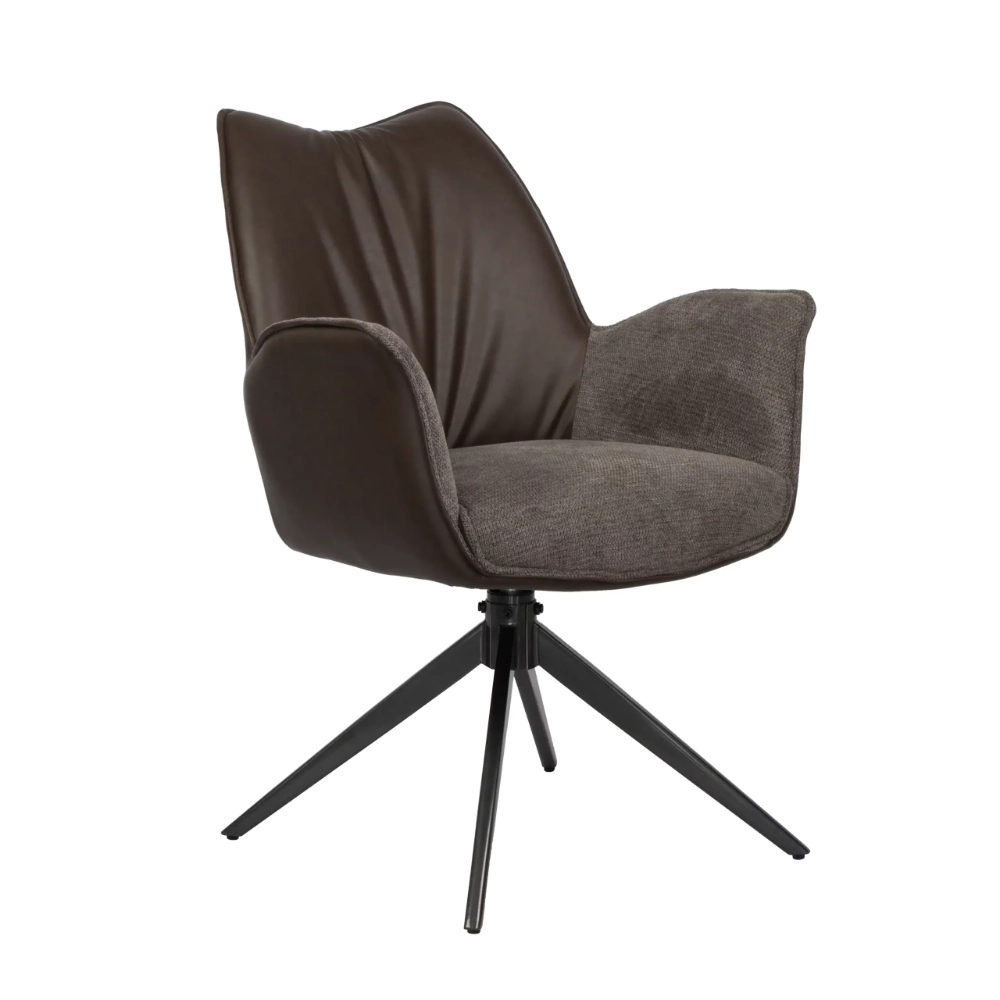
If you are specifying it for an interior project, you may first check the seat proportion, back height, fabric feel and whether the swivel function makes sense around the table. You may also want the fabric changed or a different finish on the metal base.
A retailer sees something else. The swivel has to feel the same from chair to chair. The base cannot sit unevenly. Upholstery should not vary badly from one carton to another. These are simple points, but they are the kind of points customers complain about.
That is why Dining Chair HTC0520 works well as a test. It tells you whether the factory can keep both the design and the production details under control.
How Do Materials and Construction Affect Furniture Reliability?
A material name on a specification sheet does not tell the whole story.
Two chairs may both say “fabric + metal” and still perform very differently. Fabric quality, foam density, tube thickness, welding, surface treatment and assembly all matter.
Match Materials to Real Use
Think about how the furniture will actually be used.
For upholstered seating, fabric has to look right but also handle cleaning and regular contact. Foam should hold its shape. Metal parts need enough strength for the structure and a finish that does not mark easily.
Dining Chair HTC0520 uses fabric with a metal structure, so the visual and structural sides are tied together. A factory with a clear material control process should know which materials are approved before production starts. You do not want the bulk order to come with a fabric that is “almost the same” as the sample.
This is also one reason how much the manufacturer or dealer really matters for furniture reliability is a useful question. Materials are not chosen in isolation. The factory decides how they are cut, joined, upholstered and checked.
Check Construction Details That Photos Cannot Show
Photos hide a lot.
They do not show whether all four legs touch the floor properly. They do not show how clean the welding is under the seat. They cannot tell you whether a swivel base feels smooth after repeated turns.
With Dining Chair HTC0520, the swivel mechanism is one obvious point to check. So are leg alignment, upholstery tension and seat stability.
If you are buying seating for the first time, it also helps to review common mistakes when buying dining chairs. Wrong size, weak construction and poor material choices are still common mistakes, even on products that look fine online.
How Can You Verify Quality Before a Bulk Furniture Order?
The approved sample should become the reference for production. It should not just sit in a showroom.
Before the order runs, agree on what will actually be checked. The more specific you are, the easier it is to deal with problems later.
Compare the Approved Sample with Clear Quality Standards
For seating, basic checks usually include dimensions, color, surface condition, stitching, fittings, stability, moving parts and packing.
A proper product inspection process should look at the product against the approved standard, not just ask whether it “looks good.”
For Dining Chair HTC0520, you can check whether the fabric color stays close to the sample, whether the stitching is clean, whether the swivel works smoothly and whether the metal legs are aligned. The chair should also sit stable on the floor.
These details sound small until you multiply them by 200 pieces.
Treat Packaging as Part of Product Quality
Packing is one of those things buyers often check too late.
An upholstered chair needs protection around the fabric, frame and moving parts. If two chairs are packed in one carton, they also need to be separated properly so they do not rub against each other during transport.
For retailers, bad packing means damaged stock and more returns. For designers, it can mean missing pieces during installation and a project schedule that starts slipping.
Which Commercial Details Matter Before You Choose a Manufacturer?
Once the product and quality standards are clear, then you can talk seriously about commercial terms.
This is where MOQ, packing, production time and repeat supply start to matter more.
Compare MOQ, Packing, Production Capacity, and Delivery
Dining Chair HTC0520 has an MOQ of 200 pieces. It is packed two pieces per carton and has a listed volume of 0.262 m³.
A retailer can use those numbers to work out how big the first order really is, how much warehouse space it may need and whether the product makes sense as a test item.
For a designer, MOQ can be a bigger issue. A 200-piece minimum may work for a hotel, restaurant or larger residential project, but not for a small private job.
Production planning matters too. Hometree’s manufacturing advantages include sample development, mass production, quality control and design support. Production can involve several departments, including metal work, sewing, upholstery and packing. Custom orders are generally stated at around 30–45 days, though the exact time still needs to be confirmed against the actual product and order quantity.
Ask How Repeat Orders Stay Consistent
The second order is often a better test of a supplier than the first.
Ask whether the approved sample is kept. Ask how fabric codes, dimensions, colors and components are recorded. If a material becomes unavailable, you should know whether the factory will ask before changing it.
This matters for Dining Chair HTC0520 because the product has several visible and functional details that customers will notice. A change in fabric tone, swivel feel or frame finish may not seem large at factory level, but it can be obvious when old and new stock sit next to each other.
How Should You Compare Furniture Manufacturers Before the Final Decision?
By now you should have enough information to stop comparing factories only by quotation.
The useful question is no longer “Which one is cheapest?” It is “Which one gives me fewer things to worry about after I place the order?”
Compare Evidence Instead of General Sales Claims
Most factories will tell you they have good quality and fast delivery. That does not help much.
If they say they do customization, ask to see how the sample process works. If they say their quality is stable, ask what is inspected. If they say they are good at bulk orders, ask how they control materials and repeat production.
This is also the better way to answer what factors should I consider when selecting a custom furniture factory. Look for something you can check, not just something you can read in a sales message.
When you try to find a reliable custom furniture manufacturer, a clear production process is usually worth more than a very low first quotation. Many buyers also need to know how to find reliable wholesale home furniture suppliers before building long-term cooperation.
Choose a Manufacturer That Fits Your Business Model
Retailers and designers may end up choosing the same factory for different reasons.
A retailer may stay because repeat orders are easy, packing is workable and quality does not move around too much. A designer may stay because samples are handled carefully and changes can be discussed before production.
The best fit is the factory that works with the way you actually buy furniture.
Conclusion
Choosing the right furniture manufacturer takes a little more work than comparing prices, but most of that work can be done before the order starts.
Look at the sample process. Check the materials. Ask how the structure is made and inspected. Confirm MOQ, packing and production time. If you expect to reorder, ask about that before the first order instead of after it.
Dining Chair HTC0520 is a simple example of why these checks matter. A designer sees its shape, fabric, size and 360-degree swivel. A retailer also sees 200-piece MOQ, two-piece carton packing, 0.262 m³ volume and the need to keep the same finish and swivel performance across a batch.
A good furniture manufacturer should be able to deal with both sides without making the process complicated. For other sourcing questions, you can check the company’s FAQs, use its service support for product or logistics issues, or contact the team to discuss samples, specifications, customization and bulk orders.
FAQ
What Factors Should I Consider When Selecting a Custom Furniture Factory?
Check how the factory handles design, samples, materials, construction, inspection, packing, MOQ, delivery and repeat orders. It is much easier to judge a factory when these points are clear before you place the order.
How Do I Find a Reliable Custom Furniture Manufacturer?
Start with the sample process and quality checks. Ask what materials are fixed in the specification, how finished furniture is inspected and what happens when you reorder the same item. A reliable custom furniture manufacturer should give clear answers to these questions.
What Should Retailers Look for in a Furniture Manufacturer?
Retailers should check MOQ, carton quantity, packing volume, production time, repeat supply, product consistency and after-sales risk. A low unit price may not help much if damage, returns or unstable supply cost you more later.
What Should Interior Designers Ask a Furniture Manufacturer Before Production?
Ask how drawings, dimensions, materials, colors, finishes, structure and samples are handled. If changes are needed, they should be settled before mass production starts.
How Can Dining Chair HTC0520 Help Me Evaluate a Furniture Manufacturer?
Dining Chair HTC0520 lets you check several things in one product: fabric consistency, size, upholstery, metal structure, swivel performance, stability, packing and repeat production. If these details stay close to the approved sample, the factory is doing more than simply making one good-looking chair.