
Finding wholesale home furniture suppliers is easy. Finding one that fits your customers, order size, target price, packing limits, and repeat-order needs takes more work. A large catalog may look impressive, but it does not tell you whether the supplier can keep colors, materials, dimensions, and finishes stable across a full shipment.
You should start with the type of furniture you plan to sell and the way you sell it. A physical furniture store needs coordinated collections and steady restocking. An online seller pays more attention to carton size, product photos, assembly, and damage rates. Project buyers usually need tighter control over dimensions, finishes, and delivery dates.
Hometree has produced living room and dining room furniture since 2010. Its work covers design, sample development, mass production, inspection, and sales support. These departments are connected, which matters when a buyer needs more than an off-the-shelf item. A design team may develop the look, but the sample team still has to make it workable, and the production team must be able to repeat it in quantity. You can check the company’s about us information before sending a quotation request.

A supplier cannot give you a useful proposal if your request only says, “Please send your best price.” A clearer buying plan saves time and makes quotations easier to compare.
Decide where the furniture will be sold. A retailer may need several matching products for one display area. An online business may prefer items that fit standard cartons and require simple assembly. A wholesaler may care more about broad style coverage and stable repeat production.
You should also define the end customer. A chair for compact apartments will not follow the same size and style rules as one intended for large dining rooms. When the customer profile is clear, you can judge whether the supplier’s product range supports your market instead of simply filling a catalog.
Prepare a target price range, expected first-order quantity, reorder plan, and packing preference. Unit price is only one part of the cost. Carton volume, warehouse space, inland handling, container loading, and replacement claims can change the final margin.
Ask each supplier for MOQ, pieces per carton, carton size, production time, and packing method. These details help you compare wholesale home furniture suppliers on the same basis. A slightly higher unit price may still produce a better result when the packing is smaller and the damage rate is lower.
Once your basic order plan is clear, look at the supplier’s collection as a whole. A long list of unrelated products may create more work, not more selling opportunities.
A useful home furniture range often includes dining chairs, dining tables, armchairs, coffee tables, side tables, cabinets, consoles, and TV stands. These products should share several colors, materials, or design lines so that you can present them as a collection.
The Hometree product category gives buyers a way to review products across living and dining spaces. When several items can be combined in one room setting, you gain more options for showroom displays, website images, bundled sales, and seasonal updates.
This also reduces the need to manage many factories. Fewer suppliers usually means fewer color mismatches, fewer packing standards, and less time spent checking separate production schedules.
Multi-scene furniture is often easier to sell. A neutral upholstered chair may work beside a dining table, in a living room corner, at a desk, or in a reading area. That gives you more product-page uses without carrying several highly specialized models.
Look for practical sizes, easy-match colors, and materials that fit normal daily use. Products with wider placement options can help reduce slow inventory, especially when you are testing a new market or placing a first order with a limited quantity.
A suitable product range gets the supplier onto your shortlist. The next step is checking whether a reliable custom furniture manufacturer can support samples, changes, production, and export work without losing important details.
Ask how a new product moves from an image or drawing to a finished sample. A proper process should cover dimensions, materials, frame structure, comfort, surface finish, fittings, assembly, and packaging.
The factory’s design and development process should also consider mass production. A handmade sample can hide difficult joints or time-consuming work. Those details become costly when the order reaches hundreds of pieces.
When the sample is ready, inspect it from every side. Sit on it, move it, check the legs, look under the seat, and test all moving parts. Keep written notes and photos. The final approved sample should remain at the factory as a production reference.
Reliable wholesale home furniture suppliers keep changes in one clear production file. The file should include the approved size, materials, color reference, fittings, labels, carton marks, and assembly instructions.
Ask who controls the file after sample approval. If the sales team, sample room, production department, and inspection staff use different versions, mistakes are likely. Written confirmation matters much more than a quick message saying that everything is clear.
You can also use a virtual factory tour to review the production setting before arranging an on-site visit. Look for separate areas for materials, sample work, production, inspection, and packing.
A sample shows what the factory can make once. Your real concern is whether the same result can be repeated across the order.
Do not accept broad descriptions such as “fabric chair” or “metal frame” without further details. Check fabric texture, shade range, stitching, foam support, metal thickness, coating, connectors, footpads, and moving parts.
The factory’s material standards can help you see which points are normally reviewed. Material selection should match the expected selling price and daily use. A chair that looks soft still needs a stable base. A dark metal finish should resist scratches from packing and assembly.
For repeat orders, ask whether the same fabric, coating, and fittings can be sourced again. Minor changes may be acceptable, but they should never be made without your approval.
Quality control should begin before production is completed rather than being left until the final cartons are ready. The factory should first inspect incoming materials, then confirm the first finished piece before the main production run continues.
During production, inspectors should check dimensions, surface finish, stitching, assembly details, and color consistency so repeated defects can be found early. Functional testing should follow, especially for parts such as swivel mechanisms, fittings, and metal frames.
Before shipment, the finished products should be checked against the approved sample and order specifications. Packaging, labels, inner protection, carton marks, and product cleanliness also need attention. A well-made chair can still generate claims if its legs rub against the seat or the carton does not protect the fabric during transport.
The product inspection process should cover dimensions, color, surface condition, fittings, cleanliness, weight, hole position, and packaging protection. First-piece approval is especially useful because it can stop a repeated defect before the whole order is completed.
A real product is often the simplest way to test the claims made by wholesale home furniture suppliers. You can compare design, comfort, materials, packing, and production control through one item before expanding the order.
Dining Chair HTC0520 uses textured ivory fabric with black metal legs and a 360-degree swivel function. Its curved wingback shape gives the seat a more enclosed feel without making the chair look heavy.
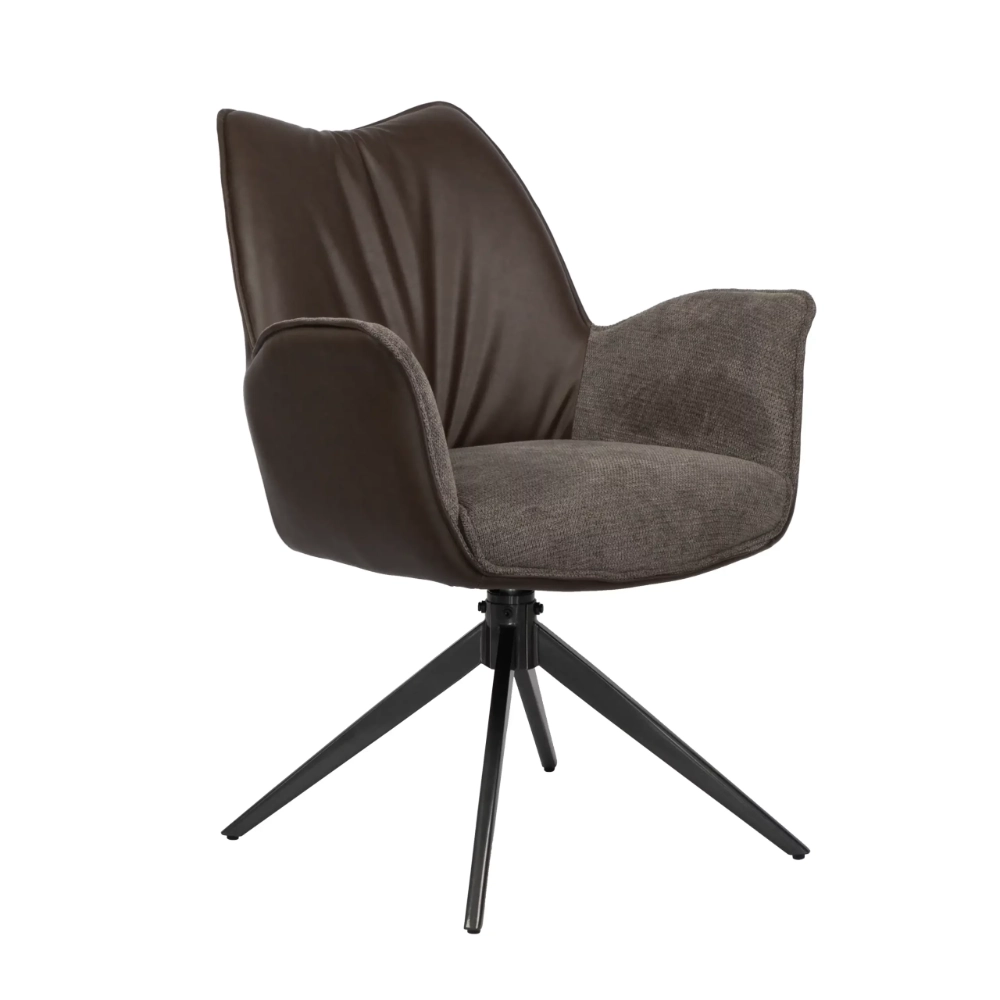
The neutral color can work with wood-look, ceramic, glass, or dark table surfaces. It can also be shown in dining rooms, living rooms, home offices, apartments, and reading areas. That wider use is helpful for retailers because one model can support several room images and customer groups.
The chair measures 54 × 66.5 × 91 cm. This is large enough to offer a comfortable, wrapped seat while remaining suitable for normal residential spaces. Before ordering, you should still compare the arm width and seat depth with the tables you plan to sell.
The listed material is fabric and metal. Packing is 2 pieces per carton, the MOQ is 200 pieces, and the volume is 0.262 m³. These figures matter because they affect the first-order budget, warehouse planning, and container use.
Request a sample and check the fabric shade, stitching, swivel movement, base stability, leg coating, and carton support. The two chairs inside one carton should not rub against each other during transport. If the factory can control these details in the sample, full order, and later restock, it gives you a practical reason to continue the partnership.
Reliable wholesale home furniture suppliers should fit your sales channel, product positioning, order volume, and shipping plan. They should also offer a coordinated range, support sample development, record specifications clearly, and inspect products throughout production.
Dining Chair HTC0520 is a useful item for supplier evaluation because it combines a neutral style, fabric and metal construction, a swivel function, multi-room use, and clear wholesale details. It lets you check more than appearance. You can review comfort, moving parts, finish control, packing, MOQ, and repeat-order consistency through one product.
Before confirming a large order, these are some of the main factors to consider when selecting a custom furniture factory: the approved sample, production file, inspection plan, carton structure, lead time, and claim process. The furniture FAQs may help you prepare further questions, while buyers who need product selection, sample development, bulk-order service, or project support can use the contact page to discuss their purchasing plan.
Q1: How Do You Find Reliable Wholesale Home Furniture Suppliers?
A1: Define your sales channel and product needs, then compare the supplier’s product range, sample process, material control, production records, inspection steps, packing, and delivery ability.
Q2: What Should You Ask a Furniture Supplier Before Ordering?
A2: Ask about MOQ, sample cost, production time, materials, dimensions, pieces per carton, carton volume, inspection standards, export documents, repeat orders, and claim handling.
Q3: How Can You Check Furniture Quality Before a Bulk Order?
A3: Approve a physical sample and inspect its materials, structure, dimensions, finish, fittings, functions, stability, and packaging before confirming mass production.
Q4: Why Are Multi-Scene Furniture Products Useful for Wholesale Buyers?
A4: They can be sold for several rooms and customer groups, which gives retailers more display options and reduces the risk of carrying products with only one narrow use.
Q5: Is Dining Chair HTC0520 Suitable for Wholesale Home Furniture Orders?
A5: Yes, its neutral ivory fabric, black metal legs, 360-degree swivel function, multi-room use, 2-piece carton, and 200-piece MOQ make it suitable for many residential furniture collections.