
Uneven cabinet doors are often blamed on the hinges, but the hinge may only be revealing a different problem. A cabinet that is slightly twisted, standing on an uneven floor, overloaded on one side, or held by loose fasteners can pull its doors out of alignment. Adjustable hinges can correct small gaps, yet adjustment will not hold if the cabinet body keeps moving. Diagnose the cabinet first, then use the hinge for fine alignment. That order prevents an endless cycle of turning screws and watching the doors drift again.
Read the gaps before touching a screw
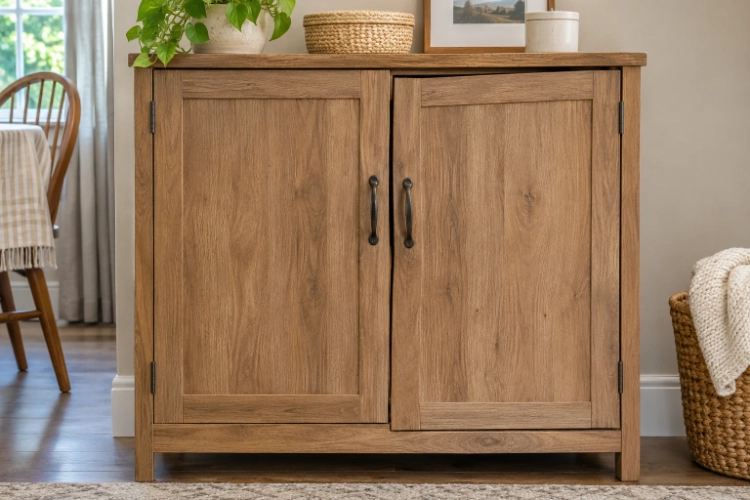
Close both doors gently and look at the dark lines around them. A door that sits lower across its full width suggests a height difference. A center gap that widens from top to bottom can indicate side adjustment, door sag, or a cabinet body that is no longer square. A door that is flush at one corner but stands proud at another points toward depth, a twisted panel, an obstruction, or a loose hinge plate.
Check whether the problem affects one door or the whole cabinet. Compare the top edge of the cabinet with the door edges. Open and close each door slowly and listen for rubbing. Remove any object that touches the door from inside. Take a photo from straight ahead before changing anything, and mark the original hinge positions lightly with removable tape. These observations make it easier to reverse an unsuccessful adjustment.
If you are comparing storage furniture, a live cabinet collection can show how door proportions and base designs vary. The exact hinge and adjustment method, however, must be confirmed for the model you own.
Check the floor and cabinet body
Place a spirit level on the cabinet top from left to right and front to back. Then check the cabinet sides for plumb if the design allows. A floor can slope while the cabinet looks visually straight because nearby walls and furniture create misleading reference lines. Adjustable feet or appropriate shims may be needed, but use only the support method permitted by the manufacturer.
Next, compare the cabinet diagonals if you can measure the case without obstruction. A meaningful difference may indicate racking, where the rectangular body has shifted toward a parallelogram. Do not force a tall or unstable cabinet into shape while it is loaded. Empty it, protect the floor, and follow the assembly and anchoring instructions. Large storage furniture can tip; wall restraint is a safety measure, not merely a way to improve door gaps.
Look for a loose back panel, connectors, or shelf supports that contribute to the case geometry. Some cabinets depend on the back to resist racking. Tighten only the fasteners identified in the instructions, and stop if a screw spins without gripping, a panel is cracked, or a joint has separated. Hinge adjustment cannot repair damaged structure.
Redistribute the load
A cabinet can settle after it is filled. Heavy objects concentrated on one shelf or one side can change how the base bears on the floor. The change may be tiny, yet narrow door gaps make it visible. Remove heavy contents and see whether the alignment improves. Refill the cabinet gradually, placing heavier items low and distributing them within the limits in the product instructions.
Do not assume that a wide top surface is suitable for heavy equipment. A TV stand range and a cabinet range may look related, but their intended use, dimensions, internal layout, and verified capacity can differ. Use the exact model documentation rather than transferring a rating from a similar-looking piece.
Inspect the hinge and its mounting points
Open the door and support its weight with one hand or a stable helper. Check whether the hinge cup is tight in the door, the hinge arm is seated correctly, and the mounting plate is secure on the cabinet side. A loose mounting screw can let the door drop. Tightening may restore the original position without changing the adjustment screws.
Use a hand screwdriver that fits the screw head. Too much torque can strip the hole or damage the adjustment mechanism. If a fastener will not tighten, do not keep turning it. The correct repair depends on the cabinet material, screw, hole condition, and manufacturer guidance. An improvised larger screw can break through a panel or interfere with the hinge.
Also check for bent metal, cracked hinge cups, torn mounting holes, or a door panel that has swollen or warped. Replacement may be safer than adjustment when hardware or material is damaged. If the door is heavy, contains glass, or could fall, remove the load from the area and ask a qualified person for help.
Use hinge adjustment for fine correction
Many concealed hinges offer three kinds of adjustment: side to side, up and down, and in or out. The screw positions and ranges vary. Consult the furniture or hinge instructions before turning anything. Change one direction at a time, use small increments, and close the door gently after each change to read the gap again.
For a pair of doors, adjust them as a system. Moving one edge changes the center gap and the reveal at the outer edge. A small change at the top hinge can rotate the door, while equal changes at all hinges can shift it without changing its angle. Height adjustment may require loosening mounting screws, holding the door in place, and retightening them. Depth adjustment controls how the door sits against the cabinet, but it should not be used to hide a twisted case.
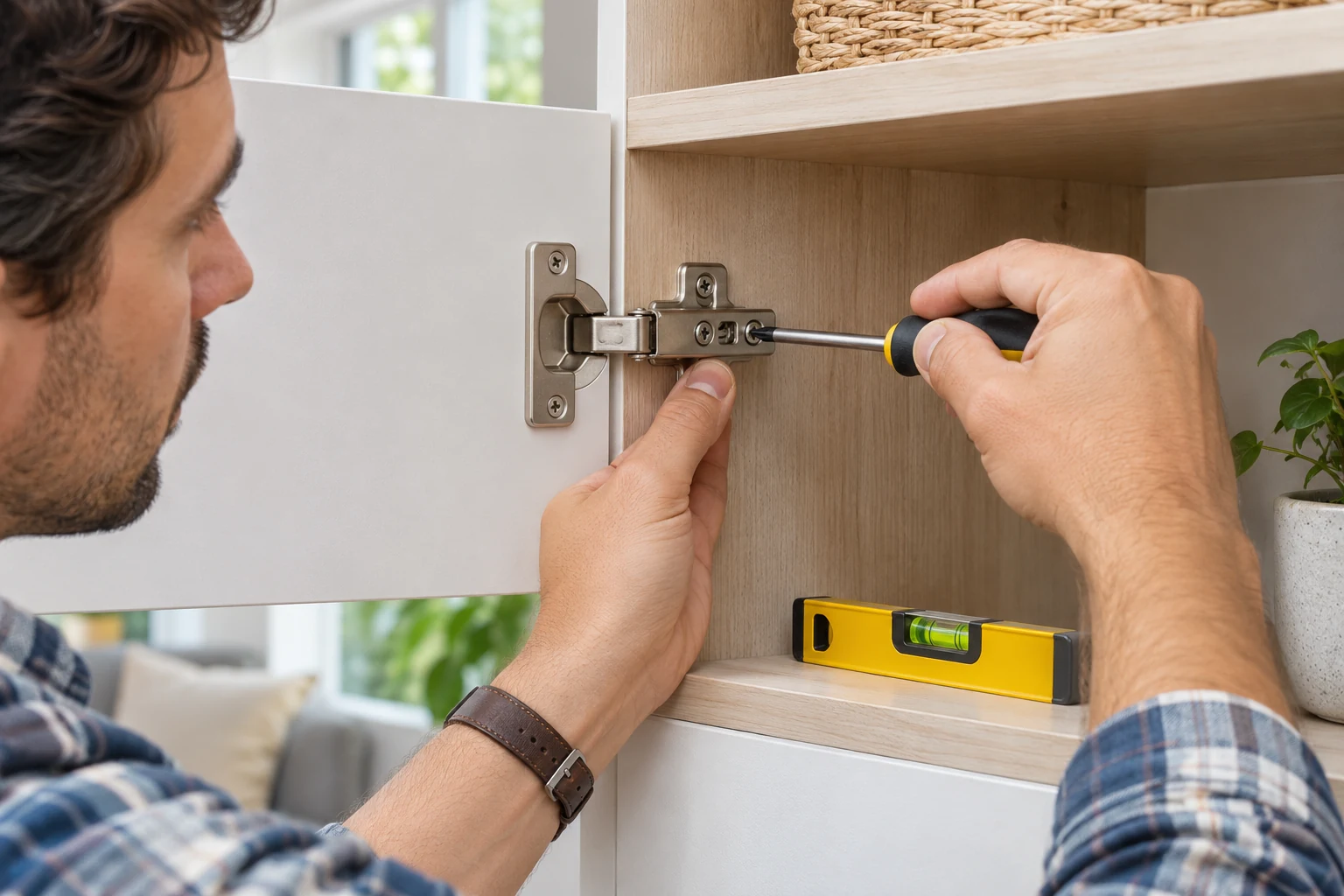
Work slowly and keep the screwdriver aligned with the screw. If the door begins to bind, the soft-close action changes sharply, or a hinge reaches its adjustment limit, return toward the marked starting position. A hinge at the end of its range is a clue that the underlying cabinet position or installation needs attention.
Know when the problem is movement or damage
Alignment that changes with the seasons may be related to moisture movement in wood-based parts or changes in the room. Keep the cabinet away from persistent water, direct heat, and unsuitable humidity extremes, following its care instructions. Do not use hinge adjustment to force a swollen door into a smaller opening; rubbing can damage the finish and place more stress on the hardware.
Rapid change deserves closer inspection. A door that suddenly drops, a widening joint, cracking sounds, or a cabinet that rocks can indicate a loose or failed connection. Empty the furniture and keep children away until it is stable. If the product is under warranty, document the condition before attempting a structural repair.
Manufacturing inspection can reduce alignment problems by checking component dimensions, frame geometry, attachments, and stable floor contact before shipment. The product inspection overview from hometree shows these as separate checks. Once furniture is in a home, careful assembly, leveling, anchoring, and loading remain important.
Choose storage furniture with adjustment in mind
Before buying, ask how the cabinet is leveled, whether the hinges are adjustable, how doors can be removed for installation, and what wall restraint is supplied or required. Review the assembly instructions and measure access routes as well as the final location. A cabinet that must be twisted through a narrow doorway may be harder to install without loosening its case.
Check the actual model rather than relying on a category photograph. Confirm dimensions, materials, finish, included hardware, packaging, assembly, care, and intended use. hometree lists multiple furniture categories, while order-specific questions can be sent through its contact page. For a consumer purchase, the retailer or seller should also provide the model instructions and local after-sales route.
Conclusion
Crooked cabinet doors are a symptom, not a complete diagnosis. Start with the gap pattern, then check the floor, cabinet body, load, mounting points, and door condition. Use adjustable hinges only after the cabinet is stable and square enough for fine correction. Small, documented changes make the job safer and easier to reverse. If hardware, panels, joints, anchoring, or stability are in doubt, stop adjusting and repair the cause first.
FAQ
Why did my cabinet doors become uneven after a few weeks
The cabinet may have settled on the floor, fasteners may have loosened, the load may have shifted the case slightly, or the hinges may need fine adjustment. Empty heavy contents and check stability before changing the hinges.
Can I level cabinet doors by adjusting only one hinge
Sometimes a small change at one hinge can rotate a door, but the other hinges and surrounding gaps must be checked. Follow the instructions for the exact hinge and make small changes.
What do the three adjustments on a concealed hinge do
Common designs allow side, height, and depth adjustment. The location and range of each control vary, so use the hinge or furniture instructions rather than assuming every mechanism works the same way.
Should I adjust the doors while the cabinet is full
Remove heavy or fragile contents first. This makes the cabinet safer to inspect and helps reveal whether uneven loading is contributing to the problem.
When should I stop and call for help
Stop if the cabinet rocks, joints are separating, mounting holes are damaged, a door is very heavy or glazed, the hinge is bent, or the furniture cannot be safely anchored or supported.