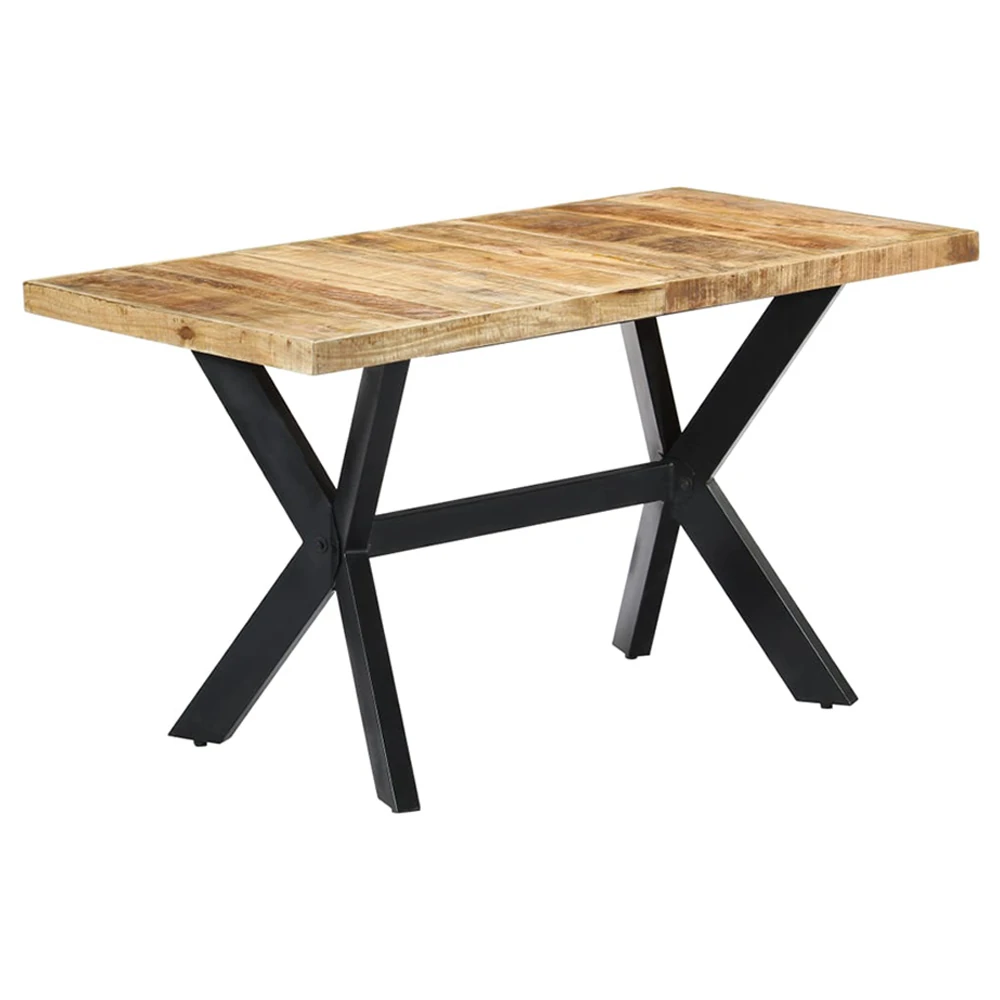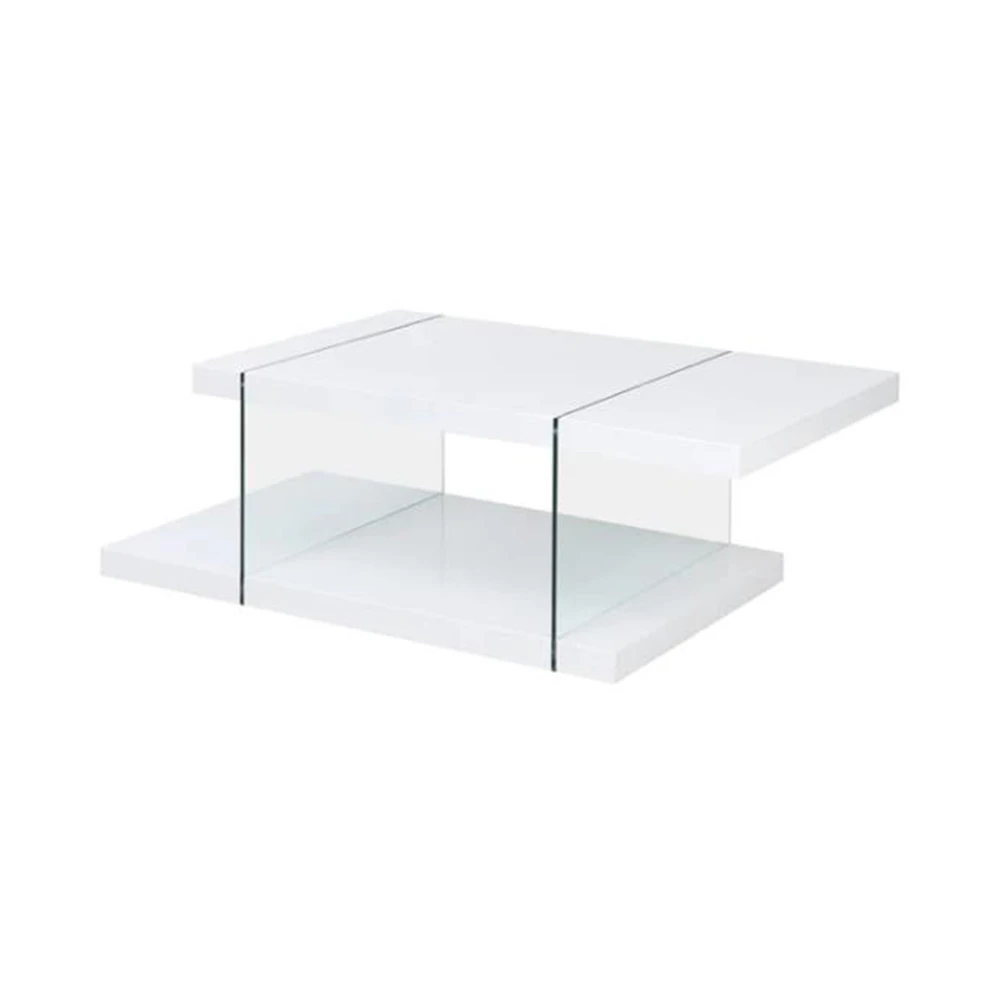

An approved sample proves that one piece can be made well. It does not prove that hundreds of pieces will match it. A sample may receive extra attention, use carefully selected components, and be assembled by a senior technician. Production introduces repetition, multiple operators, material lots, tooling wear, packaging pressure, and deadlines. Buyers who treat the sample as a photograph of the future shipment leave too much open to interpretation. The safer approach is to convert the sample into a controlled reference with measurable requirements, agreed checkpoints, and clear release rules.

The sample needs a written identity
The first risk appears before production begins: people may be referring to different versions of the same item. A chair can pass through several rounds of changes to its seat depth, leg finish, foam feel, stitching, carton, or hardware. If the final approval is only an email saying “sample approved,” an earlier drawing or material swatch can remain in circulation.
Create one approval package and give it a revision date or code. It should connect the physical sample to the latest drawing, bill of materials, finish reference, color standard, hardware list, packaging specification, assembly instruction, and approved deviations. Photograph details that are easy to confuse, but do not rely on photographs for color, texture, or dimensions. Record where the physical reference will be stored and who can authorize a change.
This discipline matters most when a design is being prepared for repeatable production. The design and development process described by hometree covers appearance, materials, structure, components, color, and packaging before a design is released. Buyers can use those same categories to make their own approval package complete.
A beautiful sample can hide production variables
Many furniture characteristics are produced by a process, not by a single final action. Upholstery shape depends on cut accuracy, seam allowance, foam placement, tension, and the order in which the cover is fixed. A metal leg finish depends on surface preparation, coating conditions, curing, handling, and protection after finishing. A stable chair depends on frame geometry, hole position, connectors, assembly sequence, and contact with a flat surface.
A skilled sample maker can compensate for a small error by trimming, shimming, reworking, or selecting a better-looking component. That intervention may be reasonable during development, but it becomes a warning if the production method still depends on individual judgment. Ask what was adjusted during sampling and whether the same result can be achieved with fixtures, templates, gauges, documented work instructions, and checks at the correct station.
The right question is not simply whether the sample looks good. Ask which characteristics are sensitive to variation and how the factory will keep them within the agreed range. For an upholstered chair, this might include frame dimensions, hole positions, seam placement, visible puckering, leg alignment, color matching, and carton contents. The exact list must come from the product and order specification, not a generic checklist.
Material approval must reach the purchasing team
A sample can be correct while the production purchase is not. Fabrics, coatings, boards, stone-like surfaces, fasteners, and foam may vary by supplier or lot. A similar commercial name does not establish the same composition, shade, performance, or appearance. If substitutions are allowed without written approval, the production team may solve an availability problem by creating a consistency problem for the buyer.
Identify order-critical materials at the level the buyer can verify. Keep signed swatches or master samples where appropriate, record supplier or grade when contractually required, and define what evidence is needed for any replacement. For visible surfaces, decide how color and texture will be assessed and under what lighting. For components hidden after assembly, define the inspection point before they disappear.
When choosing items from a broad dining chair range, buyers should still confirm the exact model, material, finish, dimensions, packing method, and order terms. Category membership alone is not a technical specification.
First article approval is a bridge to the full batch
A production-line first article is more informative than a development sample because it is made with intended production materials, tools, operators, and routing. Review it before the full quantity advances beyond a costly point. If the product has several finishes or configurations, decide whether each variant needs its own first article or a smaller set of verified differences.
The review should compare the first article with the controlled sample and current documents. Record results instead of relying on a quick visual sign-off. A difference may be acceptable, but the acceptance should be explicit and added to the controlled record. Otherwise, a temporary concession can quietly become the new standard.
First article approval is not a substitute for process checks. It only shows that the production setup can make an acceptable unit at that moment. Continue monitoring characteristics that can drift as materials change, operators rotate, or equipment wears.
Inspection points should follow how defects are created
Final inspection is too late for many problems. A covered frame cannot be fully evaluated after upholstery. A misdrilled component may be forced into assembly and create stress or poor alignment. A finish defect can be hidden by protective wrapping until the customer opens the carton. Place checks where the result is still visible and correction does not require dismantling a finished product.
Useful stages may include incoming material confirmation, frame or component geometry, pre-finish preparation, finish appearance, assembly, function, and packaging. Sampling frequency should reflect order size, defect risk, process stability, and the buyer’s acceptance plan. Do not copy a sample size from another product without understanding what it is meant to detect.
The current product inspection framework from hometree separates surface, assembly, packaging, and drop-test checks and compares components with approved samples and production requirements. That structure illustrates an important principle: the inspection basis must be defined before inspection begins. A checker cannot judge conformity when the requirement is still vague.
Packaging is part of the approved product
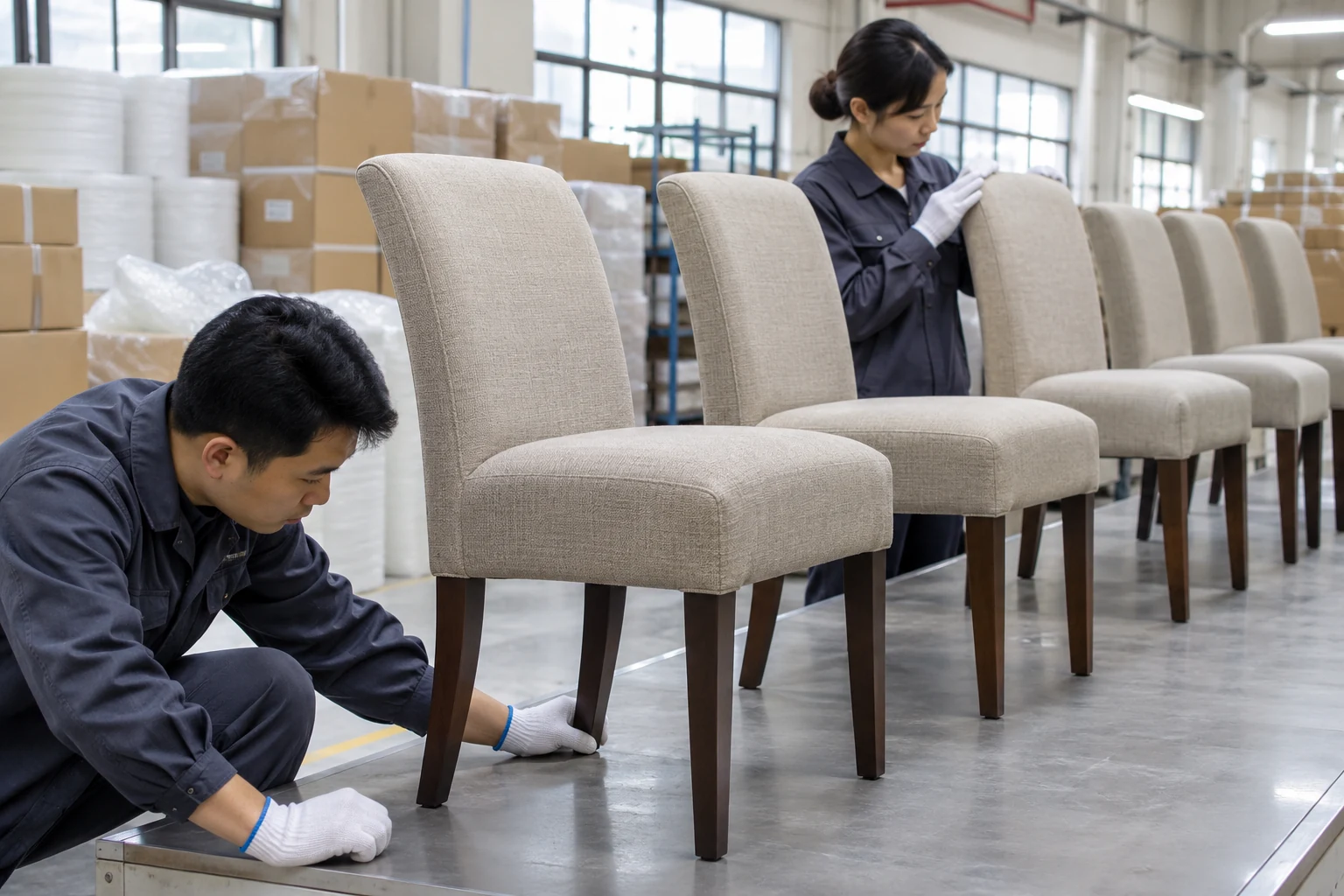
A correct chair can arrive as a customer complaint if the carton allows legs to rub, hardware to move, corners to crush, or moisture to reach a sensitive surface. Packaging also affects whether the buyer receives the right quantity of fittings and clear assembly information. Approve the packed configuration, not only the unpacked furniture.
Confirm carton dimensions, unit count, protective contact points, hardware containment, labels, instructions, and any order-specific marks. Evaluate the hazards of the planned distribution route and use an agreed test method where testing is required. A single improvised drop does not establish transport performance. Record the method, condition of the package, result, and action taken.
Shipment release needs evidence and authority
A report is useful only if it supports a decision. Before inspection, define what constitutes a critical, major, or minor nonconformity for the order, how many units will be checked, and who can accept a deviation. Make sure the report identifies the purchase order, model, quantity presented, sample size, findings, photographs, and disposition.
When defects appear, separate containment from correction. Containment identifies affected goods and prevents accidental shipment. Correction repairs or replaces the immediate defect. Corrective action addresses the cause so the same problem does not continue through the batch or next order. A buyer may reasonably release conforming goods while holding a defined quantity, but that decision should be traceable.
For sourcing conversations, hometree presents furniture categories alongside development and inspection capabilities. Buyers should submit the exact product, market, quantity, specification, packaging, and evidence requirements through the contact channel so the quotation and quality plan refer to the same scope.
Conclusion
The gap between a good sample and a good shipment is controlled by documentation, repeatable processes, staged verification, and disciplined release. Preserve the approved sample, but translate its important features into requirements that production and inspection teams can apply. Then verify the first production units, watch the steps where variation is introduced, and treat packaging as part of the product. That turns sample approval from a hopeful milestone into a workable production control.
FAQ
Is an approved sample enough to start furniture mass production
It can authorize production only when it is tied to current drawings, materials, finishes, components, packaging, and approved deviations. The physical sample alone cannot communicate every hidden or measurable requirement.
What is the difference between a development sample and a first article
A development sample proves and refines the design. A first article is made through the intended production route with production materials and tools, so it helps verify that the manufacturing setup can reproduce the approved result.
Should every furniture unit be inspected
Not always. The inspection plan should reflect risk, order size, process capability, contractual requirements, and the cost of a missed defect. Some safety-critical or order-critical characteristics may require complete checking even when appearance is sampled.
When should packaging be approved
Approve packaging before the order is fully packed and preferably while changes are still practical. The review should cover the packed arrangement, protection, hardware, labels, instructions, carton details, and any agreed transport test.
Who should approve a production deviation
The purchase agreement or quality plan should name the authorized person. Production staff and inspectors should record the difference and contain affected goods rather than assuming that a small change is acceptable.