
The doorway thinks my coffee table is excellent. From there, it sits neatly on the rug and leaves just enough white floor around itself. The sofa is less impressed. Sit down and the mug asks for a bow; lean forward and a knee reaches the edge first. I have learned to let the doorway admire the furniture and let the seated person choose it.
The useful sofa height appears after somebody sits down
The empty sofa gives a rather flattering account of its own height. Sit on a soft cushion and the reference point drops. Sit back in a deep seat and the hands begin their journey farther from the front. Nothing in the coffee-table listing knows that.
I would sit as I do on an unobserved evening, not upright for a showroom test. Let the cushion settle. Put the feet where they normally go and pick up a full mug. A raised shoulder, a deep bend or a cautious little lunge is the body supplying the missing measurement.
The occupied seat height is worth recording. I would keep the intended task beside it. A top around that height, or somewhat lower, can be agreeable for drinks. A board game asks the hands to stay forward for longer; a laptop or supper changes the posture again. “Correct height” is doing suspiciously much work if the activity has not been named.
This is why an old table can become wrong beside a new sofa without moving a millimetre vertically. The sitter has moved down, back, or both. The table is simply receiving the complaint.
Too low and too far away can feel like the same problem
Imagine two low tables. One sits close to the sofa; the other is pushed out to make the room look airy. Reaching the second requires more forward movement, so it may receive the complaint “too low” even though its twin does not. Height and distance have combined.
Pulling the table closer may fix the reach and ruin the route into the seat. That is the little argument at the centre of the layout. The gap must let somebody stand up and walk through, yet keep ordinary objects within an unremarkable reach. When the reach becomes an event, the table is no longer quietly doing its job.
Masking tape is helpful here too. Mark two possible positions and live with each for part of a day. People will reveal their verdict without giving one. They may drag the table closer, abandon their drinks on the sofa arm or walk around the far end rather than use the narrow gap. I would pay attention to those improvised solutions.
Include whoever in the household has the least easy time getting up. What looks like a handsome sweep of empty floor to me may require an unpleasant reach from somebody else. I am not searching for the distance that wins on the internet. I want the gap that this particular group soon stops noticing.
The hometree coffee and side table collection offers several shapes to compare. I would begin that comparison only after noting the sofa depth, occupied seat height and path through the room.
A small table can make everyone reach for the same patch
A compact top protects floor space. It may also leave one usable patch in the middle, just beyond the easy reach of every seat. A larger table distributes objects along the sofa, although it can bring the near edge uncomfortably close to knees.
Length makes more sense against seated people than an empty wall. From one end of the sofa, place a coaster where your hand expects it. Let the person at the other end do the same without seeing your choice. When the two coasters are forced into the same small patch in the middle, the top has given both sitters a shared inconvenience.
Depth can be deceptive. The far half of a deep top adds area, but not necessarily useful area. Nobody wants to lean over a vase whenever they need the remote. At the same time, extra depth pushes the opposite edge toward the room’s walkway.
I would cut a cardboard top to the proposed size. Put the real clutter on it: two mugs, a book, remote controls, perhaps a tray. A spotless showroom table does not have to accommodate any of that. The cardboard does, and it will quickly show whether “plenty of surface” exists only while the surface is empty.
Corners alter the route before they alter the style
A rectangle beside a straight sofa makes immediate visual sense. Its corner also occupies the exact place where somebody rounds the table. In a stingy route, an oval or circle removes that particular ambush.
Round is not a magic word for small rooms. Let the diameter grow and the useful centre travels away from every seat. The armchair at the end is the awkward test: can its sitter set down a cup without borrowing the sofa user’s space? I sketch a loose arc from each regular seat towards the top. Only after those arcs arrive somewhere useful do I care what the shape is called.
Two small tables are another possible arrangement. Apart, they can serve different seats; together, they can host a game. There will be twice as many pieces to steady and twice as many edges to walk around. Some rooms gladly accept that housekeeping in return for movement, while others need one object that stays where it was left.
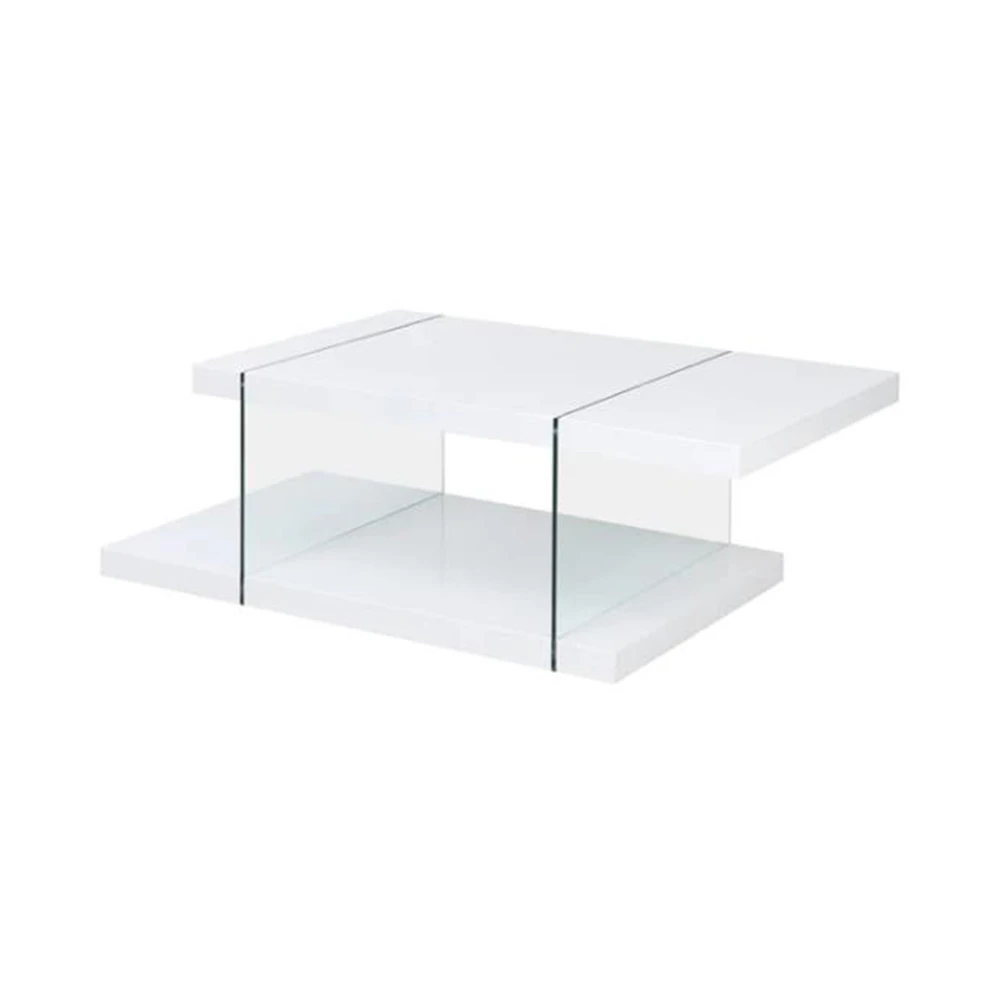
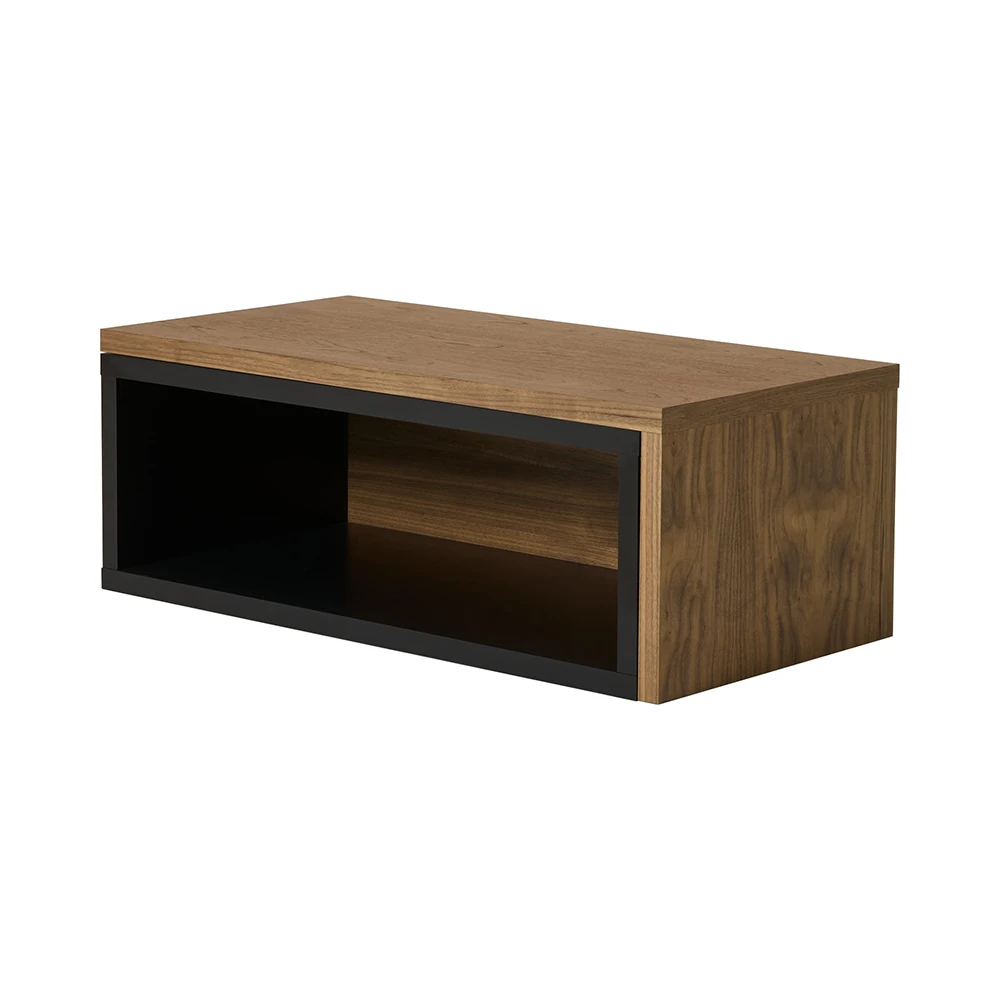
Compare HTT0159 with HTT0157. The outlines and the space beneath them are plainly different, which is enough to begin the room test. A photograph cannot settle the current size, material or finish for an order; I would ask for those details separately.
Look underneath from the height of the sofa
The camera usually stands high enough to flatter the base. Supports retreat beneath the top and the whole piece appears lighter. From the sofa, a block base may fill the view and the territory where feet wander. Splayed legs do the reverse: they clear the middle and send their ends out to meet passing toes.
An empty shelf promises order. A few weeks later, it may be carrying books, a basket and a mysterious cable. Nothing has gone wrong; the storage is being used. Yet the table now looks more solid from the sofa, and the wandering knee has less space. I would picture the shelf full before praising the gap beneath it.
At sofa height, I try the ordinary intruders: shoes and vacuum cleaner. The robot vacuum is an unexpectedly useful model. If it enters beneath the table, will it come out again, or sit in a low wooden cave calling for rescue?
Pads belong to the particular floor and should not peel away when the table is shifted. Their job is protection at the contact point. Stability is a separate question. With an undamaged sample, I would apply modest pressure at the places where people tend to brace a hand and notice the response.
Decide what this table is mostly for
“Coffee table” tells me the address of the furniture, not its occupation. At one address it holds two drinks and the remote. Next door, a board game takes over every Friday. Elsewhere it serves as an improvised desk, dining surface and footrest, sometimes before the same film has ended.
I would keep a slightly embarrassing list of what actually lands on it for a week. The first two recurring jobs deserve to lead. It seems perverse to let one annual party overrule fifty ordinary Tuesday evenings.
An occasional laptop could be given a movable side table instead of making the central piece taller for everybody. Regular games reward a top that several seats can reach. Even the most disciplined display table will eventually receive a cup, spectacles or a half-read book. I would reserve a patch for ordinary life.
One fixed table is allowed to be a compromise. I would only ask that it be a good compromise for the frequent jobs, rather than a theoretical answer to every possible one.
Let the annoyance identify the measurement
The annoyance usually points somewhere. A long lean makes me question distance before height. If the reach is easy until the hand has to drop, I look at the vertical difference. A brushed knee turns my attention to depth. For the corner everybody avoids, I trace the wandering footsteps rather than measuring an imaginary straight route.
Who complains matters too. Perhaps the table is perfectly centred on the sofa while the people favour its ends. The lonely end seat then exposes the error. When every cup ends up on an arm or windowsill, I take the unanimous migration seriously.
An evening is long enough for a small experiment. I might move the table a hand’s width, turn the oval or banish the enormous tray. The neglected chair can borrow a side table. If nobody bothers to undo the change, it has made a quiet case for itself.
hometree presents living and dining pieces for this sort of room planning. Once a model is shortlisted, its current specification should be obtained directly rather than carried into a project as an assumption.
Conclusion
I would make the final trial from the sofa, after the cushion has yielded and with a real mug in hand. A taped position and cardboard top are sufficient scenery. Walk past them, reach over them, and allow the room to object. For a project tied to a particular size or surface, contact the team with the sofa measurement, plan, intended use and model reference.
FAQ
Should the coffee table be lower than the sofa seat
Often it is, but the cushion should have a person on it before the comparison begins. Soft upholstery sinks and makes its unloaded measurement rather hopeful. Next I would try the normal task. Reaching once for tea and leaning over a laptop for an hour are entitled to produce different answers.
How far should it be from the sofa
There must be room to stand up and enter the seat; that is my first boundary. Within it, I set down the mug and try two taped positions. Then I stop directing the experiment. The place to which people keep nudging the table is usually the useful one.
Why does the table seem farther away after I changed sofas
The table may be blameless. On a deeper sofa, the reach begins farther back. On a softer one, it begins lower. Compare the body’s usual resting place rather than the two sofas’ outer dimensions; that is where the missing distance often hides.
Is a round table always better in a small room
No. The missing corners are helpful along a tight route, while a large diameter pushes the middle away. I would tape the curve on the floor and try the armchair that sits off to one side. General rules have a habit of forgetting that chair.
How can I test the size before buying
A cardboard top is accurate enough. Mine would carry the usual mugs, books and remote controls before anybody judged its size. Visit every seat and walk past the corners. If the cardboard keeps curling, weigh it down; the test does not need to look dignified.