
A small detail that changes the whole table
Dining table edge profiles influence how a tabletop looks from across the room and how it feels at close range. The same outline can appear substantial, fine or softly rounded depending on the perimeter detail. For furniture retailers and designers, reviewing that detail creates a clearer design brief than describing a table simply as modern or elegant.
Key takeaways
- Specify plan shape, corner treatment and edge section separately.
- Develop the profile in the material that will be used in production.
- Review both a detailed section and the complete table silhouette.
Separate shape from edge profile
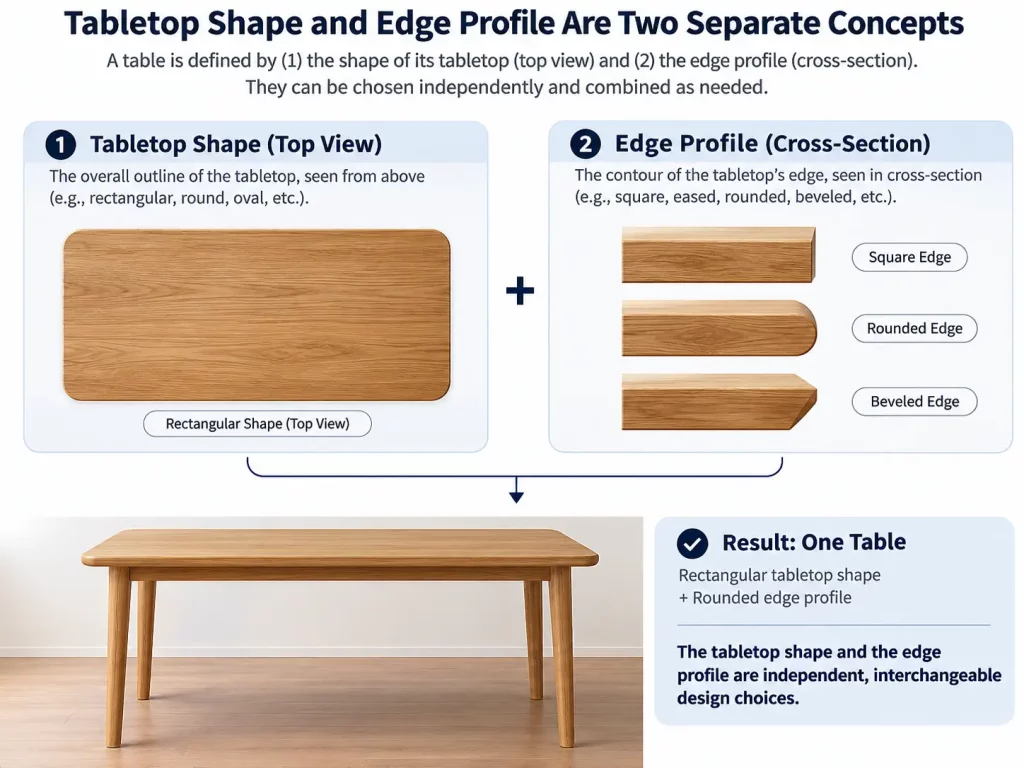
Table shape describes the plan view, such as round, rectangular or oval. The edge profile describes the cross section at the perimeter. A rectangular top can therefore have rounded corners and a curved edge, while a round top can have a crisp-looking perimeter. Record these features separately so the supplier does not have to interpret an ambiguous reference image.
This distinction matters when a buyer sends a photograph labelled “soft edge.” The request might refer to curved tabletop corners, a rounded cross section, or both. Ask for a top view and a section view before development begins. Those two views turn a style preference into details that a designer and factory can discuss consistently.
Compare relevant styles within the Hometree furniture range.
Understand a straight looking edge
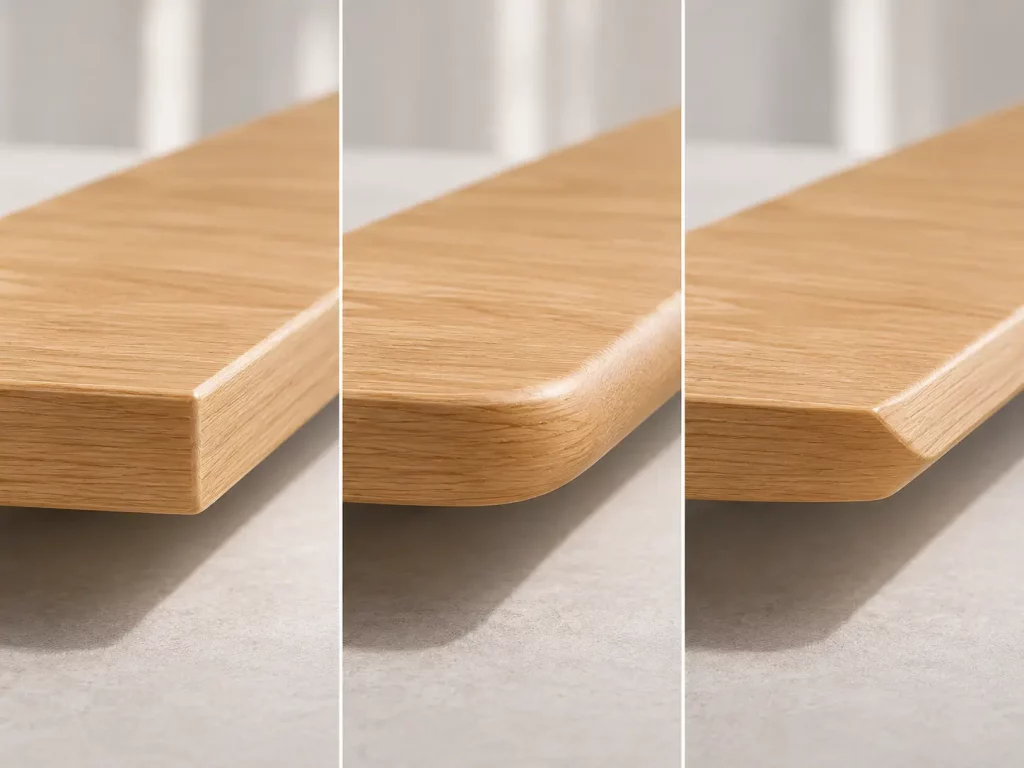
A straight perimeter can give a tabletop a clear, architectural appearance. Its visual effect depends on the apparent thickness, material and finish. A straight-looking edge should still be reviewed for the specified edge treatment and workmanship. Avoid assuming that a crisp visual line means a physically sharp corner. Drawings and a physical sample should establish the actual detail.
A straight edge can suit a collection built around simple geometric forms, particularly when the tabletop and base share clear lines. Check how the edge catches light and how the finish meets the underside. A slight inconsistency may be more visible on a plain perimeter than on a highly textured surface, so examine a representative length rather than only one small corner.
Consider rounded and softened profiles
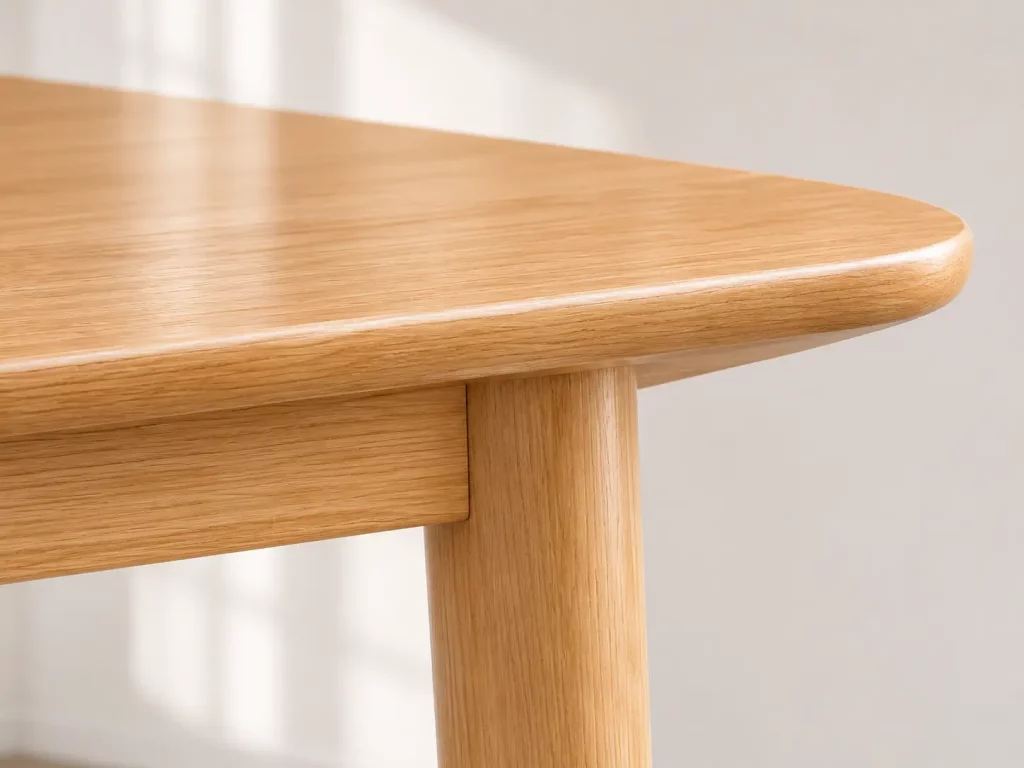
A curved edge can create a softer transition between top and side surfaces. The amount of rounding changes the effect, so a request for a rounded edge needs more definition than the name alone. Rounded corners in plan view are a separate decision. Neither feature by itself establishes product safety or suitability for a particular user group; those questions require the full product specification and applicable requirements.
The visual character also depends on how the curve meets the flat top. A gentle transition creates a different appearance from a prominent full curve. Compare the detail with the surrounding chairs and room setting: a soft upholstered chair and a strongly rounded tabletop may create a different collection language from a slim metal chair beside a more restrained edge.
Use a bevel to adjust visual thickness
A bevel introduces an angled face around the perimeter. Depending on its position and size, it can make the top appear slimmer from some viewing angles. Review the table from seated height as well as standing height because the underside becomes more visible at the dining position. A profile that looks discreet in a catalog may be more prominent in everyday use.
For example, a designer may want a substantial material presence from above while keeping the side view light. A bevel can be considered as one design option, but the remaining material, support and fabrication method still need review. Approve the actual section rather than asking production to make the top “look thinner” from a photograph.
Develop the detail with the actual material
Solid wood, veneered panels, laminated boards, glass and stone-based surfaces use different fabrication methods. Do not transfer a profile from one material to another without checking feasibility. Ask the supplier to explain the edge construction, finish continuity and any joints or seams. On a veneered or laminated top, clarify how the perimeter is finished instead of assuming the surface continues through the full thickness.
A rounded finish on a solid wood sample does not establish how a veneered panel or stone-based surface will be constructed. Ask which faces remain visible, how the edge material joins the top and how finish repairs would be handled. When comparing options, record both the visual reference and the proposed construction so that quotations refer to the same detail.
For a detailed product brief, review the design and development process.
Review the edge with the table base and chairs
A substantial top on a delicate base creates a different balance from a slim top on a broad pedestal. Evaluate the whole silhouette rather than approving the edge in isolation. Place representative chairs beside the sample and inspect the visible apron, underside and perimeter from the seated position. Keep the functional clearance review separate from the aesthetic decision so neither is overlooked.
Make the design brief unambiguous
Provide a section drawing, material specification, overall thickness and the intended edge finish. Mark the radius or bevel dimensions where those features are required. Label reference photographs as visual references rather than treating them as dimensional specifications. If a developed profile changes the visible material area, ask for a new sample or representative section before confirming the final direction.
Include a clear revision identifier when the profile changes. If the top thickness, edge section or corner treatment is altered, ask whether that affects support positions, packaging protection or the overall appearance. The purpose is to keep the design decision connected to the complete product rather than letting a small revision disappear into an informal message.
Evaluate a representative sample
View the sample in consistent light, then examine the transition between the top, edge and underside. Check finish continuity, workmanship and agreement with the approved drawing. Ask how the surface should be cleaned and whether the care guidance differs at joints or edges. A small section can help evaluate a detail, but a full table is needed to judge the overall proportion.
Inspect straight runs and curved corners together because the finish may behave differently at those transitions. View the sample from the normal dining position and from above, then compare it with the drawing. Record observations as specific locations and visible conditions, such as an uneven finish transition at one corner, rather than broad comments such as “the edge feels wrong.”
When preparing sample review criteria, consult the product inspection information.
Frequently Asked Questions
What is the difference between table shape and edge profile?
Shape describes the tabletop outline seen from above. Edge profile describes the cross section around the perimeter. A rectangular table can have rounded corners and a curved edge; a round table can have a straight-looking edge. Specify these decisions separately in the development brief.
Does a bevel reduce the structural thickness of a table?
A bevel removes or shapes material at the perimeter and can change perceived thickness. Its structural implications depend on the material, dimensions, support and construction. Ask the supplier to review the actual section rather than assuming that a visual effect establishes strength or suitability.
Are rounded dining table edges automatically safer?
A rounded profile describes one design feature. Product suitability depends on the complete construction, stability, edge treatment and applicable requirements. Avoid treating a rounded appearance as a safety certification or as proof that the table is suitable for every setting or user group.
What should I send a supplier for a custom table edge?
Provide the material, tabletop thickness, section drawing, corner treatment and finish reference. Mark required dimensions and identify the drawing revision. Review a representative section before evaluating the complete table so the detailed finish and overall proportion can both be confirmed.
Choose the profile as part of the complete design
Dining table edge profiles work best when their appearance, material and production detail are considered together. Begin with the desired silhouette, define the section clearly and evaluate a representative sample. Hometree’s design and development process provides a useful starting point for discussing a table concept and its detailed requirements.
To discuss your collection requirements, contact the Hometree team.