
Buying chairs for dining room use sounds simple until you start checking the details. The chair has to match the table, fit the space, feel comfortable in daily use, and still make sense when you review materials, carton data, MOQ, and production control. A nice photo may catch your eye first, but that alone will not tell you whether the item is a strong choice for a real project.
Hometree works as a furniture export full supply chain service provider for living room and dining room products. The company has operated a furniture factory since 2010 and supports design, prototyping, mass production, and quality inspection. This matters when you are selecting chairs for dining room orders, because a chair should be checked from the first sketch to the final shipment, not only at the catalog stage. The company also works with dedicated teams for design, sample development, production, quality control, and sales service, which helps buyers reduce avoidable gaps during selection and execution.
A chair can have the right color and still be the wrong choice. Before you discuss finish, mood, or trend direction, check whether the size truly fits the dining setup. This is the same basic mistake many buyers make when comparing living room sets: they judge one attractive piece alone, then find out later that it does not work well with the rest of the room.
Seat width, depth, back height, and visual volume all affect the final result. If the chair is too large, the dining area may feel tight. If the back looks too tall or too heavy, the whole table set can lose balance.
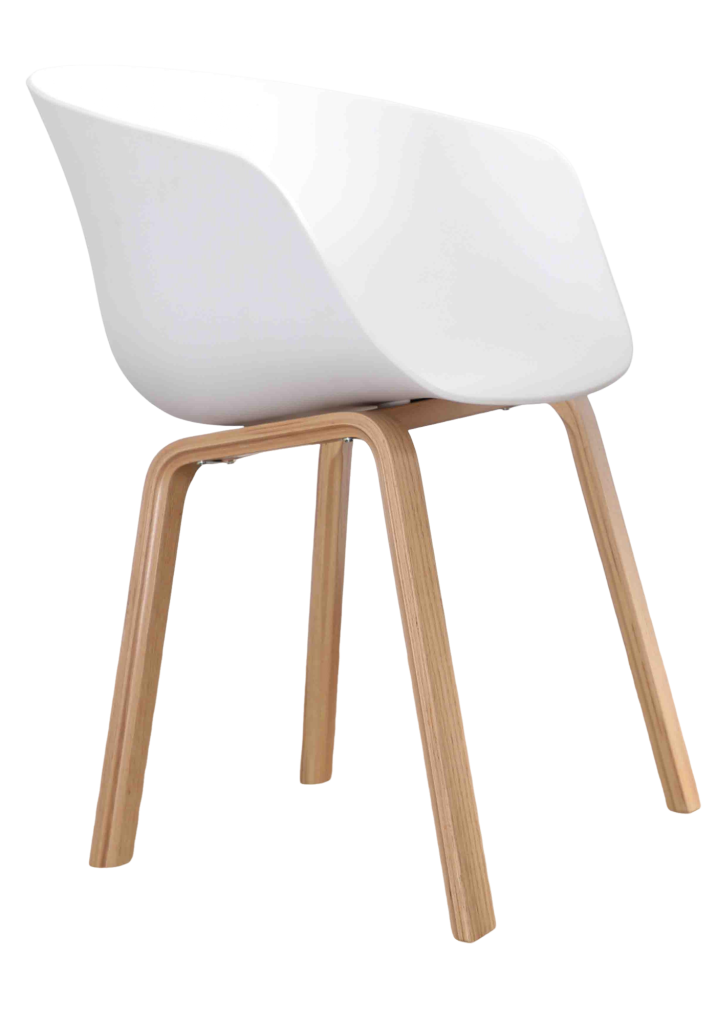
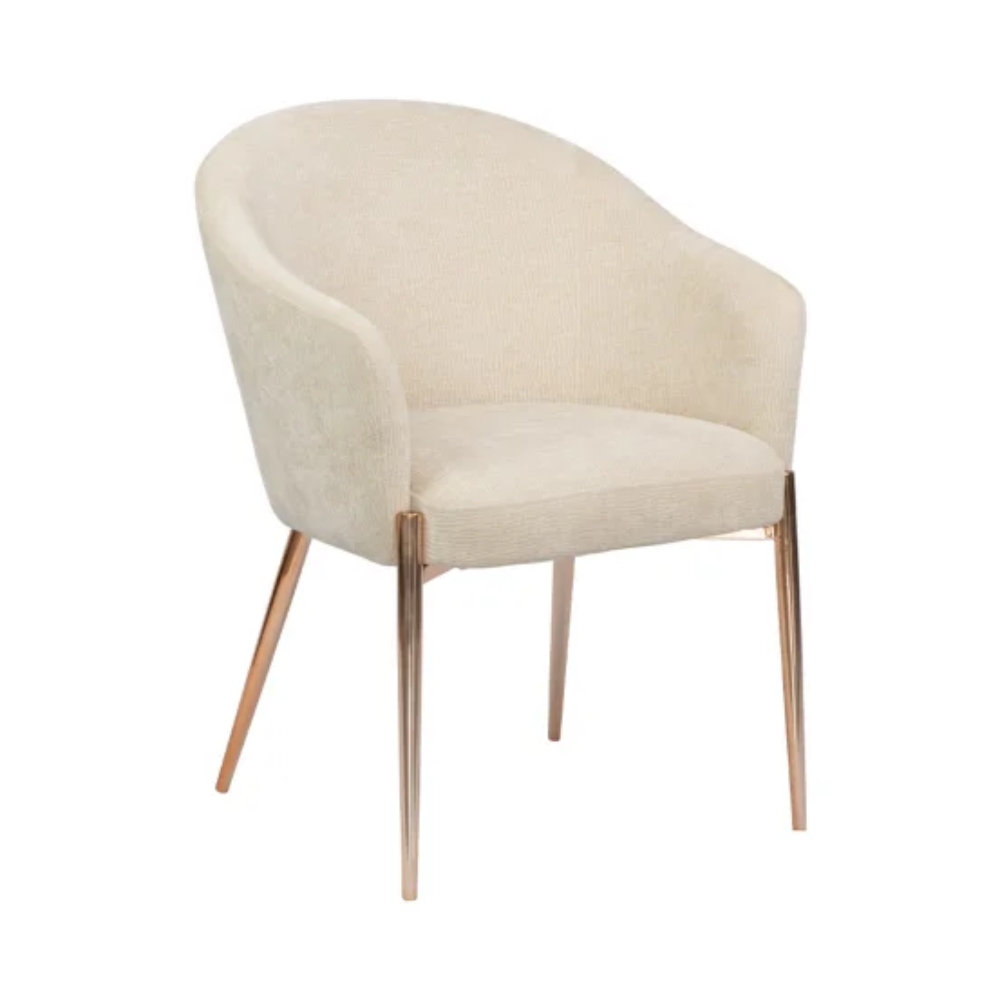
Dining chair HTC0551 measures 65.5 × 64 × 84.5 cm. Its size gives it a clear presence without pushing too far into an oversized look. The curved shape and soft upholstered body make it suitable for dining spaces that want comfort and a more polished tone at the same time. It can work especially well when you need a refined seat around modern or lightly luxurious dining tables.
Dining chairs are used in motion. People pull them out, sit down, get up, and walk around them several times a day. A chair that fits only in a still image may feel less practical once the room is in use.
This is why you should check chair spacing before final approval. A dining area does not need to feel empty, but it should not feel blocked. When chairs for dining room layouts are selected with movement in mind, the final room looks calmer and also works better for daily use.
After the size is right, comfort becomes easier to assess. But comfort is not only about a soft seat. It also comes from back shape, arm support, surface feel, and whether the material suits the kind of use the buyer expects.
Some dining rooms are used for short meals. Others are used for long dinners, family gatherings, or open-plan living. The chair should follow that use pattern.
Dining chair HTC0551 has a cocoon-like back shape and textured upholstery that give it a softer sitting impression. This kind of chair is more suitable when you want the dining area to feel relaxed but still neat. It can also help the space connect more smoothly with nearby living room furniture in homes where the two zones are visually linked.
Material choice changes the chair’s value in a very direct way. Fabric brings warmth and a softer home feel. Metal legs help create a lighter, cleaner frame. Together, they can give a dining chair a balanced look that does not feel too cold or too casual.
The chair introduced here uses fabric plus metal. That combination fits many current dining spaces because it brings comfort and structure together. It is also easier to position across different room styles than a chair that leans too strongly into only one design direction. More broadly, the supplier’s material control approach covers metal, fabrics, foam, wood, glass, PU, and other materials, with attention to both function and appearance.
A good dining chair should not fight with the table. It should help the whole room read as one complete setting. This is where many product comparisons become messy. Buyers like the chair finish, the table finish, and the room mood separately, but the pieces do not always belong together once placed in the same scene.
Dining chair HTC0551 uses cream upholstery with rose gold legs. That pairing gives the chair a lighter and more elegant look. It works better with dining tables that also carry a cleaner, more refined appearance rather than very rough industrial styles.
If your target customer wants a soft modern dining room, this model can be easier to place than a bulkier or darker seat. The visual language stays simple: curved upholstery, warm metal tone, and a neat dining profile. That makes it useful for projects where you want the chair to add style without taking over the full room.
One glossy metal base or one special upholstery color is not enough to judge the whole chair. You still need to ask whether the shape, size, material, and room style all move in the same direction.
This is especially relevant for chairs for dining room sourcing, because these products are often chosen in groups, not one by one. A single mismatched detail becomes much more obvious when four, six, or eight chairs are arranged around a table. That is why visual balance should be reviewed as part of a complete dining setup, not only in a cropped product image.
Once you like the style and the fit works, it is time to check the business side. A chair that looks right but creates trouble in packaging, order planning, or repeat production may not be the best buying choice after all.
Dining chair HTC0551 is listed with a package specification of 2 pcs per carton, an MOQ of 200 pcs, and a volume of 0.321 m³. These numbers matter. They affect sample planning, quotation work, warehouse logic, and container calculation.
For chairs for dining room wholesale orders, this step should never be left until the end. If the chair suits the design plan but does not suit the shipment plan, you may need to restart the selection later. Checking these details early keeps the project moving in a cleaner way. For more common questions about sourcing, order planning, and cooperation details, you can also review the FAQ section.
A product page tells you what the chair is. A production system tells you whether the chair can stay consistent in real orders. That is a much bigger issue for importers, wholesalers, and retailers than many first-time buyers expect.
The supplier’s design and prototyping work follows a route from design drawings to 3D models and then to physical production. The product review also covers appearance, structure, color, packaging, and other practical factors before mass production. On the inspection side, the product inspection process includes surface checks, structural checks, packaging review, and drop testing. These steps reduce the chance that a good sample turns into an unstable bulk order.
The best dining room chairs are not chosen by style alone. You need to read the chair in layers: first the fit, then the comfort, then the material, then the room match, and finally the order details behind it. When those points line up, the buying decision becomes much easier to defend.
Dining chair HTC0551 is a solid recommendation when you want a refined seat with soft upholstery, a curved profile, rose gold legs, and a clear place in modern dining interiors. Good chairs for dining room projects should help the space look right, feel right, and move smoothly into sampling and bulk order work. If you still have questions before moving forward, the FAQ page can help clarify the basics first.Buyers who need a fuller view of production can also review the factory process and use the contact page when service and contact support are needed before the next step.
Q1: What should you check first when buying dining room chairs?
A1: Check whether the chair size fits the table and the room before you focus on color or decoration.
Q2: Why does chair comfort matter in dining spaces?
A2: Dining chairs are often used for meals, conversation, and longer sitting time, so the back shape and seat feel should match the real use.
Q3: What makes Dining chair HTC0551 suitable for refined dining spaces?
A3: Its cream upholstery, curved silhouette, and rose gold legs create a softer and more polished dining look.
Q4: Why should wholesale buyers review MOQ and packing data early?
A4: MOQ, carton arrangement, and volume affect quotation work, logistics, and whether the model fits the project plan.
Q5: What should buyers compare when selecting chairs for dining room projects?
A5: They should compare size, comfort, material, room matching, order practicality, and production control together.