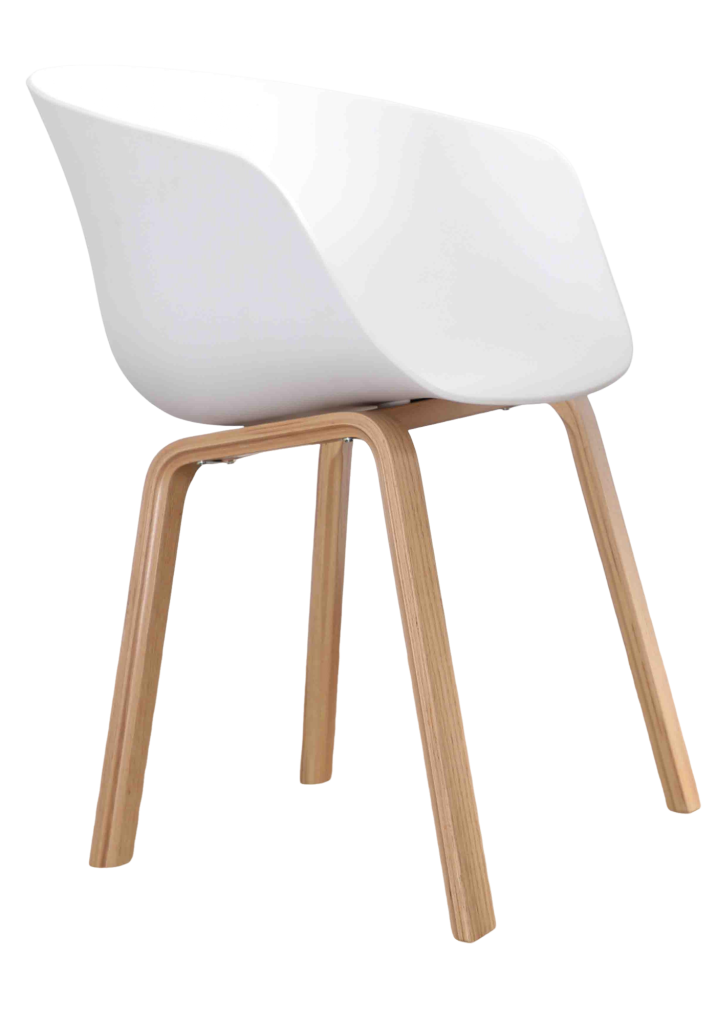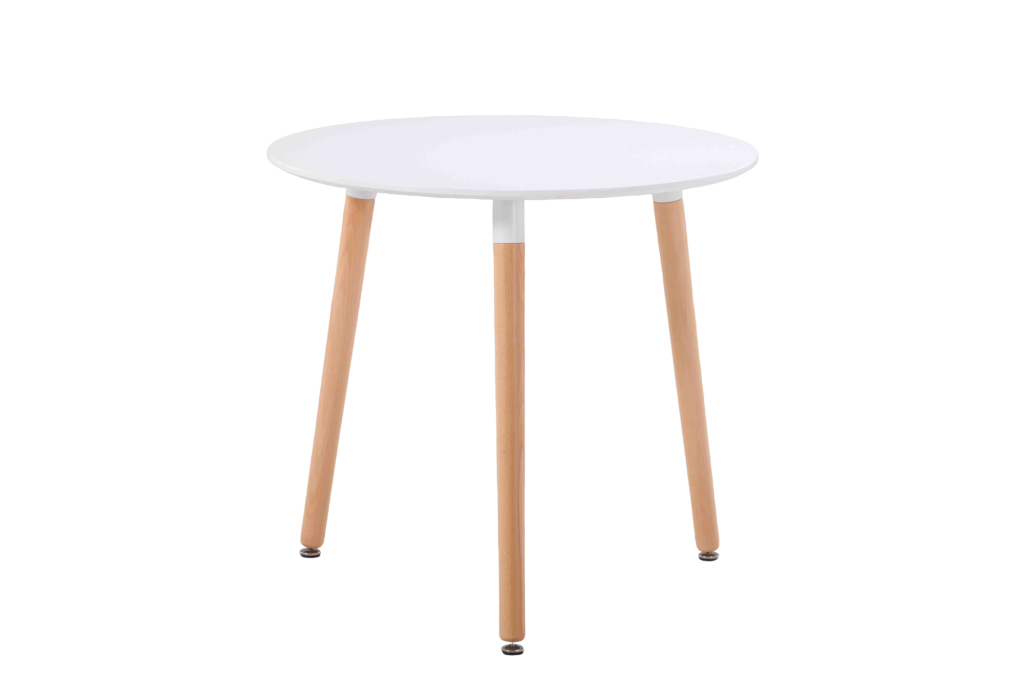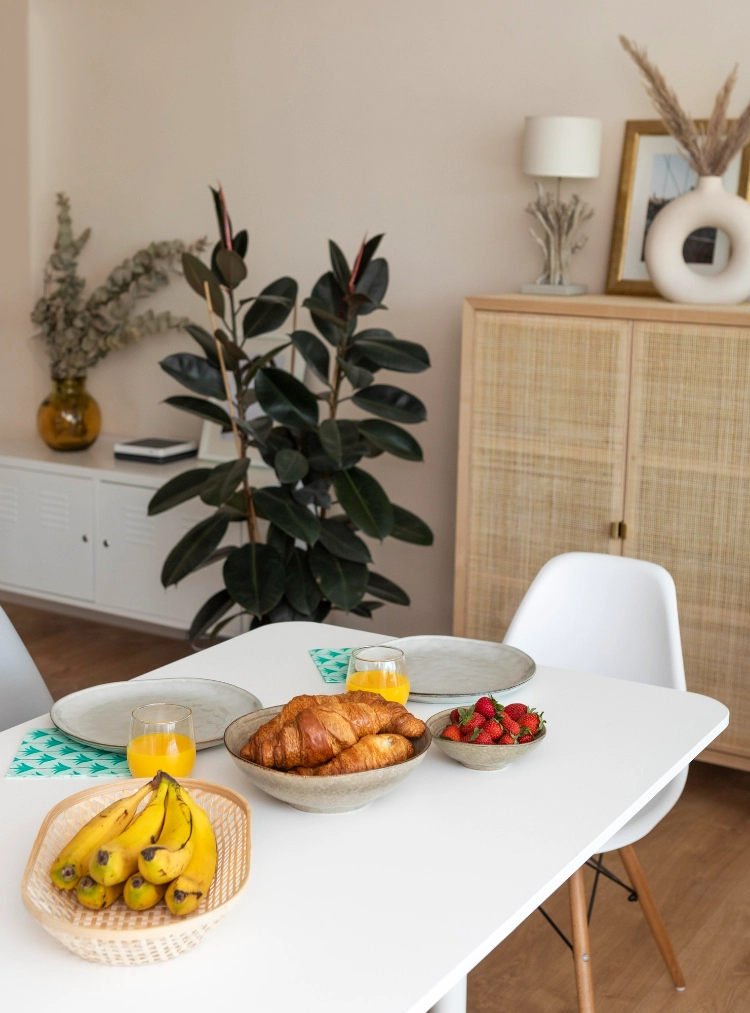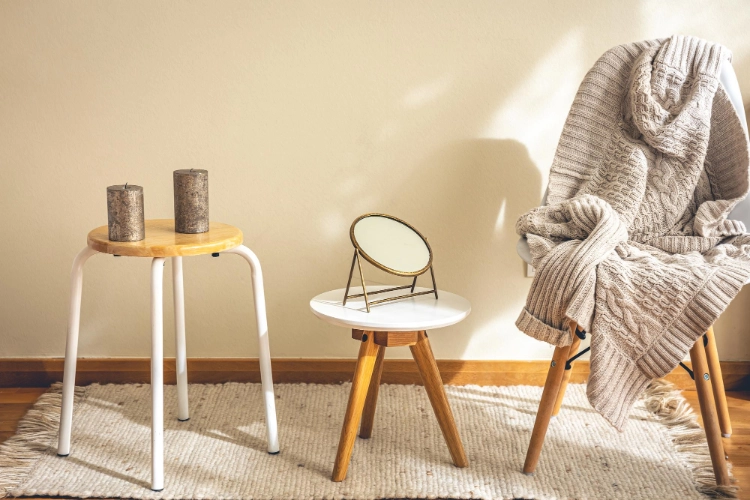

When you search for restaurant table suppliers, you are not only looking for a table source. You are really looking for a factory that can turn a design into a sellable product, keep the bulk order stable, pack it well, and still answer you after delivery. That is where many buyers lose money. A table looks fine in a photo, but the real test starts when you order hundreds of pieces, match them with chairs, place them in a dining space, and ship them across borders.
For buyers who need living room and dining room furniture from China, Hometree is a practical name to know. The company has operated a furniture factory since 2010 and focuses on living room and dining room furniture. It works as a full-supply chain furniture export service provider, covering furniture design, prototyping, bulk production, quality inspection, and export support. What I like about this type of supplier is simple: you do not have to explain the same project to five different teams. Design, sample, material choice, production, inspection, and later service can stay in one workflow. For importers, wholesalers, restaurant project buyers, and furniture retailers, that saves time and cuts many small risks that often become big costs later.
A low price can look attractive at the beginning. Most buyers know this already, but it still happens often. You compare three offers, choose the lowest one, and later find that the table structure is weak, the color is not stable, or the packaging cannot survive long-distance shipping. This is one of the common pitfalls when comparing furniture brands for a living room or dining project.
A reliable custom furniture manufacturer should explain what is behind the price. What material is used? How thick is the metal frame? Can the color stay consistent in bulk production? Is the tabletop easy to clean? Can the packaging protect the edges? These things are not small details when you sell furniture in volume.
Some suppliers are good at making a sample, but bulk production is another story. A sample can be adjusted slowly by hand. A bulk order needs repeatable standards. For restaurant table suppliers, this matters even more because commercial buyers often need matching products in one batch, sometimes for many stores or dining areas.
Hometree’s workflow is useful here because the company has separate but connected teams for design, prototyping, production, quality control, and sales service. The prototyping team brings ideas into real products and checks structure and safety. The production team handles metal parts, sewing, soft packaging, and final packing. The quality control team checks whether products meet factory standards before shipment.
Good furniture is not only “nice looking.” It must fit a real room. If you are sourcing for restaurants, hotels, cafés, apartments, or living room collections, the product should match the space, the user habit, and the expected price level.
This is also why you should not only ask for a catalog. Ask how the supplier helps you adjust a product for your market. A factory with design and development ability can help you avoid products that look trendy but are hard to sell, hard to pack, or too weak for daily use.
A serious buyer should never stop at product photos. Photos show style, not production discipline. If you want steady furniture supply, you need to see how the manufacturer treats materials, surface finish, structure, and packaging.
For example, wood and MDF can create warm and natural looks, but moisture control and surface bonding matter. Metal frames can look slim and modern, but pipe thickness and welding quality affect durability. Tempered glass can give a clean look, but edge treatment and thickness should match the use scene. Foam and fabric are also important when the order includes chairs or loveseats in the same living room set.
A product for a restaurant project may need stronger wear resistance. A product for home retail may need better visual warmth. A compact living room set may need smaller dimensions, lower packaging volume, and easy assembly. Before you place an order, you should be clear about where the furniture will be sold and how it will be used.
Hometree’s material control information is useful for this part. The company works with wood, MDF, metal, stainless steel, glass, leather, PU, colorful fabrics, velvet, flexible foam, and eco-friendly plastic pellets. That gives you room to build different product levels instead of forcing one material choice for every market.
Good inspection is not just opening a few cartons before shipment. It starts earlier. Raw materials should be checked before production. Cutting, drilling, welding, surface treatment, assembly, and packaging should all follow agreed standards.
Hometree’s quality standards include size tolerance, warpage control, color consistency, hardness tolerance, surface treatment, fitting, cleanness, weight, hole position, and packaging protection. These details sound boring, but buyers who have handled claims know how much they matter. One wrong hole position or one weak carton can affect the whole shipment.
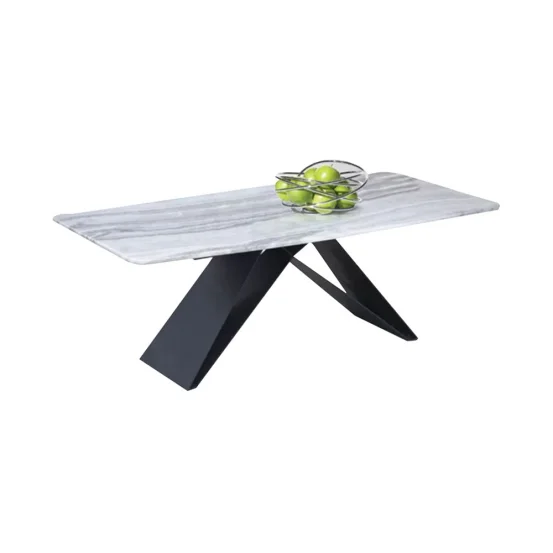
When buyers build a furniture line, they often need one product that can act as the visual center. For a living room, that piece is often the coffee table. For a café or waiting area, it may be a side table or lounge table. The HTT0120 is a good product to mention here because it belongs to the Coffee & Side table category and fits the modern style many buyers ask for now.
The design feels clean and easy to match. It has a stone-look tabletop and a black structural base, so it can work with neutral sofas, fabric loveseats, lounge chairs, or simple dining-side spaces. It is not too decorative, which is a good thing for buyers. A product that is too strong in style may only fit one market. A cleaner product can fit more interior directions.
Many common mistakes when buying living room furniture set start with looking at each item alone. A loveseat may look good. A coffee table may look good. A TV stand may look good. But when they are placed together, the height, color, material, and style may not work.
HTT0120 helps solve part of that issue because its visual language is easy to pair. The stone-look surface gives the room a cleaner and more premium feeling, while the black base adds structure. For buyers comparing loveseats across different furniture stores, this matters. A sofa or loveseat should not be judged alone. You need to think about the whole set: coffee table, side table, TV stand, storage cabinet, and even the walking space around them.
Even if you do not order HTT0120 exactly as shown, it can be used as a direction for custom discussion. You can ask about size changes, surface material options, color matching, packaging needs, and whether the product can fit your target price level. This is how a custom furniture project should start. You begin with a real product, then adjust it based on your market.
For restaurant table suppliers, this same thinking applies. Do not only ask, “How much is this table?” Ask whether the design can be adjusted for commercial use, whether the base is stable enough, whether the tabletop is easy to clean, and whether the product can be produced again with the same result.
A living room set buying guide should not only talk about style. Style is easy to see. The problems are usually hidden in structure, size, packaging, and service.
One common mistake is comparing only product photos. Another is choosing furniture from too many suppliers and hoping everything will match. In real projects, mixed sourcing often brings color gaps, different metal finishes, uneven packaging quality, and difficult after-sales handling. If one sofa supplier, one table supplier, and one cabinet supplier all use different standards, the final set may feel messy.
If a supplier cannot give clear product category, material, MOQ, package method, or customization process, you should slow down. It does not mean the supplier is bad, but it means you do not yet have enough information to place a safe order.
Hometree’s design and development process gives a better direction. A professional custom furniture manufacturer should move from design drawings to 3D models, then to physical samples. During this process, the factory should review appearance, material, structure, components, color, and packaging before mass production.
A good supplier should not disappear after sending a quotation. You need fast replies, clear sample updates, and honest feedback when a design may cause production trouble. Hometree uses an ERP system for raw material and order management, which helps production scheduling and shorter delivery time. Bulk custom furniture usually needs around 30 to 45 days, depending on the product and order details.
This is important when you compare restaurant table suppliers. You may not need the cheapest factory. You need one that can keep your launch plan, restock plan, or project schedule from falling apart.
Before asking for a quotation, prepare your requirements in a clear way. You do not need a perfect technical file at the beginning, but you should know your target market, expected size, material preference, color direction, order quantity, packaging needs, and sales channel.
If you are building a living room collection, share the whole idea, not just one item. Tell the supplier whether you need coffee tables, side tables, TV stands, loveseats, armchairs, or dining tables in the same style. This helps the factory think about matching colors, matching heights, and better packaging plans.
A professional manufacturer will ask questions. Where will the product be sold? What is the target price range? Do you prefer MDF, metal, glass, or another material? Do you need lower carton volume? Do you need special packaging printing? Are there market compliance needs?
These questions are not delays. They are signs that the supplier is thinking about production and sales together. Hometree’s product inspection and production support can help buyers reduce uncertainty before the final shipment.
When you are ready to discuss a new furniture line, you can review Hometree’s FAQ page for common sourcing questions and use the contact page to share your design idea, target product, or bulk order plan; good service should feel like part of the sourcing process, not something added after a problem appears.
Finding the right custom furniture manufacturer in China takes more than checking product photos. You need to see how the factory develops samples, controls materials, keeps bulk production stable, inspects finished goods, and supports buyers after shipment. The same rule applies when you compare restaurant table suppliers. A reliable partner should help you reduce risk, not just give you a lower number on a quotation sheet.
Hometree is a practical option for buyers who need living room and dining room furniture with custom support. HTT0120 is also a useful product reference if you are building a modern coffee table or living room set line. Start with the product, check the factory process, ask the right questions, and your sourcing work will be much safer.
Q1: How Can I Choose Reliable restaurant table suppliers in China?
A1: Look at design ability, sample development, material control, production scale, inspection standards, packaging, and response speed. A supplier like Hometree is easier to evaluate because it offers full-supply chain support from design to delivery.
Q2: What Are Common Mistakes When Buying a Living Room Furniture Set?
A2: Many buyers compare only price and product photos. A better way is to check size matching, material consistency, color tone, packaging strength, and whether items like loveseats, coffee tables, TV stands, and side tables can work together as one set.
Q3: Why Is HTT0120 Worth Recommending for a Modern Living Room Project?
A3: HTT0120 has a clean stone-look tabletop and a black structural base, so it is easy to match with modern sofas, loveseats, side tables, and TV stands. It can also work as a reference product for custom furniture development.
Q4: What Red Flags Should I Notice When Comparing Furniture Brands?
A4: Be careful with unclear material descriptions, missing packaging details, vague MOQ, no inspection process, slow replies, and product photos that do not come with useful specifications. These issues often create trouble during bulk orders.
Q5: Where Can I Learn More Before Starting a Custom Furniture Order?
A5: You can read Hometree’s FAQ page to check common sourcing details, then contact the team with your product idea, target market, quantity, and customization needs.