
Office furniture is used in a workplace so it must still feel right after several months. When selecting an office chair from a mail order catalog, viewing fabric samples or trying it out in a showroom, all office chairs typically look good at first. A clean chair tells you very little about back support, heat buildup, parts becoming loose, or whether the seat will work with the height of the desk.
For buyers who need factory support rather than a simple stock purchase, Hometree is worth knowing. Hometree has been producing furniture for more than 15 years. It has separate teams for design, sample development, production, quality control, and sales service. Its design and development process checks appearance, ergonomics, structure, materials, components, color, packaging, and production feasibility before approval.
What you see is a shape, but what you buy is much more than that. You are buying something that people will sit on, move, and adjust throughout the day. It will be used through long working hours, and poor support may eventually cause discomfort or fatigue.
The style of an office chair is important because it helps keep an office looking current. However, ergonomics matters more when someone needs to sit for several hours.
Just because a modern office chair has an outline does not mean that it fits the user when set up. Most problems start from the seat height, a feeble backrest and then the worst of all: leaning forward in order to reach the work surface.
Start with the height of the work surface and the dimensions of the bodies of users. Adjust the seat height so that the user can sit with both feet on the floor with their knees at a comfortable degree of flexion and with their forearms at a comfortable height on the work surface.
A useful height range matters because offices rarely have users of exactly the same height. Special care should be taken in areas of shared workstations, training and meeting rooms, etc. where one chair is shared by several people.
Seat depth matters as well. A shallow seat gives weak thigh support, while a deep seat may press behind the knees. Compare the chair dimensions with the intended users and the workstations already in the office.
Measurements on a product sheet are a good starting point, but placing the sample beside the actual desk gives you a clearer answer.
The backrest needs to support a natural sitting position while still allowing small changes in posture. People move while they work. They lean forward to type, turn toward another screen, and sit back during a phone call.
An adjustable headrest can support the neck during short breaks. Armrests should allow the shoulders to relax rather than push them upward.
When comparing an office furniture collection, look at how the seat, backrest, headrest, and armrests work as one system. One strong feature cannot correct a chair that fits poorly overall.
A thick seat does not always mean good support. A large backrest does not automatically mean the chair will suit every user.
Once the basic fit is right, look at the functions that make the chair easier to use through a full working day. Useful controls should be simple and easy to reach.
A long feature list may look attractive on a quotation, but users normally rely on only a few adjustments. Those basic functions need to work properly.
The pneumatic height adjustment facility on this chair allows it to be used on a variety of different desks and also from user to user. The lever should operate easily and once set the chair should return to the height set by the operator each time the chair is sat on.
During sample testing, raise the chair fully, lower it, and stop it at several points. Testing the control only once may not reveal a weak gas lift.
A reclining backrest gives the user another sitting position. You may sit upright for focused work, lean back during a call, or relax briefly between tasks. The recline mechanism should feel controlled, and each position should lock as intended.
360° swivel base, turn your chair to face a drawer, screen or colleague without having to twist your body or push the chair across the floor. The movement should feel steady. A rough swivel or loose connection becomes annoying quickly.
Each chair component has a different job.
Breathable mesh works well for the backrest because it improves airflow during long periods of sitting. The mesh still needs even tension, firm edge fixing, and a strong supporting frame. If it feels loose in the sample, it may sag further after regular use.
A fabric seat gives a softer contact surface, but the padding below it must keep its shape. Very soft foam can feel comfortable during a short showroom test and then lose support sooner than expected.
PP is commonly used for armrests, headrests, and supporting frames because it offers a useful mix of shape, weight, and wear resistance. The five-star base has a different job. It needs enough strength and stability to support movement, turning, and reclining.
A material selection guide can help you compare structural and surface materials before confirming the final specification. Even so, the sample should still be pressed, moved, and used rather than judged from a material list alone.
Durability comes from the base, moving parts, fittings, finish, and production consistency. Strong upholstery will not save a chair if the gas lift, wheels, or connection points fail early.
Many problems begin in parts that are not obvious in product photos. Buyers usually notice the seat fabric first, while the mechanism below the seat may have a greater effect on service life.
The five-star base should remain stable when the chair turns or reclines. Check the gas lift class, base material, caster movement, and the connection between the seat mechanism and the central column.
Height controls should move smoothly. Recline settings should lock as intended, and the wheels should roll without wobbling.
It is also worth testing the casters on flooring similar to the final office. A wheel that moves well on a smooth showroom floor may behave differently on carpet, vinyl, or wood-look flooring.
Turn the chair several times and listen for clicking or grinding. Move from an upright position into each recline setting. These small checks tell you more than a general promise of high quality.
For a bulk order, you need the same result across every carton. A good sample only proves that one chair can be made correctly.
Check dimensions, color, surface finish, fittings, cleanliness, weight, hole position, and packaging. The supplied factory standards control hole-position deviation within ±0.5 mm and require the packaging to protect the chair during transport.
Chrome surfaces should not show obvious scratches, scuffs, or manufacturing heat marks. Components should fit without excessive force, and removable parts should not feel loose after installation.
Packaging also needs to be included in the sample review. A chair can leave the factory in good condition and still arrive damaged if the internal carton protection is weak.
A clear product inspection process shows what will be checked before shipment. The factory’s frequently asked questions can also help you prepare questions about materials, customization, production consistency, and lead time.
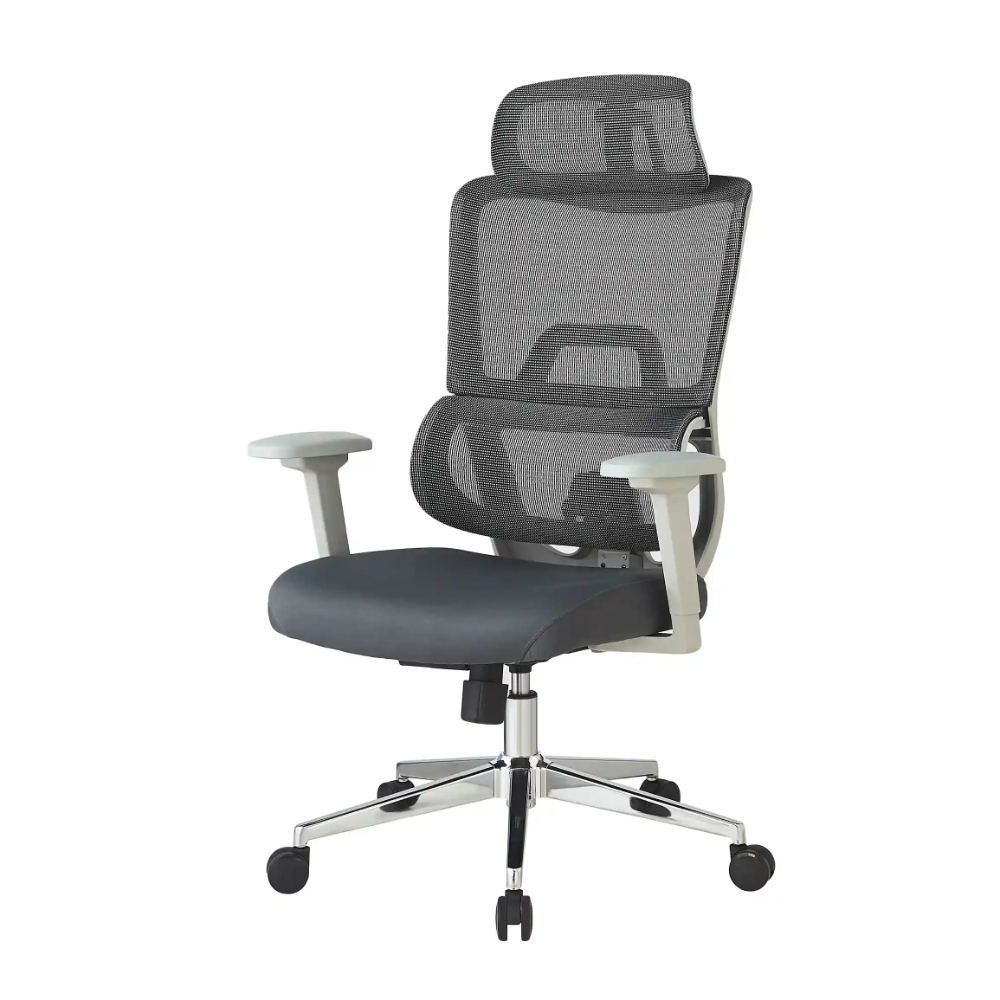
The Ergonomic Office Chair T803R brings the main buying points together without adding controls that are difficult to use.
Its size is 71 × 73 × 113 cm. It uses a mesh and PP headrest and backrest, a fabric seat, PP armrests, a Class 2 gas lift, and a chromed five-star base.
The specification is fairly straightforward, which is useful for buyers. Each main feature has a clear purpose during daily office work.
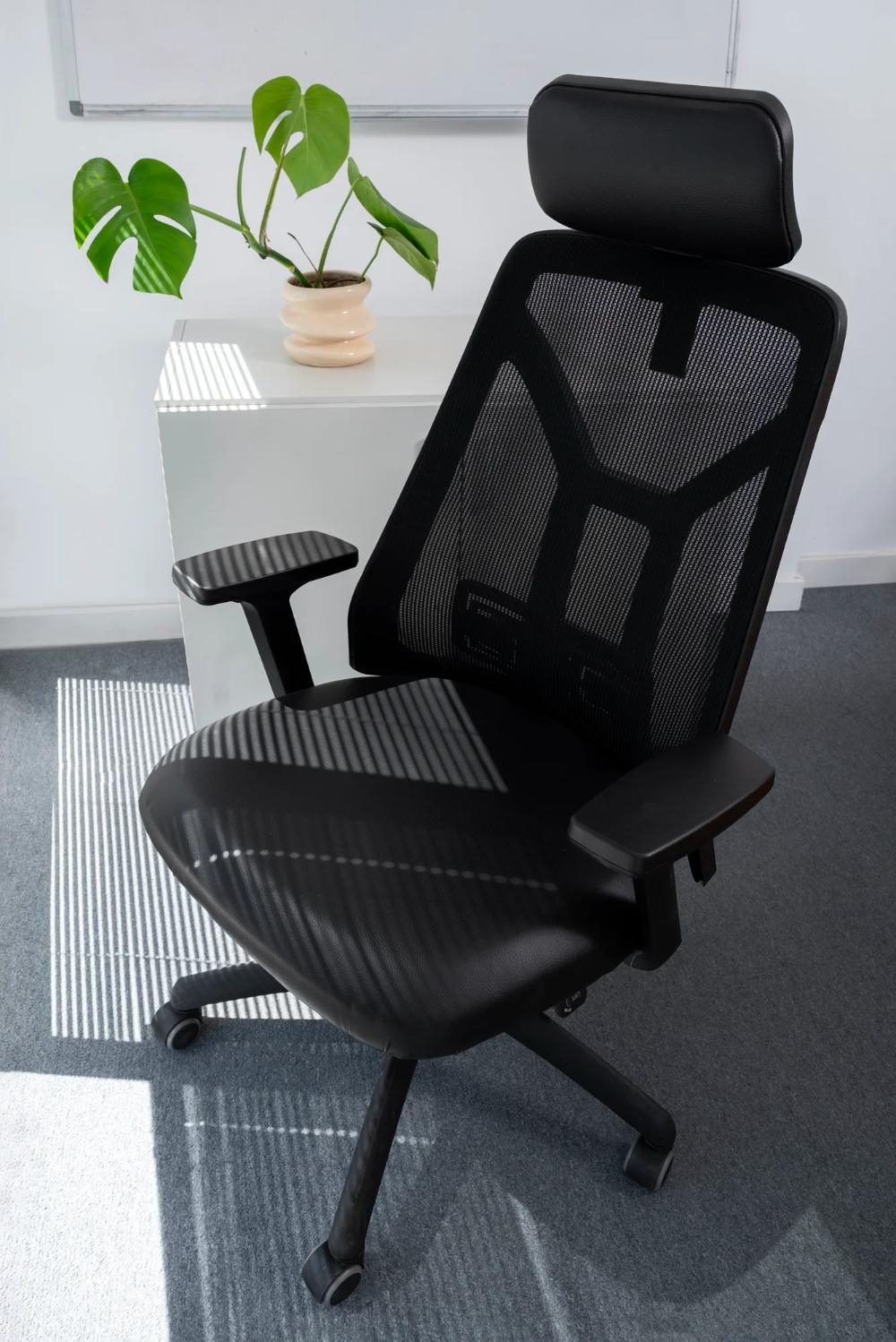
The chair has pneumatic height adjustment, a 360-degree swivel base, and a three-position reclining backrest. You can set the seat for the desk, turn naturally during work, and change the back angle when you need a different posture.
Its adjustable headrest provides neck support when needed, while the mesh backrest improves airflow. This combination suits executive offices, shared workspaces, meeting areas, and home offices where people may sit for long periods.
The three recline positions are also easier for users to handle than a complicated control system. The chair can move between a more upright working position and a more relaxed angle without requiring several separate adjustments.
The fabric seat provides a softer contact surface. PP components keep the chair practical, while the chromed five-star base provides stable support and a clean office appearance.
Its packing size is 77 × 55 × 60 cm. This matters when you plan container space, warehouse handling, or project delivery.
Packing information is easy to overlook when the main discussion is about comfort. For an importer or project buyer, however, carton size affects loading quantity, storage space, delivery cost, and local handling.
This model is easy to explain to buyers because its main features answer clear daily needs rather than adding decorative details with little practical use.
A sample can look good and still leave questions about batch color, assembly, packing, or replacement parts. Before approving production, turn the product description into a written checklist.
Test the chair in the same conditions in which the customer is likely to use it. A quick showroom test is not enough for a bulk purchasing decision.
Sit in the sample at the intended desk. Adjust the height several times, test all three recline positions, turn the chair, and roll it over the expected floor.
Check whether the armrests and headrest remain secure after repeated movement. Listen for friction, clicking, or loose parts around the mechanism and base.
Then review the mesh tension, fabric finish, chrome surface, component fit, stitching, and carton protection. It is easier to correct one sample than hundreds of finished chairs.
Make written notes during the test. The approved sample should become the reference for production rather than something that is discussed from memory later.
Ask who handles design changes, sample approval, production planning, quality control, and after-sales service.
You should also confirm whether these teams follow one coordinated workflow. Clear coordination helps a supplier respond faster when a project requires new materials, packaging changes, or market-specific adjustments.
The factory advantages page and virtual factory tour can help you review these capabilities before placing an order.
Confirm the delivery period, inspection records, spare-part approach, and responsibility when a problem appears. A low price loses value when chairs arrive with unstable parts, damaged finishes, or weak packing.
Choosing an office chair that balances ergonomics and durability starts with the user, the desk height, and the expected working hours.
You should then check the seat support, backrest, adjustment functions, materials, base, gas lift, moving parts, sample quality, and inspection method. Following this order helps you avoid paying for a stylish chair that does not perform well in daily use.
Ergonomic Office Chair T803R is worth reviewing because its breathable mesh backrest, fabric seat, adjustable headrest, pneumatic height control, three-position recline, 360-degree swivel, Class 2 gas lift, and chromed five-star base cover the main needs of long office use.
For customization, sample support, inspection details, service, or order discussion, use the contact page and review the office furniture FAQs before confirming the next step.
Q1: What Should You Check First When Choosing an Ergonomic Office Chair?
A1: Check whether the seat height, seat depth, backrest, armrests, and headrest suit the user and match the desk before comparing style or color.
Q2: Is a Mesh Backrest Good for Long Office Hours?
A2: Yes, a mesh backrest can improve airflow during long sitting periods, but you should also check its tension, frame strength, edge fixing, and back support.
Q3: What Makes Ergonomic Office Chair T803R Suitable for Daily Work?
A3: It offers pneumatic height adjustment, a three-position reclining backrest, a 360-degree swivel base, an adjustable headrest, a breathable mesh backrest, and a fabric seat.
Q4: How Can You Check Office Chair Durability Before a Bulk Order?
A4: Test the sample, gas lift, recline mechanism, swivel movement, casters, base stability, fittings, surface finish, mesh tension, and packaging protection.
Q5: Why Does Product Inspection Matter for Office Furniture?
A5: Product inspection helps keep dimensions, color, component fit, surface quality, hole positions, cleanliness, and packaging consistent across the full order.