
Choosing a coffee table factory looks simple until you move from one sample to a full container. A sample may look clean, yet the bulk order can arrive with mixed ceramic shades, uneven frames, loose fittings, or weak packaging. Price matters, but it should not be your only filter. You need to know whether the factory can turn your design brief into a stable product and repeat the same result across the whole order.
Hometree has worked in living room and dining room furniture production since 2010. Its design, prototyping, production, quality control, and sales teams work as one chain. That setup matters in custom furniture. A good drawing is not enough if the structure cannot be made at scale, and a strong production line cannot rescue a poor design. The company also follows market changes through furniture exhibitions and customer contact. You can review the factory’s company background before discussing a project.
Start with your own order. Different order types place different demands on a supplier. Before requesting a quotation, set the planned size, material, finish, quantity, target price, delivery market, and packing method.
Send more than a reference photo. Include tabletop thickness, frame structure, color direction, expected use, loading needs, and carton limits. A capable factory will point out where a design may wobble, crack, cost too much, or create an oversized carton.
A base may look good in a rendering but need a different joint, thicker support, or simpler cutting process before it can move into mass production. Feedback at this stage can prevent expensive changes after the sample has already been approved.
Ask about MOQ, sample cost, sample time, normal lead time, and peak-season capacity. Also ask whether the sample team prepares the final production file. Details are often lost when the approved sample and the production instructions are handled separately.
Custom furniture production commonly takes about 30 to 45 days after the sample and specifications are confirmed. Material availability, finish, order size, and packaging can change that schedule. A clear production plan is more valuable than a quick verbal promise.
A table is not ready simply because the drawing looks right. It is ready when the same design can be produced repeatedly without changes in size, structure, color, or assembly.
The normal path runs from drawing to 3D model and then to a physical sample. At each stage, the factory should check proportion, edge treatment, frame balance, assembly, material thickness, and carton size. Its design and development process should show how these details are reviewed before production.
When the sample arrives, do not only inspect the top. Push it gently from different sides. Check whether all feet touch the floor. Look at the underside, welds, screws, pads, joints, and edge finish. These areas tell you more than a showroom photo.
After approving the sample, record every key point in a final specification sheet. Include the overall dimensions, material grade, tabletop thickness, frame finish, color reference, hole positions, fittings, carton size, inner protection, labels, and assembly instructions.
The approved sample should remain at the factory as a control sample. Without it, a different screw, a new ceramic shade, or a thinner protective pad can enter the order without a clear comparison.
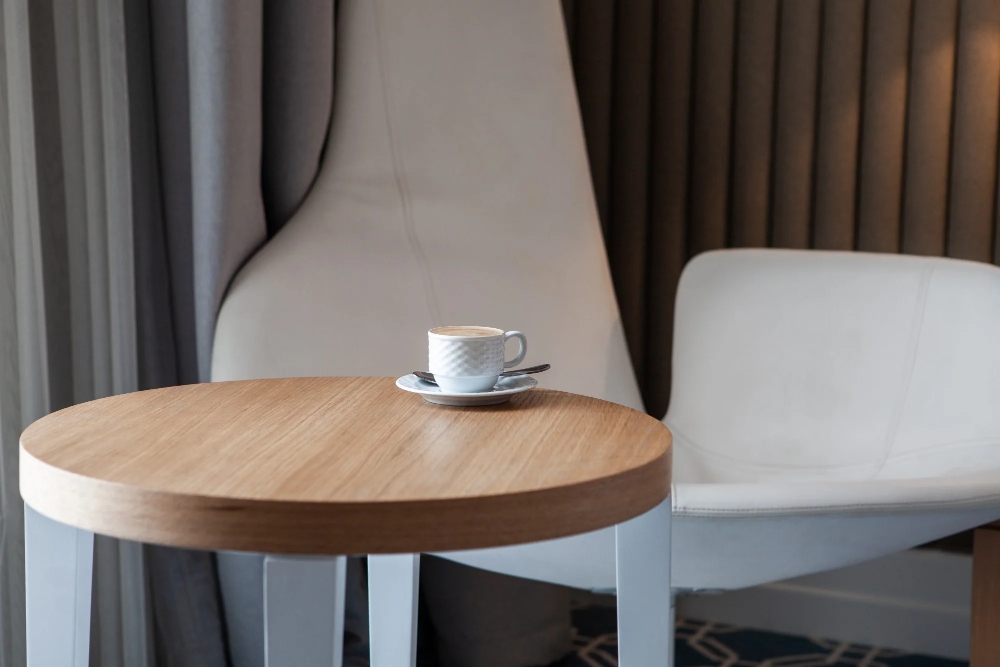
A real product gives you a better way to judge a supplier than broad company claims. The Coffee Table Ceramic AYP016 is a useful reference because its simple form makes production errors easy to see.
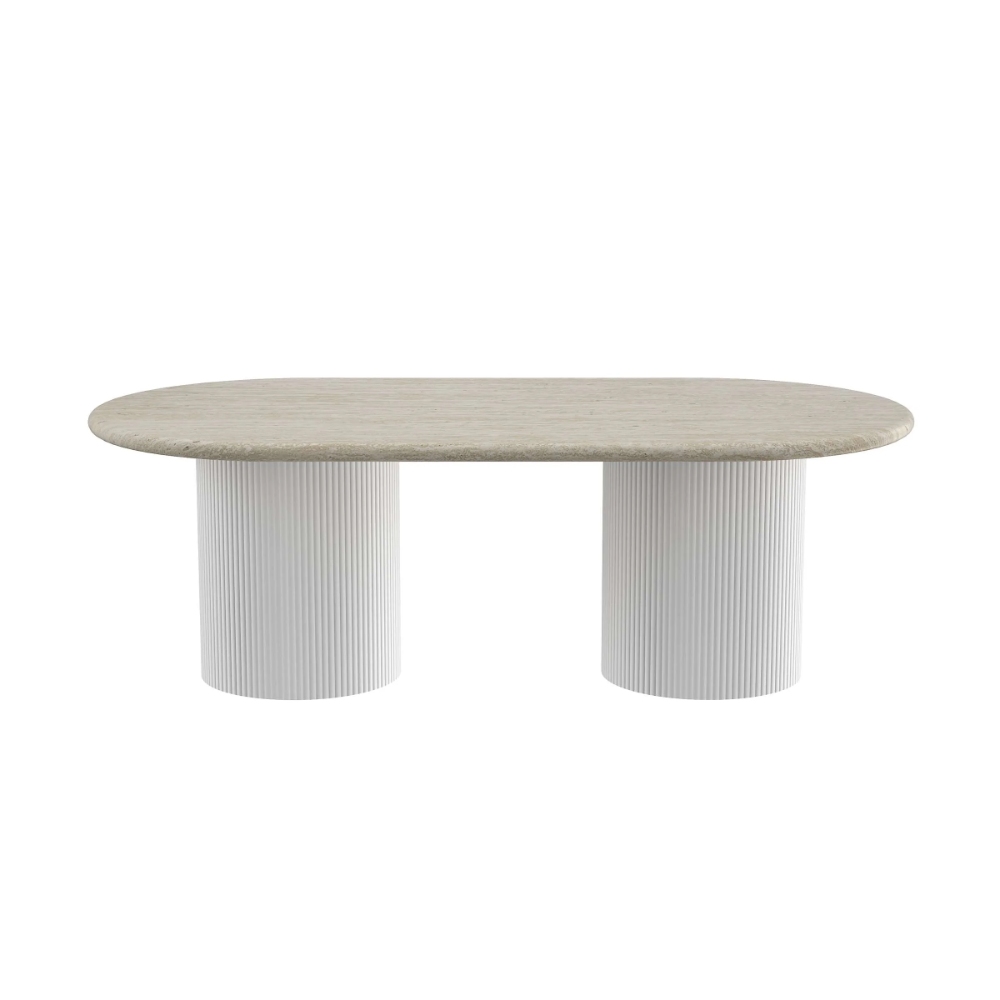
The table measures 120 × 60 × 40 cm and uses a 12 mm ceramic tabletop with an iron frame. It provides enough room for coffee, books, small décor, or laptop use without filling a compact living room. The same size can also work in a balcony area or home office.
The ceramic top resists scratches and high temperatures and is easy to wipe after coffee spills. Customers can use the table every day without treating the surface as a delicate display piece. This practical performance also makes the model easier for wholesalers and retailers to introduce to end users.
Minimalist furniture needs careful control. Straight lines make a tilted frame, uneven joint, or poor edge easy to notice. Ceramic shades and patterns also need an agreed range so that products displayed together do not look mismatched.
Ask how the factory controls ceramic selection, cutting size, frame position, welding, coating, and assembly. The answer should mention tools, templates, inspection points, and written standards. “Good quality” by itself tells you very little.
Quality needs attention before production, during the run, and before shipment. A final inspection alone may discover a repeated defect too late.
The same order should use controlled material batches where possible. Ceramic surfaces need an accepted shade and pattern range. Metal parts need fixed dimensions and finish requirements. Cartons and inner protection also need clear standards because poor packaging can damage a well-made table.
The factory’s material control standards can show how common furniture materials are selected. Ask whether materials are checked before leaving the supplier and again after arriving at the factory. This makes it less likely that weak or incorrect materials enter production.
Inspection should cover product height, tabletop size, frame level, hole position, surface marks, color, fittings, cleanliness, and stability. For knock-down parts, hole positions and connectors need tight control or assembly becomes slow and frustrating.
Request first-piece approval before the full run. The first finished unit should match the signed sample and production sheet. Later checks should use the same points. You can review the factory’s product inspection process and prepare your own checklist before ordering.
Consistency comes from repeatable work, not memory. Parts, tools, production steps, and inspection records must remain fixed from the first unit to the last.
Cutting templates, drilling guides, welding fixtures, and assembly instructions help each department work to one standard. They are also useful for repeat orders months later. A complete production file makes it easier to match the earlier size, finish, and packaging.
Packaging should protect the ceramic top, edges, frame, and painted surfaces. Ask how the product is held inside the carton and whether the carton size suits your shipping plan. More guidance can be found in the furniture FAQs.
Your sales contact should record changes in drawings, specifications, or approval emails and pass them to production. Verbal changes are risky. Export support should also cover labels, spare fittings, assembly sheets, carton marks, and loading plans.
A virtual factory tour can help you check the workshop before an on-site audit. For custom development, bulk order planning, service details, or delivery questions, use the contact page to discuss the project before placing the order.
The right coffee table factory should do more than make one attractive sample. It should improve the design, set clear material and size standards, control each production stage, and protect the product during transport.
Coffee Table Ceramic AYP016 is a useful example of what buyers should check: a practical 120 × 60 × 40 cm size, a 12 mm ceramic top, an iron frame, easy cleaning, and a simple form that fits several spaces. Its clean lines also make it a good test of factory accuracy. Before ordering, compare the sample, production file, inspection process, packaging plan, communication, and claim terms. The furniture FAQs can help you prepare more questions for the supplier.
Q1: What should you ask a coffee table factory before ordering?
A1: Ask about MOQ, sample time, production lead time, material specifications, color control, inspection steps, packaging, export documents, and claim handling.
Q2: How can you check whether a custom coffee table is ready for bulk production?
A2: Approve a physical sample, final drawing, material list, color reference, size tolerance, assembly method, packaging structure, and written production specification.
Q3: Why is a ceramic tabletop suitable for a coffee table?
A3: A ceramic tabletop offers good resistance to heat, scratches, and common drink stains, while its smooth surface is easy to clean.
Q4: How can a factory keep quality consistent across a large order?
A4: It should use controlled material batches, fixed templates, first-piece approval, in-process checks, final sampling, and one approved reference sample.
Q5: How long does custom coffee table production usually take?
A5: A normal custom furniture order often takes about 30 to 45 days after the sample, materials, specifications, and packaging are confirmed.