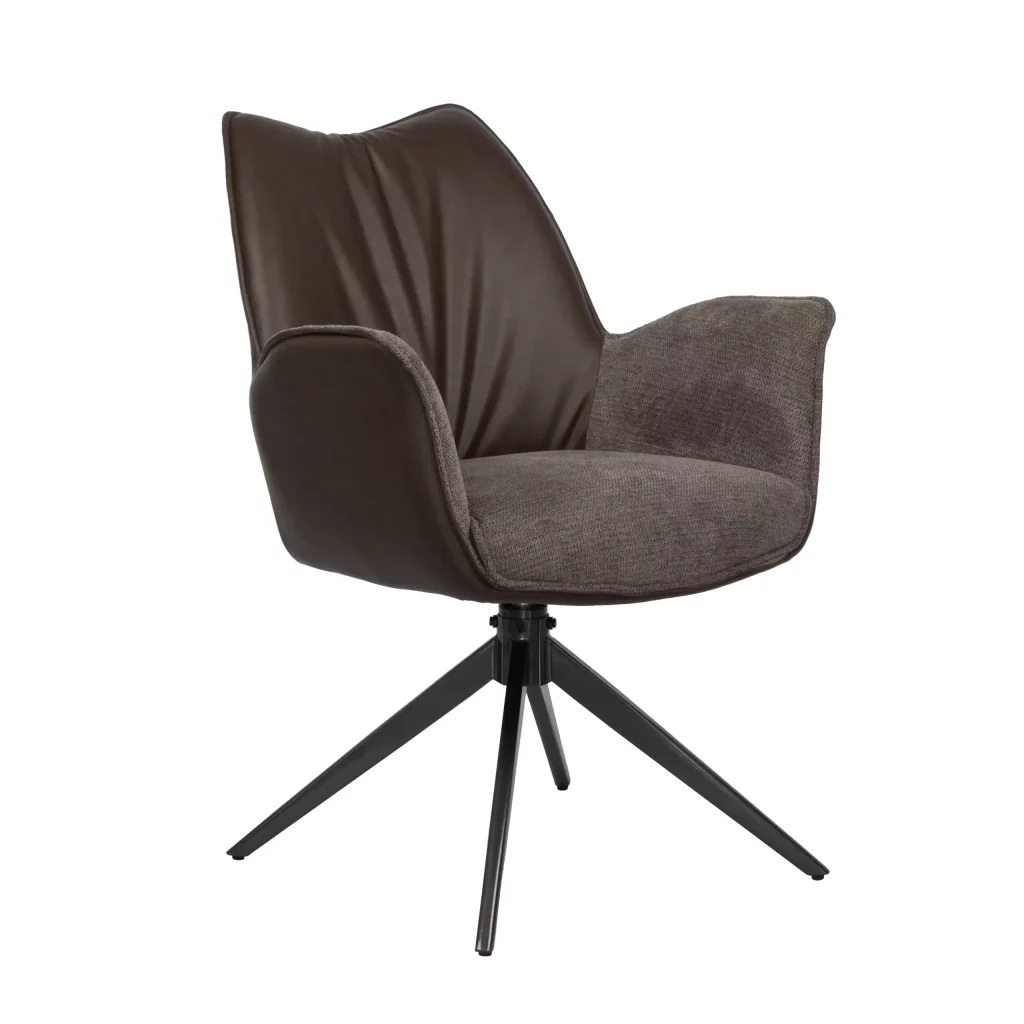

There is a particular disappointment in sitting down on a chair that looks wonderfully inviting and then spending dinner wriggling about. You pressed the seat in the shop. It felt soft. What went wrong? Quite possibly nothing went wrong with the cushion at all. It may be doing its job while the rest of the chair is a poor fit for you, or for the table. Softness answers a fairly small question about a seat. We tend to ask it to answer much bigger ones.
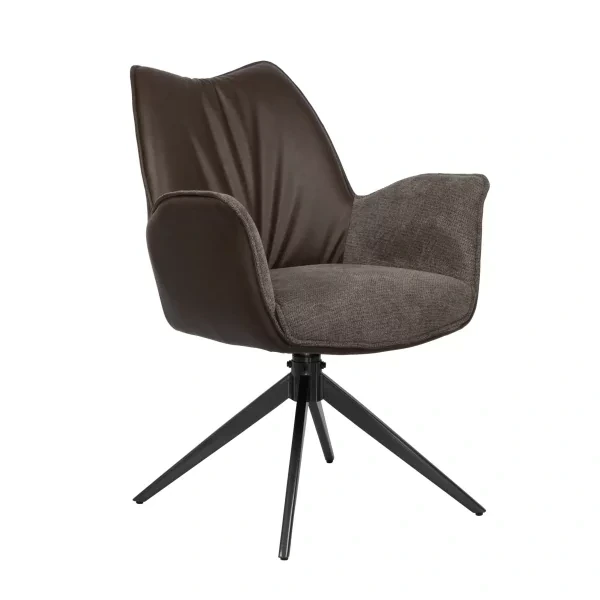
A hand pressed into a seat is a very short audition
A hand test is quite a peculiar way to choose something to sit on. You press a small patch for a moment, release it, and make a judgement about an entire meal. It is understandable: softness is immediately apparent. Where your feet will end up, or whether you can use the backrest while reaching the table, takes rather more investigation.
For flexible polyurethane foam, it helps to separate the first yielding sensation from what happens farther into compression. The industry distinguishes surface firmness from deeper support. Similar initial softness need not mean similar behaviour under a sitter. And you are sitting on an assembled cushion, with its covering and underlying structure, rather than on the piece of foam tested in isolation.
A density figure does not settle this either. Density measures mass per unit volume. It is quite possible to specify a soft foam of high density or a firm foam of lower density. I would keep density and firmness on separate lines in my notes, then leave a third line for how the finished chair feels. Trying to squeeze all three into the word “soft” is where the confusion begins.
The backrest you cannot quite reach
Imagine a shorter person choosing a generously deep seat. Sitting near the front, their feet find the floor easily enough. But the backrest is somewhere behind them. They move back to use it, and now the front edge is too close to the backs of their knees. More padding will not move those two parts of the chair closer together.
This is the reason to ask for usable seat depth. Overall depth is the outside measurement of the furniture, including whatever projects behind it. You cannot read the space available for sitting directly from that number. A thick or curved back can take up some of the distance you thought you were buying.
The practical check is ordinary: sit back, with your feet supported, and notice the space at your knees. Can you use the backrest without the front edge pressing against them? Do you immediately shuffle forward again? Those observations are more useful than deciding that deep seats are good or bad in general.
I would ask another regular user to try the same chair, especially someone of a different height. If their verdict differs, that is information rather than a disagreement to settle. A set bought for several people has to accommodate several bodies. The person who chose it is not necessarily the person who will find every seat dimension easiest to live with.
Pay attention to the bit under your thighs
The middle of a cushion gets most of the attention. Its front edge deserves some too. That is where the shape of the seat underneath, the padding and your sitting position meet. A soft centre cannot promise a comfortable edge.
Try the chair without deliberately arranging your legs to make it feel better. Put your feet where you normally would at dinner. Notice any pressure near the front, then move back and see what changes. You are trying to locate the mismatch, not prove that you can tolerate it if you sit very carefully.
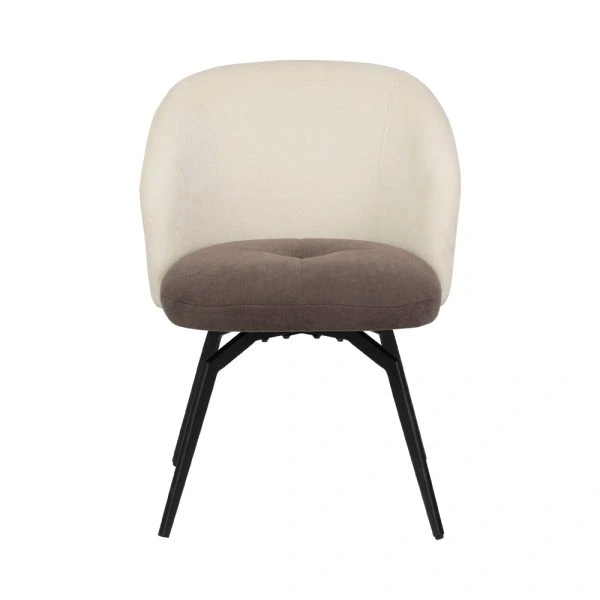
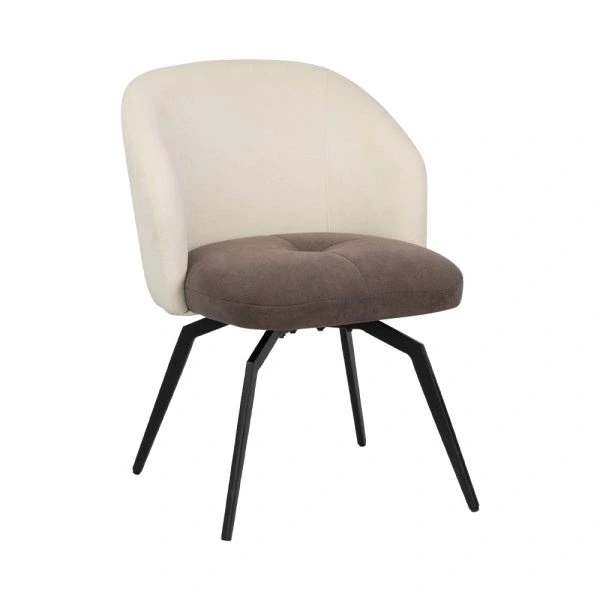
On the HTC0553 dining chair, the seat and back are visibly separate areas. I would judge them separately as well. “Nicely upholstered” is a description of the whole appearance; it leaves unanswered where the edge meets your legs and where the back meets you. Those are questions for a sit, not a colour choice.
Add a plate and the judgement may change
I would rather try a dining chair at a table than in splendid isolation. Give me somewhere to put an imaginary plate and I have a reason to move closer. Without that task, it is easy to enjoy a leisurely lean backwards and never discover how awkward reaching dinner might be.
Suppose its arms meet the rail beneath your tabletop. The chair stops short. You lean forward to reach dinner, leave the backrest behind, and sit on a different part of the seat. Nothing about the foam has changed. Your use of the chair has.
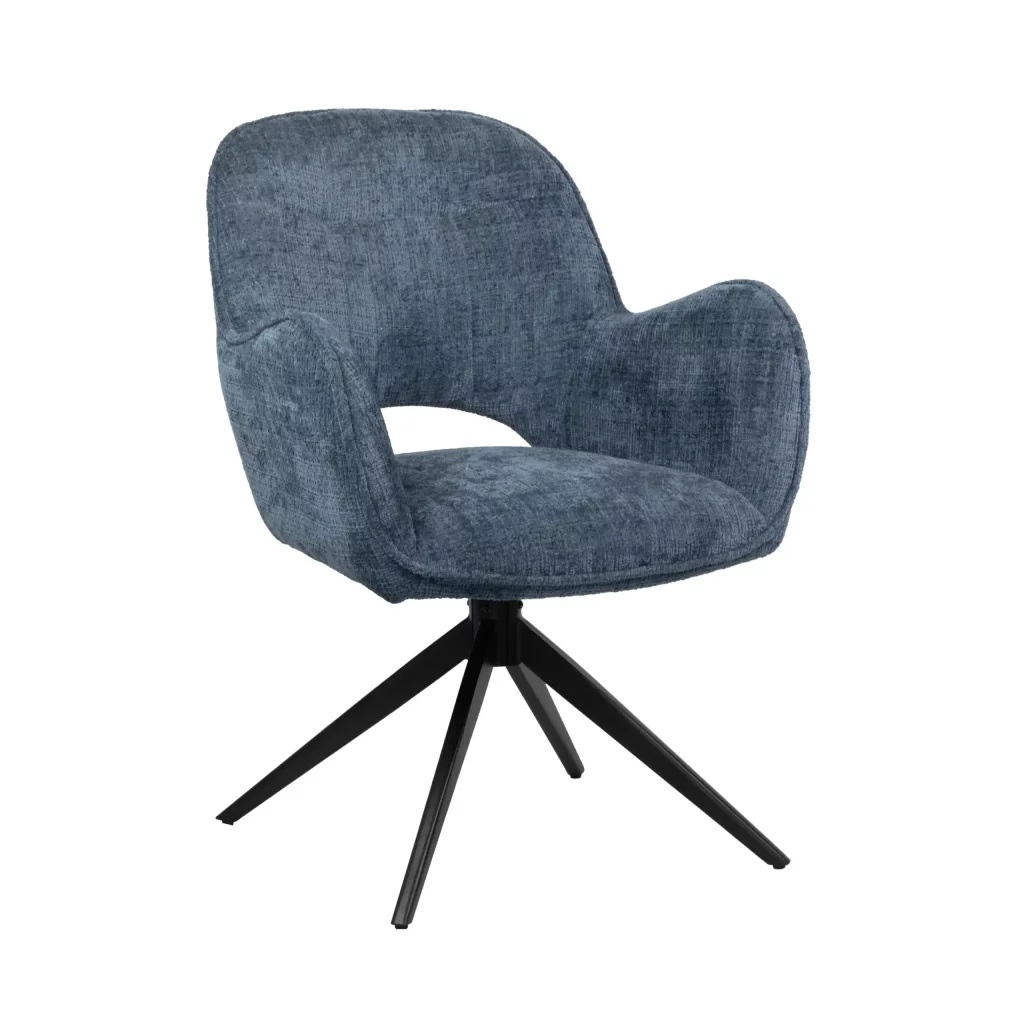
For an armchair such as the HTC0520 dining chair, I would want the arm height alongside the clearance under the actual table. Measure to the lowest obstruction the arm will encounter, not simply to the top of the table. A rail below the top can settle the question before the cushion gets any opportunity to impress you.
There is another complication: upholstery compresses when occupied. The top of an empty cushion is not quite the same reference as your sitting position. That is one reason I would welcome a trial with the table. Reach forward as if using a knife and fork. If you have to lift your shoulders or perch at the edge, investigate the pairing instead of asking for softer foam.
A tall back can still miss the spot
Height is an easy feature to compare. Contact is harder. A tall backrest can leave a gap where you wanted support, while a shorter back may meet you quite comfortably. The location of a curve matters at least as much to your trial as the fact that a curve exists.
The question I would ask during a trial is where I stop noticing the backrest. Is that while sitting at the plate, or only after leaning well back? If the second position is pleasant and the first awkward, I would write both down. A meal includes eating as well as the conversation afterwards; choosing for just the latter leaves part of the job untested.
Looking through the dining chair collection can help you choose shapes to investigate. I would resist ranking their comfort from the outlines alone. “Higher,” “more curved” and “more padded” describe differences. They are not a dependable order from worst to best.
What happens if you add another cushion
It is tempting to solve every seating disappointment with a loose pad. Before buying one, name the problem. Are you trying to soften the surface, shorten the seat, or raise yourself towards the table? A cushion changes dimensions as well as feel.
A pad on the seat raises your position. A cushion behind you takes away some usable depth. Either could be helpful in a particular pairing, but neither is free of consequences. If your feet already struggle to rest comfortably, adding height is worth thinking through. If a back cushion leaves very little room to sit, the new arrangement needs another look.
Any extra cushion should remain securely positioned. Stacking loose pads to make a chair usable is not a particularly convincing endorsement of the chair. For a new purchase, I would rather investigate another fit before building a small upholstery project around the wrong one.
Stay long enough to stop posing
There is no magic showroom duration that certifies comfort. I would simply do more than sit down and spring up again. Pull up to a table, reach forward, settle back, change position and stand. Notice the correction you keep making. That repeated movement may explain the problem more clearly than a general feeling that something is off.
When discussing a model with hometree, bring the table measurements and those observations. “The arms stop me getting close” is a better starting point than “I need something softer.” Once the fit works, softness can be a preference instead of a proposed cure for everything else.
FAQ
Does a soft seat mean weak support?
I would not reject a seat for being soft. A cushion’s first response to pressure tells only part of the story about how it behaves farther into compression. Sit in the completed chair and judge that experience; the quick press with a hand has done all it can do.
Would a thicker cushion solve discomfort?
First decide what you wish were different. If you want to sit higher, thickness may be relevant. If your arms are hitting the table rail, you have another problem. Adding upholstery without locating the awkward contact can leave you with a more padded version of the same difficulty.
Why does my partner like a chair that I dislike?
Ask your partner to show you where they sit, rather than trying to agree on a score. Perhaps they reach the backrest while you perch forward. Perhaps their feet rest easily while yours do not. You can both be describing the chair accurately from two quite different fits.
Which measurements should I ask for?
I would write down the question before choosing a measurement. “Can I reach the back?” calls for usable seat depth. “Will the arms pass underneath?” calls for arm height and table clearance. The overall dimensions are handy for the room plan, but they cannot fill every blank on that list.
Can I use the chair for a full working day?
That would be another trial, at the intended work surface. I would not carry a comfortable-meal verdict straight across to an entire day. The duration and activity have changed, and you still need opportunities to change position, however agreeable the cushion feels at first.