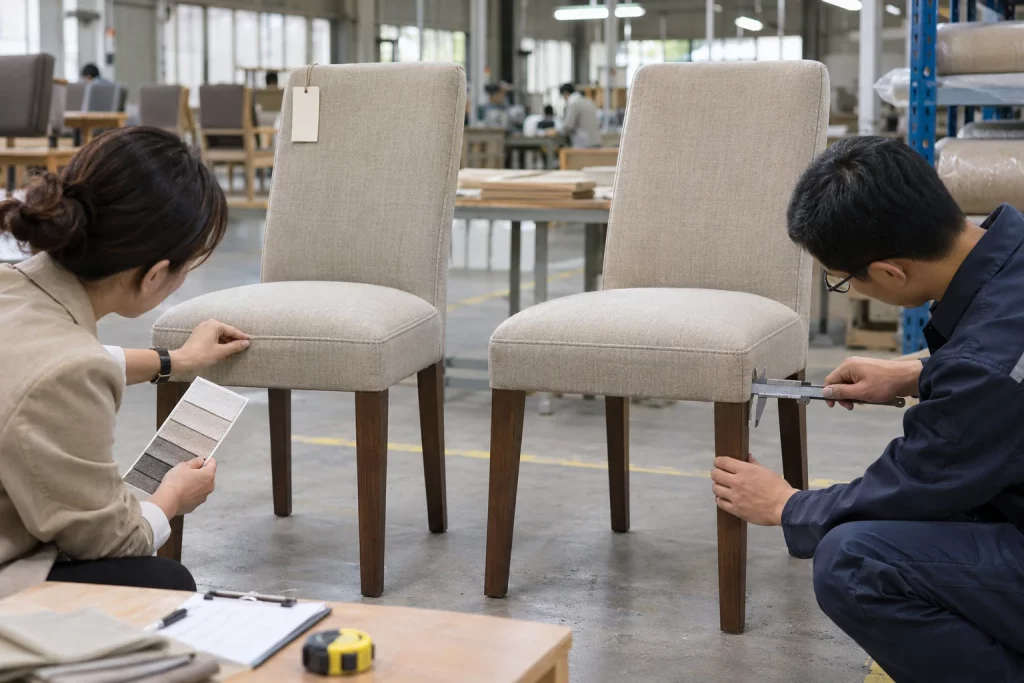

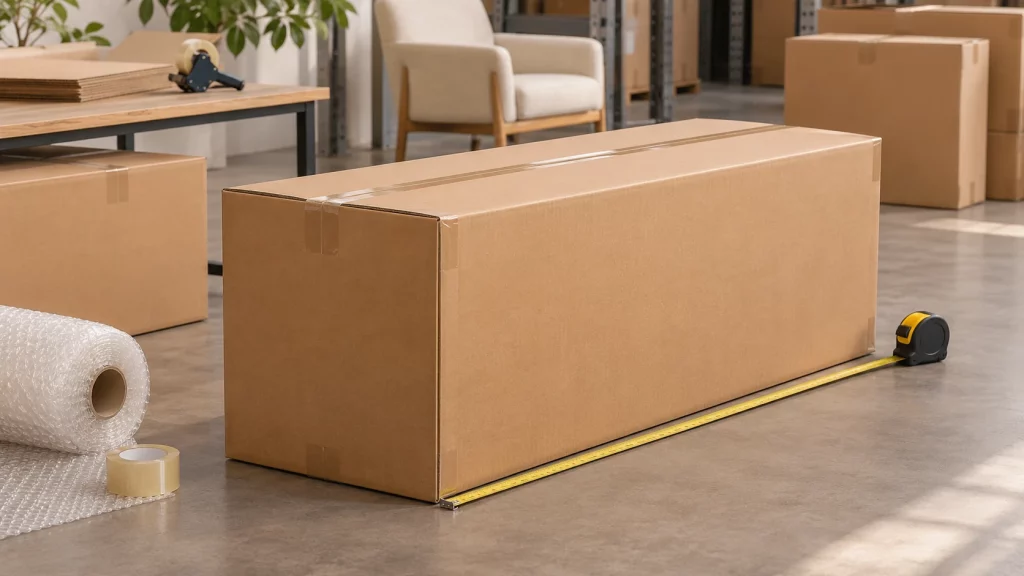
A chair’s assembled dimensions describe the product in the room. They do not tell a buyer how much space its packed carton occupies. Furniture CBM is the packed volume in cubic metres, calculated from the external dimensions of the relevant shipping packages. For rectangular cartons, multiply length, width and height in metres, then add the volumes of all cartons in the order. The important step is establishing whether the supplier’s figure refers to one carton, one piece or one complete set.
Key takeaways
- Use packed external dimensions and consistent units.
- Account for pieces per carton and every carton in a split pack.
- Keep calculated carton volume separate from a confirmed freight or loading quotation.
Start with the packaging data
Request the model code, order quantity, pieces per carton, external carton dimensions and gross weight. If one item ships in several cartons, obtain the dimensions and quantity of every carton type. Keep dimensions for the assembled furniture in a separate field so they cannot accidentally enter the volume calculation.
A catalogue field labelled “volume” needs a unit and a basis. Ask whether it means cubic metres per carton, per furniture item or per set. The same decimal figure can produce very different order totals depending on that basis. Confirm whether packaging is final or still being developed before treating the calculation as a booking reference.
Identify the relevant models in the Hometree furniture range and request current packing data for the actual order.
Convert dimensions before multiplying
For a rectangular carton, CBM = length in metres x width in metres x height in metres. If dimensions are in centimetres, divide their product by 1,000,000. If they are in millimetres, divide their product by 1,000,000,000. Use the external packed measurements, including the thickness of the shipping package.
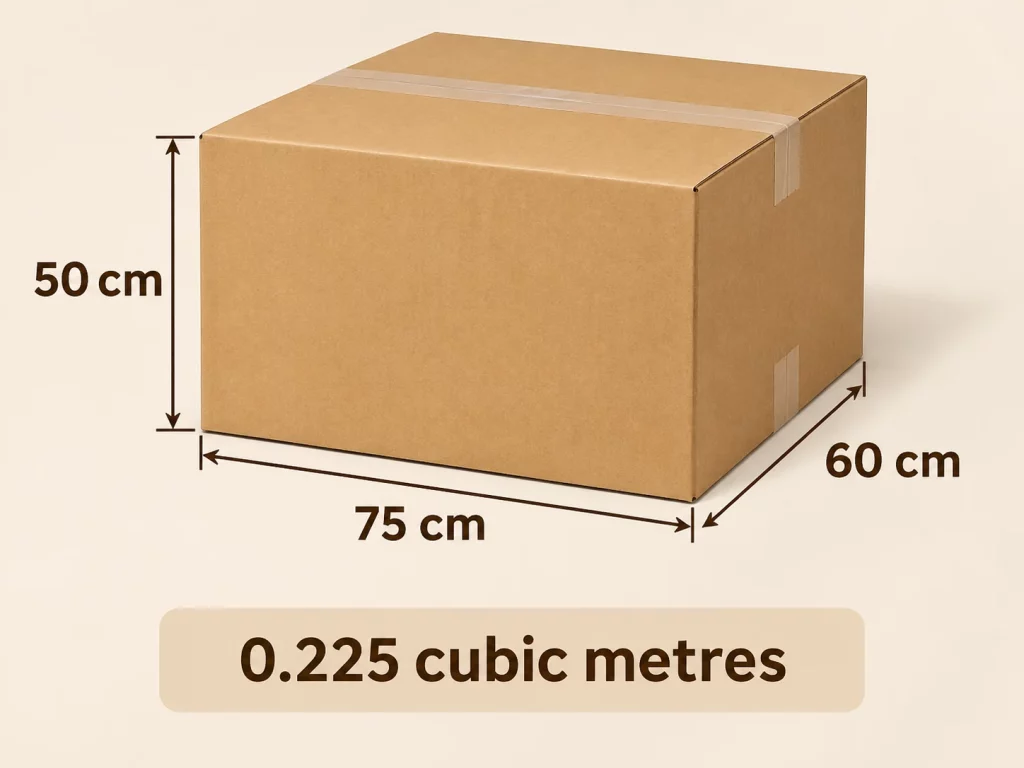
For example, a carton measuring 75 x 60 x 50 cm occupies 0.75 x 0.60 x 0.50 = 0.225 cubic metres. Enter the units explicitly in the working sheet. Multiplying centimetres together and labelling the result cubic metres would create a large error even though the multiplication itself is correct.
Distinguish carton volume from volume per piece
Suppose the 0.225 cubic metre carton contains two dining chairs. Its volume per chair is 0.225 / 2 = 0.1125 cubic metres for this packing arrangement. An order for 120 chairs therefore requires 60 full cartons and occupies 60 x 0.225 = 13.5 cubic metres in carton volume.
Do not multiply the carton volume by 120 unless there are 120 cartons. Also check how a quantity that does not divide evenly into full cartons will be packed. An additional partly filled carton may have a different configuration. The supplier’s confirmed packing plan should establish its dimensions rather than a proportional estimate.
Add every carton in a split pack
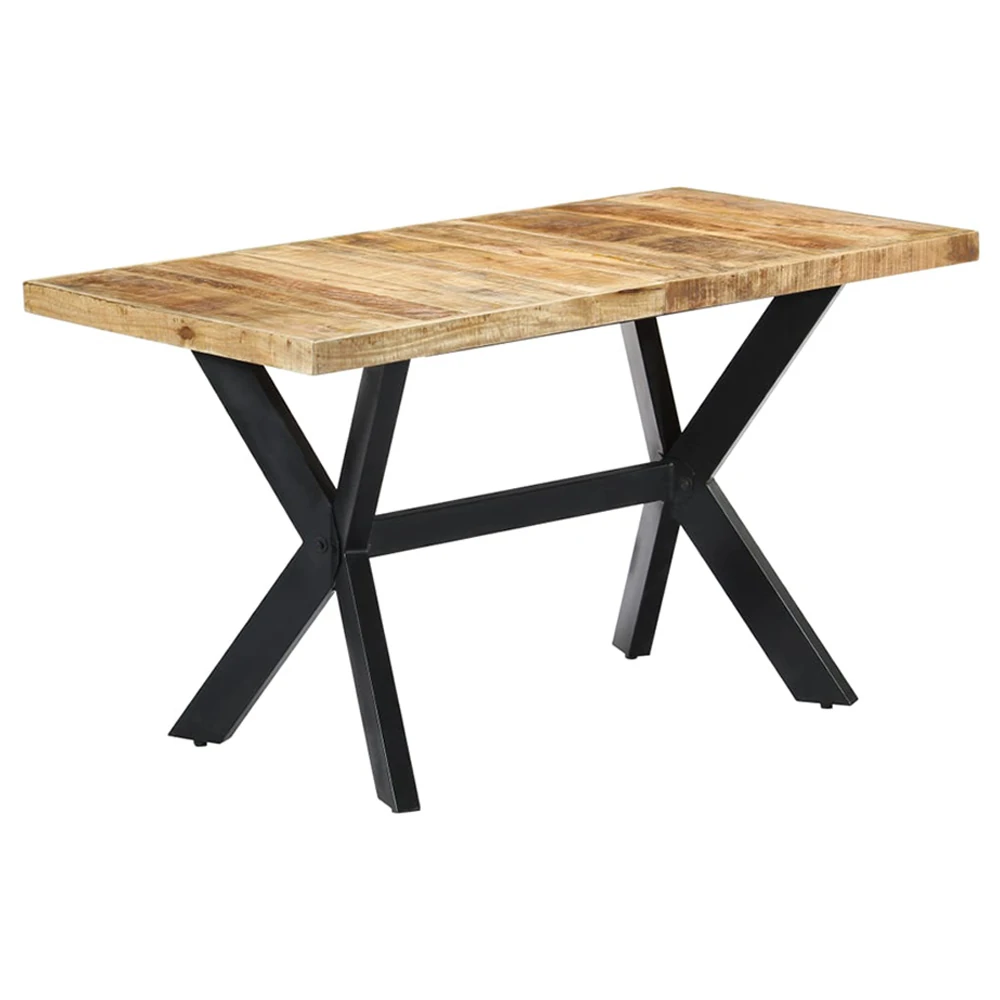
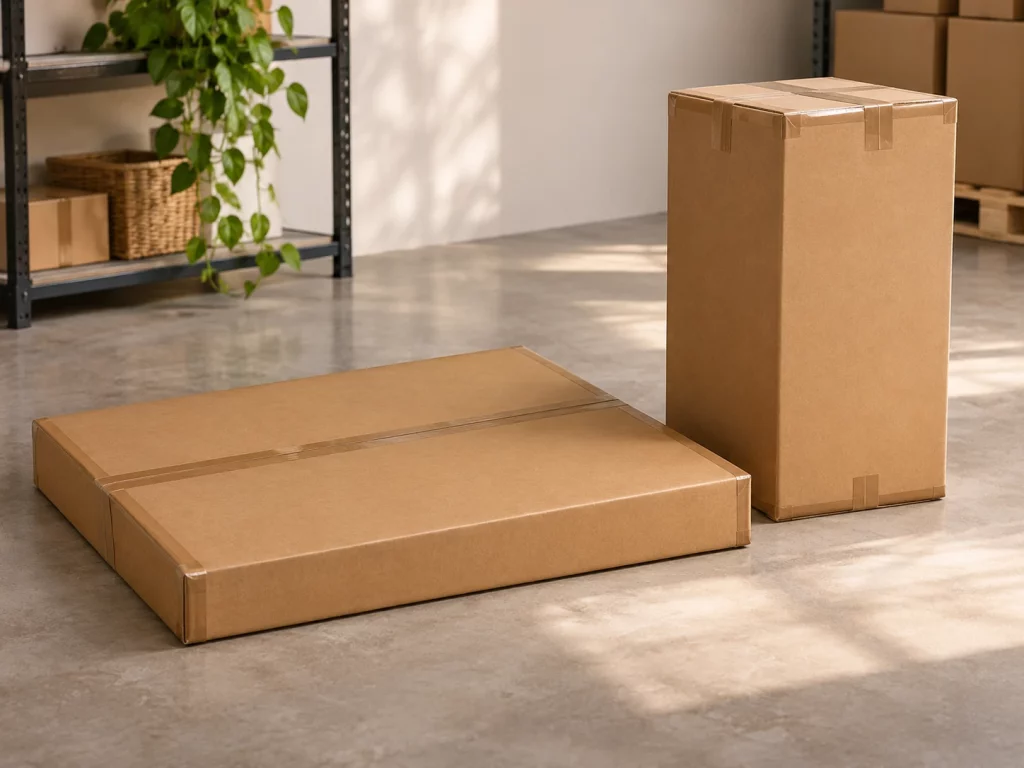
A dining table can ship with the top and base in separate cartons. In an illustrative example, carton A measures 145 x 90 x 10 cm: 1.45 x 0.90 x 0.10 = 0.1305 cubic metres. Carton B measures 80 x 20 x 15 cm: 0.80 x 0.20 x 0.15 = 0.024 cubic metres.
One complete table occupies 0.1305 + 0.024 = 0.1545 cubic metres across two cartons. Twenty tables require 20 cartons of each type, or 40 cartons in total, with a combined volume of 3.09 cubic metres. Counting only the tabletop carton would omit the bases. Counting the complete-table volume twice would overstate the order.
Build a mixed order total
Using those examples together, the chair order occupies 13.5 cubic metres and the table order occupies 3.09 cubic metres. The mixed order therefore totals 16.59 cubic metres, covering 120 chairs and 20 tables in 100 cartons. These are illustrative calculations, not specifications for an identified Hometree model.
Keep the worksheet organised by carton type, not only by saleable product. A useful row records the model, carton identifier, external dimensions, carton quantity, pieces represented and calculated volume. Retain enough decimal places during calculation and agree the final reporting precision with the party preparing the shipment.
For the wider purchasing context, see the wholesale furniture supplier checklist.
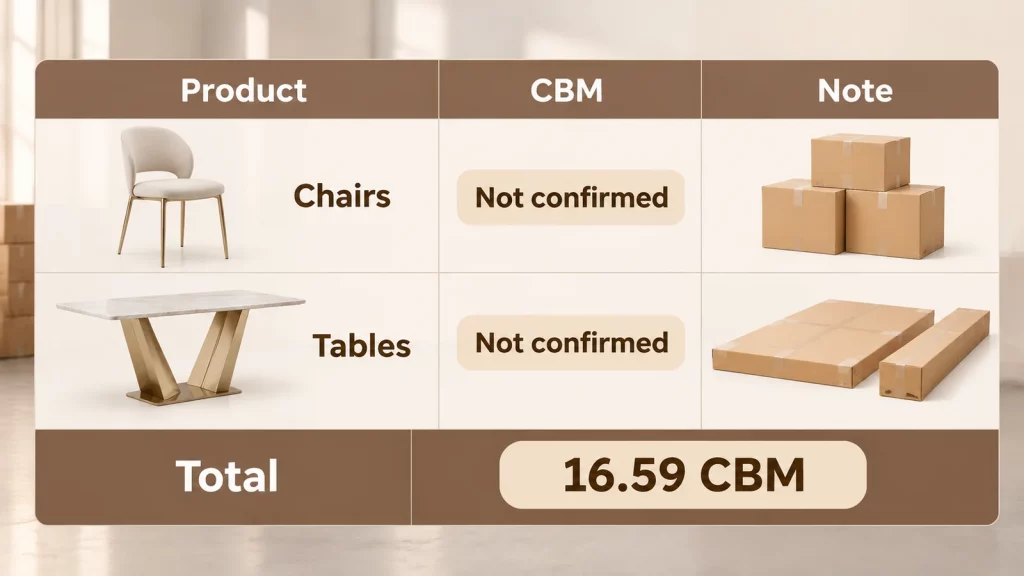
| Order line | Items | Cartons | Volume m3 |
| Chairs | 120 | 60 | 13.50 |
| Tables | 20 | 40 | 3.09 |
| Total | 140 | 100 | 16.59 |
Illustrative figures based on the carton dimensions in this article.
Check what the shipping quote measures
The sum of carton volumes does not by itself confirm how much cargo will fit into a container. Carton shape, permitted orientation, weight distribution, stacking restrictions and the loading arrangement affect usable space. If pallets or crates are used, obtain the final shipping-unit measurements and clarify which basis the booking requires.
CBM alone also does not establish the final freight charge. Supply gross weight and the packing details to the forwarder, and confirm the quoted charging basis and included services. Avoid applying an assumed volume allowance or universal weight conversion to every route. The calculation is an input to the quote, not the quote itself.
Recheck the numbers when packaging changes
Protective materials, revised carton layouts and changes from assembled to knock-down packing can alter the dimensions. Ask for updated external measurements when the packaging version changes. A small increase per carton becomes more noticeable over a bulk order, so keep the revision date beside the calculation.
Before booking, reconcile the quantities with the final packing list: how many saleable items, how many carton types, how many cartons of each type and the resulting total volume. Where the figures disagree, resolve the unit basis first. “Per chair” and “per two-chair carton” are common sources of confusion that a clearly labelled sheet can prevent.
Use the bulk furniture delivery checklist to connect the packing record with receiving checks.
Frequently Asked Questions
What does CBM mean for furniture?
CBM means cubic metres. In a packing calculation it normally expresses the external volume of the shipping packages. Always confirm whether a quoted figure is per carton, per furniture item or per complete set, especially where several pieces share one carton.
How do I calculate CBM from centimetres?
Multiply length, width and height in centimetres, then divide by 1,000,000. For example, 75 x 60 x 50 / 1,000,000 = 0.225 cubic metres. Use packed external dimensions rather than assembled furniture dimensions.
How do I calculate CBM for a table in two cartons?
Calculate each carton type separately, then add their volumes for one complete table. Multiply that total by the number of tables if each uses the same packing arrangement. Keep the carton quantities visible so that every top and base is accounted for.
Can I determine container quantity or freight price from CBM alone?
No. Carton volume is a planning input. Container loading also depends on the packing arrangement and handling restrictions, while a freight quotation needs the relevant shipment details and charging basis. Confirm the final loading and quotation with the responsible parties.
Conclusion
A useful furniture CBM calculation connects external carton dimensions with the real packing arrangement. Convert units consistently, distinguish cartons from pieces, add split packs and reconcile the result with the final packing list. Send that record with the gross weights and shipment details when requesting a quotation.
For current product and packing details, contact the Hometree team.
Further reference
For a carrier booking example, see Maersk guidance on calculating LCL cargo volume. Its booking calculator requests cargo dimensions and weight.