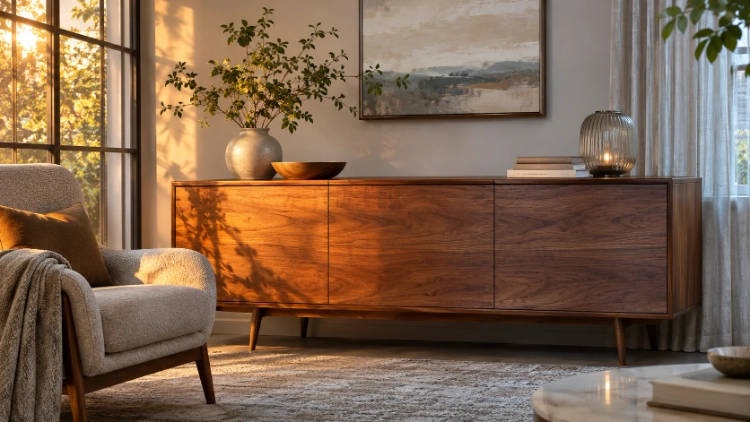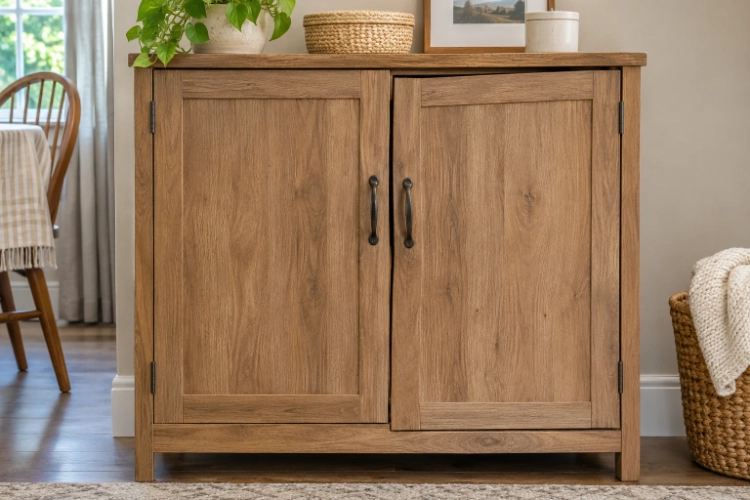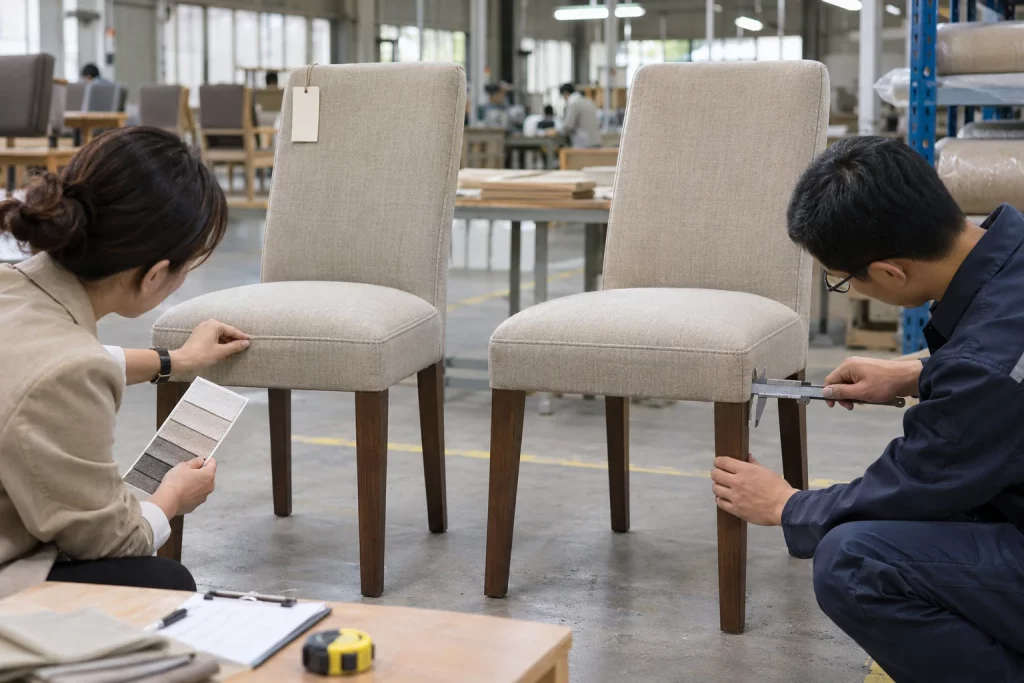
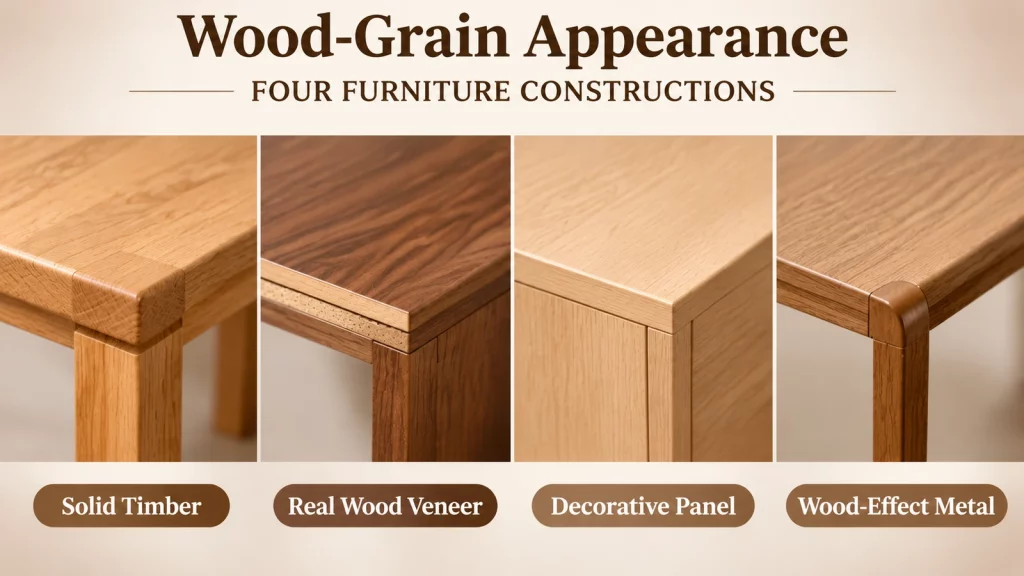
A warm oak colour can belong to solid timber, a real wood veneer or a decorative surface on a different core. Even a metal component can carry a wood-grain effect. That makes “oak finish” a useful appearance description but an incomplete material description. For buyers building a retail collection, wood look furniture should be explained through two connected questions: what creates the visible surface, and what is the component underneath? Answer both before turning a supplier’s description into customer-facing copy.
Key takeaways
- Keep appearance, core material and surface construction in separate fields.
- Describe each component rather than assigning one material to the whole product.
- Treat care and performance claims as specification questions, not conclusions drawn from the grain.
Read the colour name as an appearance reference
Names such as natural oak, walnut tone and smoked wood may describe colour or pattern rather than timber species. Read them alongside the material specification. If the description stops at the colour name, ask whether the surface is actual wood, a printed decorative layer, a coating or another construction.
A useful retail description can preserve the appealing colour name while giving the material plainly. “Oak-look top on an MDF core” communicates something different from “solid oak top.” Neither wording needs to promise a better product. The purpose is to describe the item accurately enough that customers understand what they are considering.
Review the Hometree product range with the material specification beside the product photographs.
Separate solid timber from real wood veneer
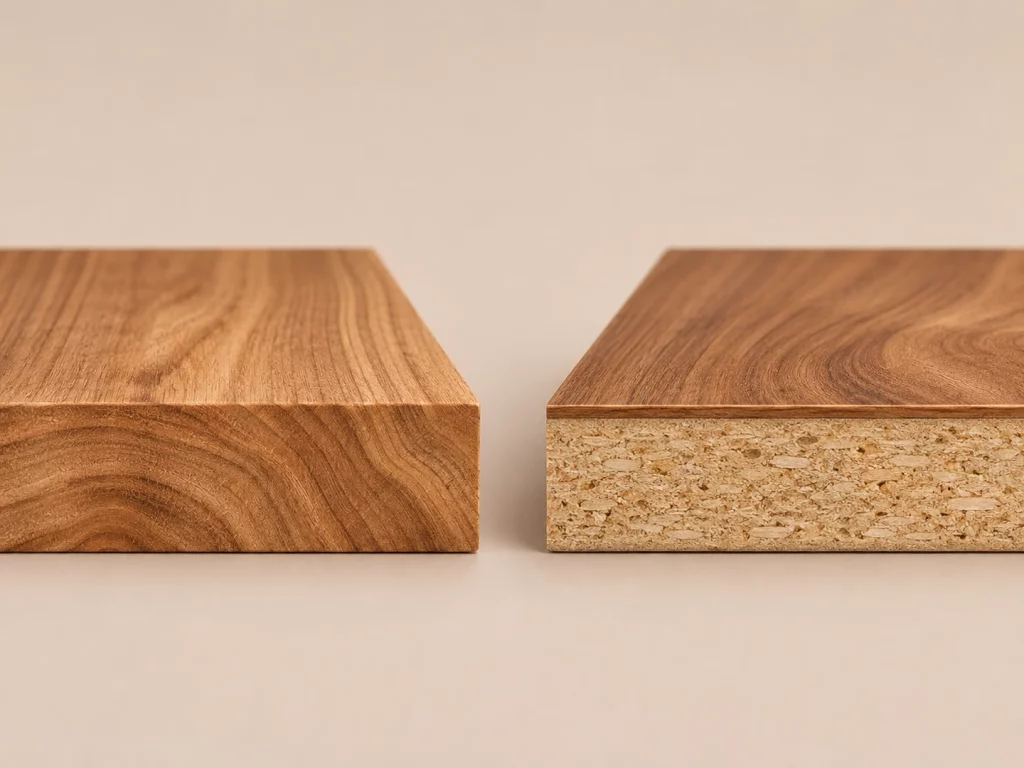
A solid wood component uses timber through its specified section. Real wood veneer uses a thin layer of wood over a supporting material; the core and other layers still need to be identified. The visible surface is real wood, but that does not make the entire panel solid timber. These distinctions belong in product data rather than being left to a customer to infer.
The word “veneer” should also be checked when supplier terminology is inconsistent. Ask whether it means a real wood face or is being used loosely for a decorative finish. Keep the response specific to the actual order. A product name or translated catalogue heading may not provide enough detail to establish the construction.
For the meaning of veneer, see Haworth’s surface material definitions; its glossary describes veneer as a thin wood layer.
Identify a decorative wood effect separately
A printed paper, film or laminate can reproduce a wood-grain appearance on a panel. Record the supporting core and the actual surface construction instead of grouping all decorative layers under one material name. A colour photograph usually cannot establish how the surface is made or how it joins the edge.
Wood effects are also possible on metal. One documented method uses a compatible powder-coating system followed by sublimation decoration. That is an example of how a grain appearance can differ from the underlying material, not a process to assume for every wood-look chair leg. Obtain the method used for the specific component.
For a coating-system example, Interpon D STF documents a wood-effect finish for metal. This example does not identify the coating used on any Hometree product.
Describe the furniture component by component
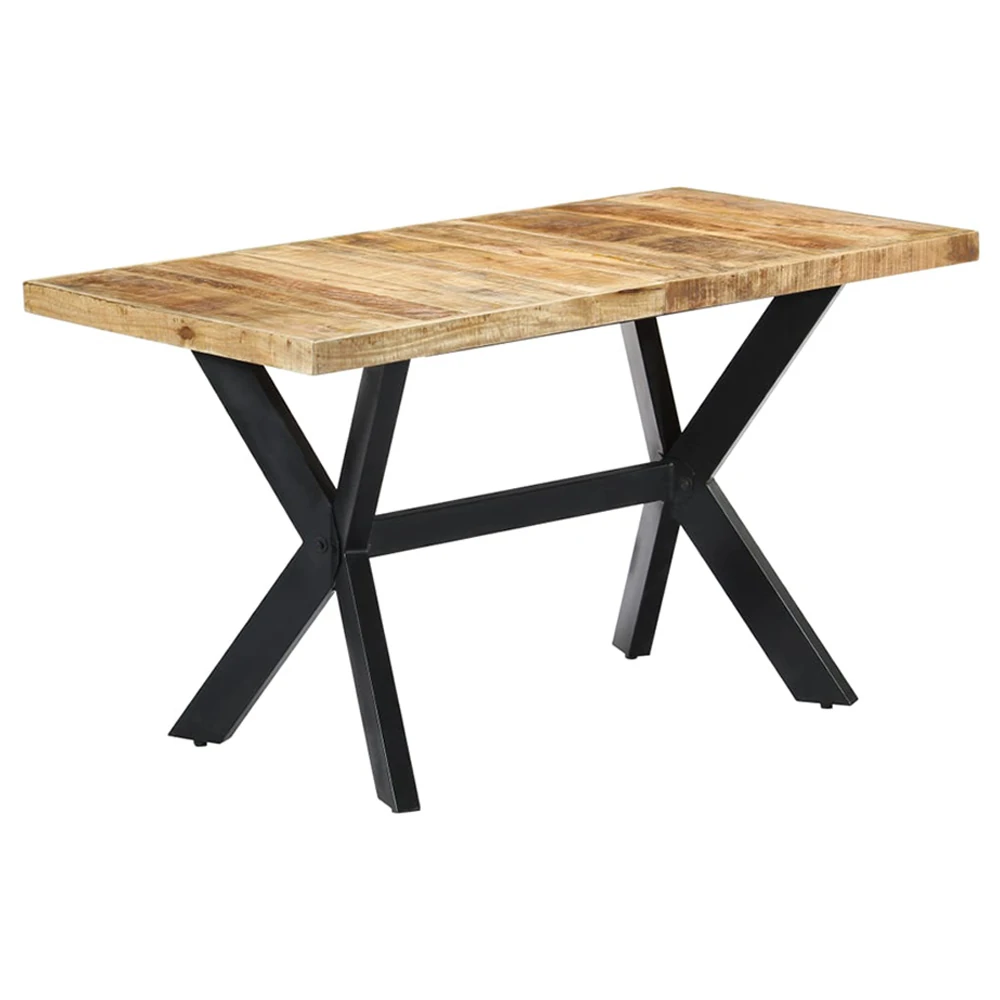
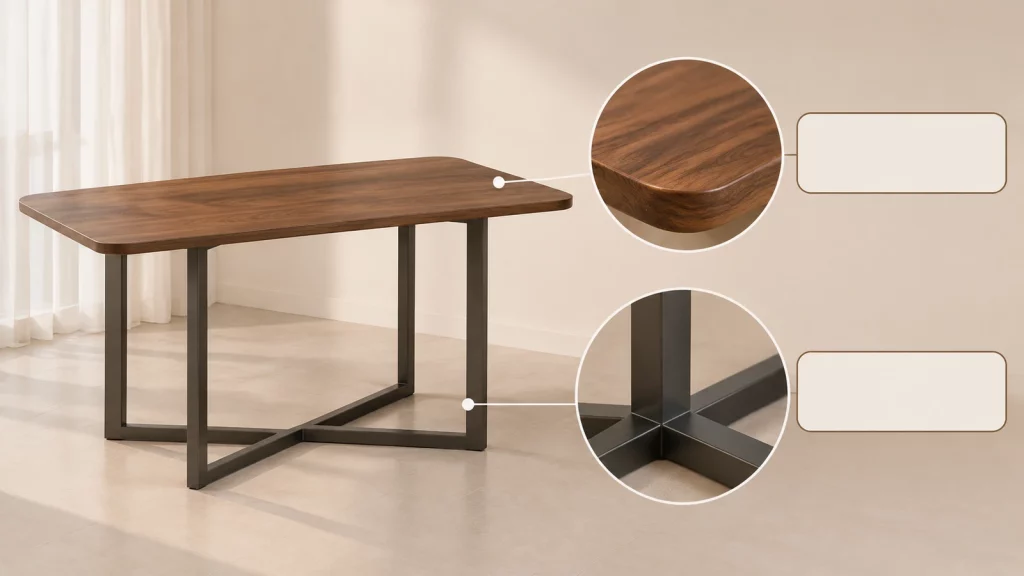
A dining table may combine a decorated MDF top, metal legs and separate edge details. A cabinet may use one construction for its body and another for doors or handles. Describing the entire item simply as “wood” removes information that matters to the buyer. Build the material record around the parts that are actually supplied.
For each major component, record the core or frame material, the visible surface, the colour reference and any relevant edge construction. Then edit that record into readable retail copy. The customer does not need every production detail, but the product team should be able to trace each published material statement to a confirmed source.
The HTD0151 product listing illustrates the distinction: its wood-look appearance is presented alongside MDF and metal materials. Confirm the current component details for an order.
Keep performance separate from appearance
A convincing grain pattern does not establish scratch resistance, moisture performance, outdoor suitability or the available repair method. Those depend on the actual construction and specified finish. Request relevant evidence where a claim is important to the product offer, and confirm that it applies to the model and surface being sold.
The same applies to care advice. Do not transfer instructions from solid timber to a printed surface or from a decorative panel to a wood-effect metal frame. Once the surface is identified, obtain the appropriate care method. That avoids making the visual resemblance carry a promise the specification does not support.
Check the description across every sales channel
Compare the supplier specification, order confirmation, product title, online material field and showroom label. They should describe the same construction. A detailed specification does little for customers if the product title elsewhere implies solid wood. Check translated descriptions as well, especially where a finish name can be mistaken for a species.
As an illustrative wording example, use “walnut-look decorative surface on an MDF top; coated metal base” only if those details are confirmed. Do not add a species, finish method or performance claim to make the copy sound more premium. When the answer is missing, resolve it with the supplier before publication.
Use a short material handover
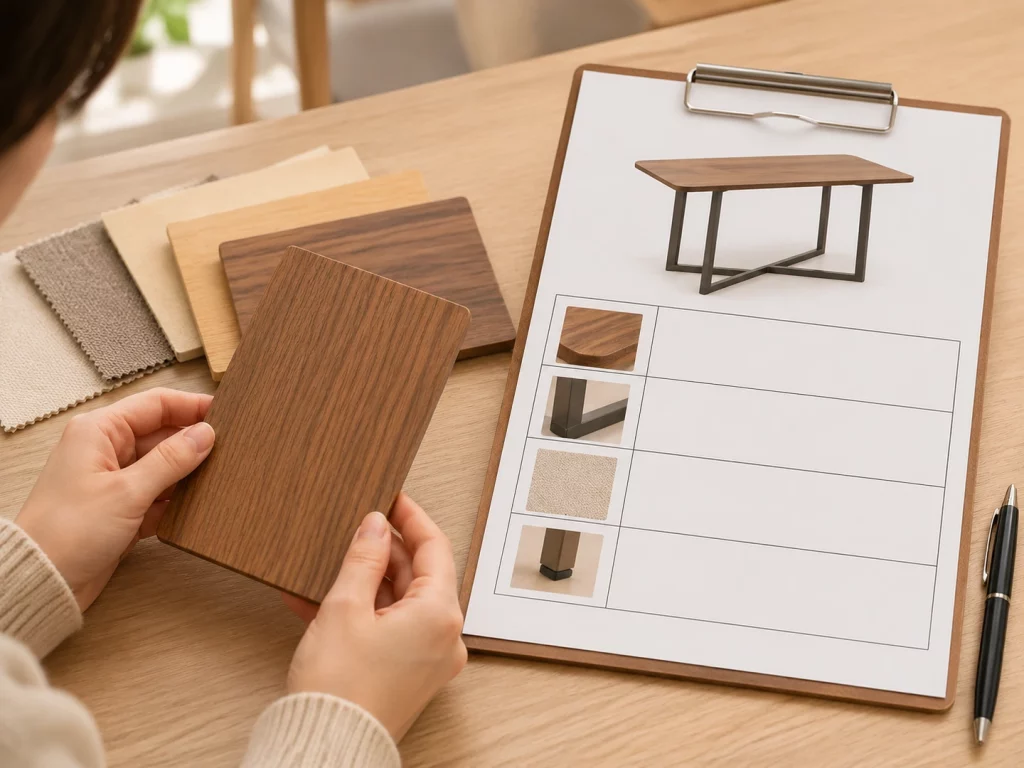
Give merchandising and customer service one approved record showing the product code, component, structural material, surface type and appearance reference. Add a clear photograph or sample reference where useful. Link the care document separately so staff can answer both what the item is made from and how it should be maintained.
Review that record when a construction or finish changes. A familiar commercial colour name can remain in use while the underlying specification changes, so the name alone is not enough to control the description. Keep the approved version matched to the order and update the retail wording when required.
Include this handover in the design and development brief so product descriptions follow the specified construction.
Frequently Asked Questions
Does an oak finish mean the furniture is solid oak?
Not necessarily. The wording may describe colour or grain appearance. Check the component’s confirmed material and surface construction. If the top is MDF with a decorative oak-look surface, describe both rather than allowing the finish name to imply solid timber.
Is real wood veneer the same as a printed wood effect?
No. Real wood veneer is a thin layer of wood, while a printed decorative surface reproduces the appearance. Both require a supporting construction to be described accurately. Ask what the supplier means if the word veneer is used without a clear specification.
Can metal furniture have a wood-grain finish?
Yes. Decorative systems can give metal a wood-grain appearance, including suitable sublimation finishes. Confirm the material and finish process for the actual component rather than identifying it from a photograph or assuming that all wood effects use the same method.
Which information should retailers request for wood look furniture?
Ask for the product code, the material of each main component, the surface construction, the appearance reference and appropriate care information. Confirm evidence for any performance claim separately. Keep these details consistent in the quotation, product page and showroom description.
Conclusion
Wood look furniture can be described clearly without losing its visual appeal. Keep the grain and colour as appearance references, identify the structural material and explain the surface construction where it matters. A component-based record helps buyers compare products and gives retail teams an accurate basis for their descriptions.
For current product details, contact the Hometree team.