
High top seating is easy to recognize in a café or bar, but it is not always easy to order correctly. A tall chair may be described as a bar stool, counter stool, or high dining chair. Those names are sometimes used loosely, while the actual seat height tells a different story.
That difference matters. A stool that sits too low leaves the user reaching upward toward the table. One that sits too high cuts down the space around the knees. The product can look right in a photograph and still feel wrong once it is placed beside the actual counter.
For project buyers, retailers, and importers, Hometree offers more than a list of ready-made products. The factory has operated since 2010 and works with separate design, prototyping, production, quality-control, and sales teams. Its product range covers dining and living-room furniture, including a dedicated bar stool category. This makes it possible to review the chair itself, the matching space, and the later mass-production requirements as one job rather than several disconnected steps.
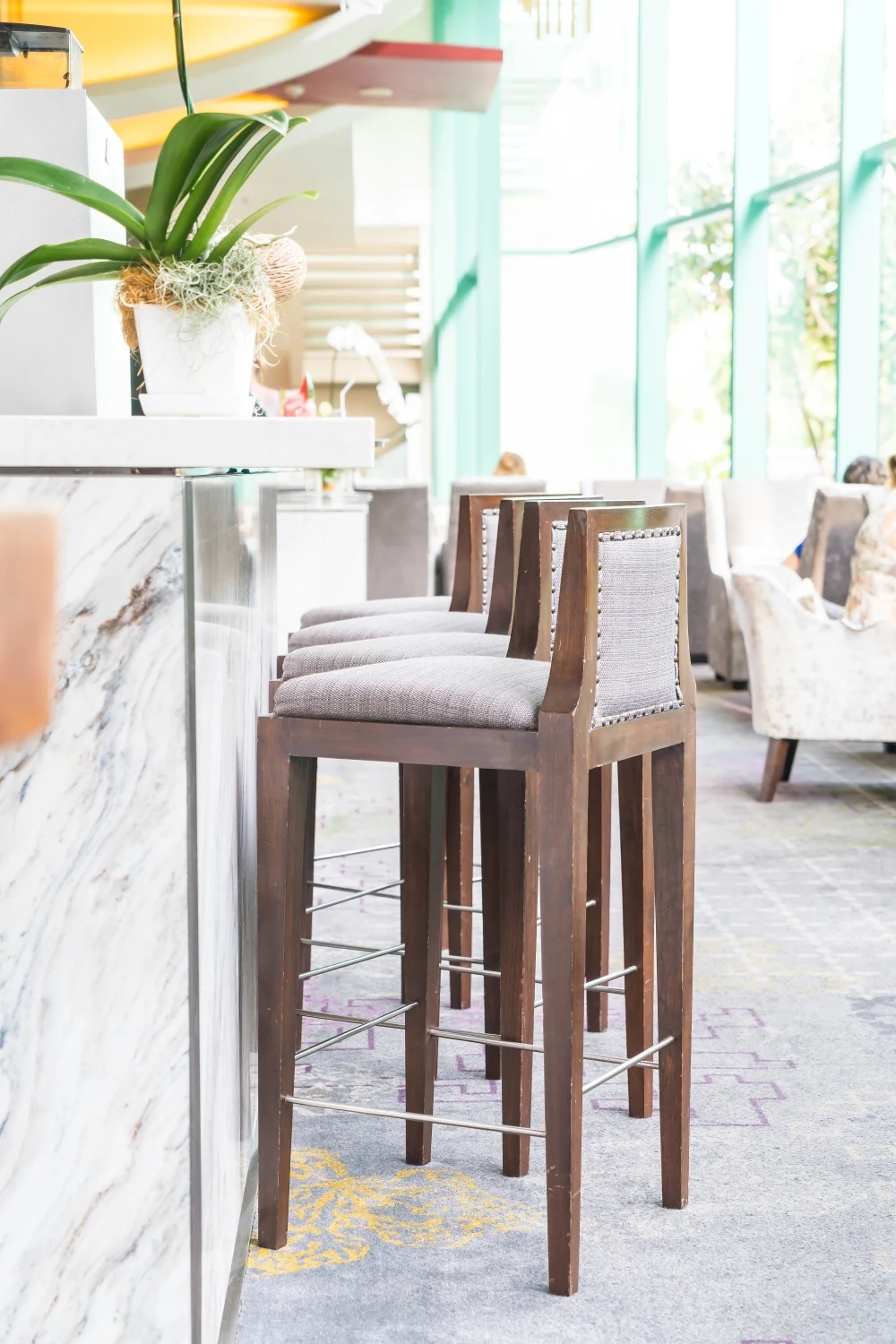
High top seating is furniture designed for a raised table, bar counter, breakfast bar, or kitchen island. It normally places the user higher than standard dining seating and often closer to the eye level of someone who is standing nearby.
The term describes the relationship between the seat and the surface. It does not simply mean that a chair has long legs.
With a normal dining chair, most users can place their feet directly on the floor. High top seating works differently. The seat is raised, so the user normally rests both feet on a built-in footrest.
This changes how the body is supported. If the footrest is too high, the knees may feel crowded. If it is too low, the legs hang without proper support. A well-placed footrest is therefore part of the sitting structure, not a small decorative bar.
The raised position also feels more upright and informal. It suits a quick meal, a drink, a short conversation, or a casual meeting. Some people enjoy this posture for longer periods, while others prefer a standard chair for a full dinner.
High top seating is often called bar-height seating because raised stools were first closely linked with pub and bar counters. The same idea now appears in many other spaces.
You may find it beside a home kitchen island, along a café window, at a restaurant drinks counter, or around a small high table. The room does not need to be a traditional bar. The height relationship is what places the furniture in this category.
The three types can look similar in product photos. A counter stool may have a tall back, while a full bar stool may have no back at all. Looking at the overall shape is not enough.
You need to compare the seat with the actual table or counter.
Standard dining seating is made for a normal dining table. Counter seating is higher and is commonly used beside kitchen worktops and breakfast counters. High top seating sits above both and is intended for a taller bar-height surface.
The important measurement is seat height, not total chair height. A model with a padded back may appear much taller than a backless stool even when both seats sit at the same level.
Before choosing, measure from the floor to the underside of the tabletop. Then compare that figure with the seat height. Thick table aprons, support rails, and deep countertops can reduce knee room even when the basic measurements appear suitable.
A dining chair depends mainly on the floor for foot support. Counter and high top seating usually depend on a footrest.
This is why a stool cannot be judged only by how the seat feels. The user needs enough room between the seat and the tabletop, but the feet also need a natural place to rest. These two points should be tested together.
A common problem appears when a buyer orders a counter stool for a full-height bar table. The product may be stable and well made, but it still feels too low. The opposite mistake leaves little room around the knees.
Dining seating is usually chosen for longer meals and a settled sitting position. Counter seating often works as a middle option for breakfast, home working, or casual food preparation.
High top seating is more social. It lets seated users speak comfortably with people who are standing nearby. In a restaurant or event space, that can make the area feel active without taking over the whole floor.
Still, it should not replace every dining chair. A mixed layout often works better because guests can choose the height and support they prefer.
The right space makes raised seating useful. The wrong space makes it feel awkward, even when the stool itself is good.
Before selecting a model, look at the surface height, walkway, expected sitting time, and the people who will use it.
A kitchen island can work as a preparation area, breakfast table, homework spot, and casual place for guests. Raised seating supports these different uses without adding another full dining table.
The first check is simple: measure the island. Some kitchen islands are built at counter height, while others have a raised bar section. Those two surfaces need different stools.
Leave enough room behind each stool as well. People need space to pull the seat back, step onto the footrest, and stand up without blocking the main route through the kitchen.
High top seating works well along windows, narrow walls, drinks counters, and smaller restaurant zones. It can create useful customer seating in areas where a wide dining table would take up too much room.
Commercial use places more pressure on the furniture. Stools are moved often. Shoes repeatedly touch the footrest. Staff clean the frame and seat several times a day.
For that reason, commercial buyers should review frame stability, joint quality, finish, upholstery care, and packaging rather than choosing by style alone. For restaurant projects, the same checks should be part of the wider restaurant furniture sourcing process before tables and seating are approved together. The company’s material selection information shows the range of metal, foam, fabric, PU, and other materials available for furniture development, although each final product specification still needs separate confirmation.
High seating is not the best choice for everyone. Children, older users, and people with limited mobility may find a standard chair easier to enter and leave.
A formal dining area also benefits from a lower, more settled seating position. When people are expected to stay for a long meal, a full dining chair may provide a more familiar level of support.
This does not mean you must choose one height for the whole project. Many cafés, restaurants, and open-plan homes combine standard dining seating with a smaller high top area.
Once the general height is correct, the smaller details begin to matter. Most returns and complaints come from parts of the chair that looked unimportant during the first review. Many of the same mistakes to avoid when buying dining room chairs for bulk orders also apply here, especially when seat comfort, stability, dimensions, and packing are checked too late.
A sample should be placed beside the intended table or a mock-up of the same height. Testing the stool by itself gives only half the answer.
The footrest should feel firm when a user steps onto it. It should not flex badly, move at the joints, or sit in a position that forces the knees upward.
Back support changes the likely use of the stool. A backless model can slide neatly below a counter and keeps the room visually open, but it is usually better for shorter sitting periods. A supported back gives the user more confidence during a longer meal or conversation.
Seat shape also matters. Padding may improve comfort, but it must keep its form after repeated use. In a commercial project, the cover should also be easy to clean and suitable for the expected traffic.
A tall stool has a higher center of gravity than a standard dining chair. Small weaknesses in the frame are therefore easier to feel.
Set the sample on a flat floor and check whether every leg touches evenly. Sit down from different angles. Put normal pressure on the footrest and move your weight slightly from side to side.
The design and development process used by the factory covers ergonomics, structure, components, colors, packaging, and production feasibility before mass production. Its listed checks also include fitting, surface condition, weight, hole-position control, and packaging protection.
Do not calculate capacity by dividing the counter length by the stool width alone.
Users need elbow room, and stools with arms or curved backs need more space than narrow backless designs. A swivel model may need extra clearance. The route behind the seat also needs to remain usable when someone is sitting down.
In a café, one extra stool may add a seat but make the whole counter uncomfortable. In a home kitchen, it may block a cabinet or the main walkway.
HTB0035 is listed in the Hometree Bar Stool category, which makes it a direct product example for high top seating projects. The official product image shows a padded seat, a supported wraparound back, a slim metal frame, and an integrated footrest.
The design gives buyers several useful points to consider without making the stool look heavy.
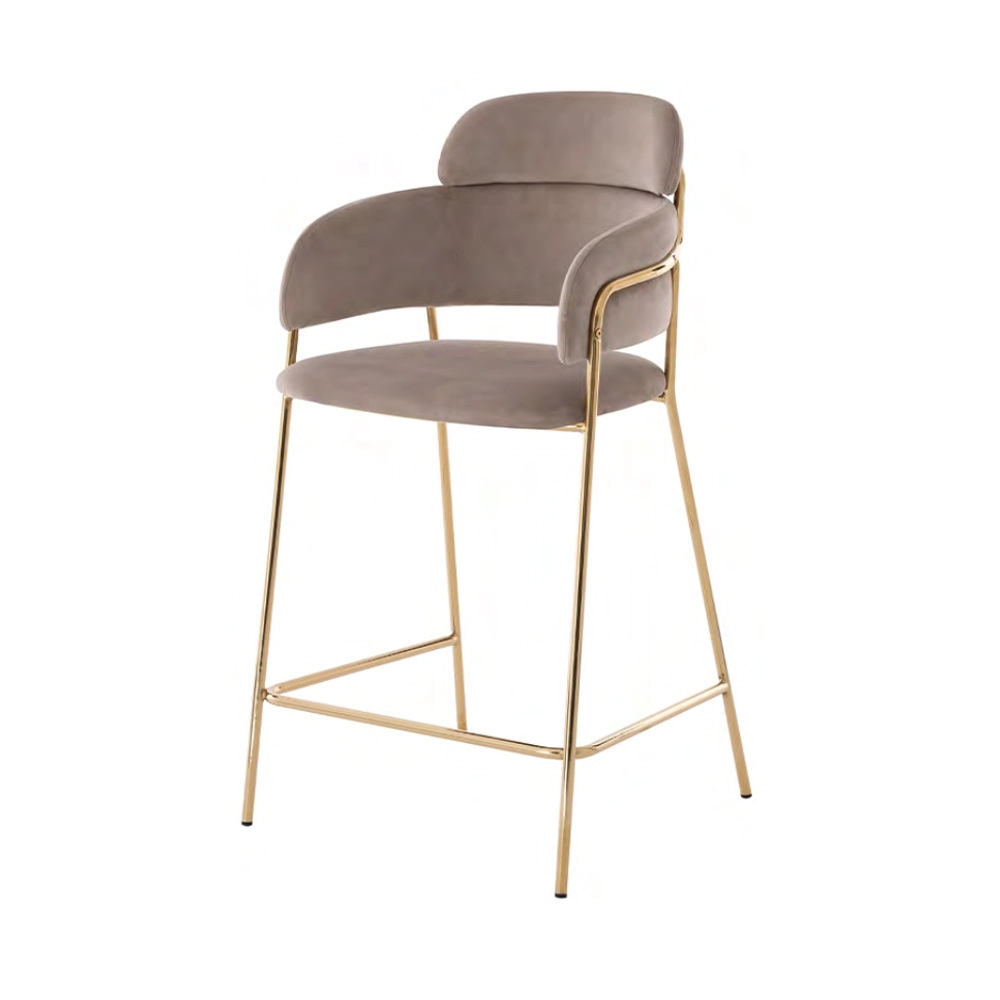
The padded seat and back make HTB0035 more suitable for situations where users may remain seated beyond a quick drink. Its curved upper section also gives the stool a more enclosed sitting area than a simple flat seat.
That can work well around a home bar, a restaurant counter, or a café high table where appearance and support both matter.
The open metal frame keeps the lower part visually light, while the footrest gives the user a clear place to support the legs. Exact dimensions, upholstery specifications, finish choices, and seat height should be confirmed before ordering because the current product page does not publish those details.
HTB0035 does not need to be sold as an isolated item. It can sit within a wider range that includes dining chairs, tables, cabinets, coffee tables, and side tables.
For retail and project buyers, this is useful. A customer may need standard dining seating in one zone and high top seating in another. Keeping both under one coordinated furniture plan makes color, material direction, and packaging easier to manage.
The company’s Hometree advantages include sample development, mass-production planning, quality control, sales communication, and original design support. Buyers can also review the virtual factory tour before discussing a new range or modified specification.
High top seating differs from counter and dining seating in more than leg length. It changes the seat-to-surface relationship, the way the feet are supported, the amount of knee room, and the way people use the space.
Start with the actual table or counter. Check the seat height next, then review the footrest, back support, frame stability, floor contact, and space around each stool.
HTB0035 is a practical option for buyers who want a padded bar stool with visible back support, an open metal structure, and a built-in footrest. Before approving a bulk order, confirm the full product specification and test a sample beside the intended surface. The factory’s product inspection process and furniture FAQs can help prepare the final checks.
For sample development, customization, production service, or project details, use the contact page to discuss the required height, materials, finish, packaging, and order plan.
Q1: What Is Considered High Top Seating?
A1: High top seating refers to chairs or stools designed for raised bar tables, high counters, kitchen islands, and similar elevated surfaces.
Q2: Is High Top Seating the Same as Counter-Height Seating?
A2: No. Counter-height seating is normally lower than full bar-height seating, so the required stool seat height is also different.
Q3: How Do You Match a Stool to a High Top Table?
A3: Measure from the floor to the underside of the tabletop, then compare that measurement with the stool’s seat height and available knee room.
Q4: Is High Top Seating Comfortable for Long Meals?
A4: It can be comfortable when the stool has the correct height, a firm footrest, suitable padding, and enough back support for the expected sitting time.
Q5: Where Can Buyers Find HTB0035?
A5: HTB0035 is available on the Hometree website under the Hometree Bar Stool category.