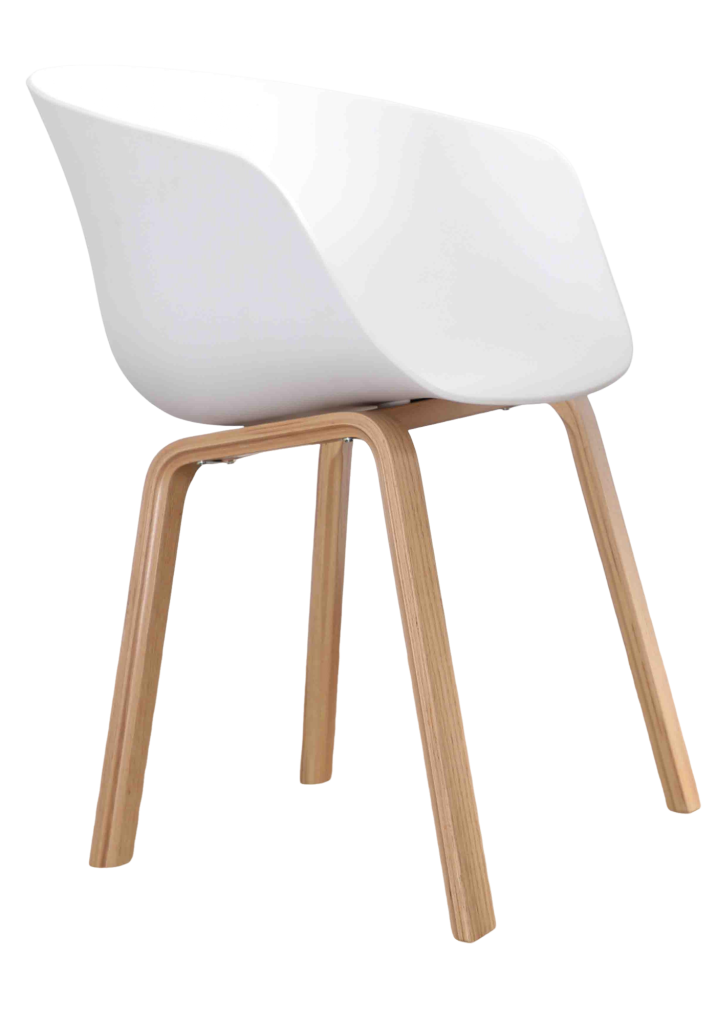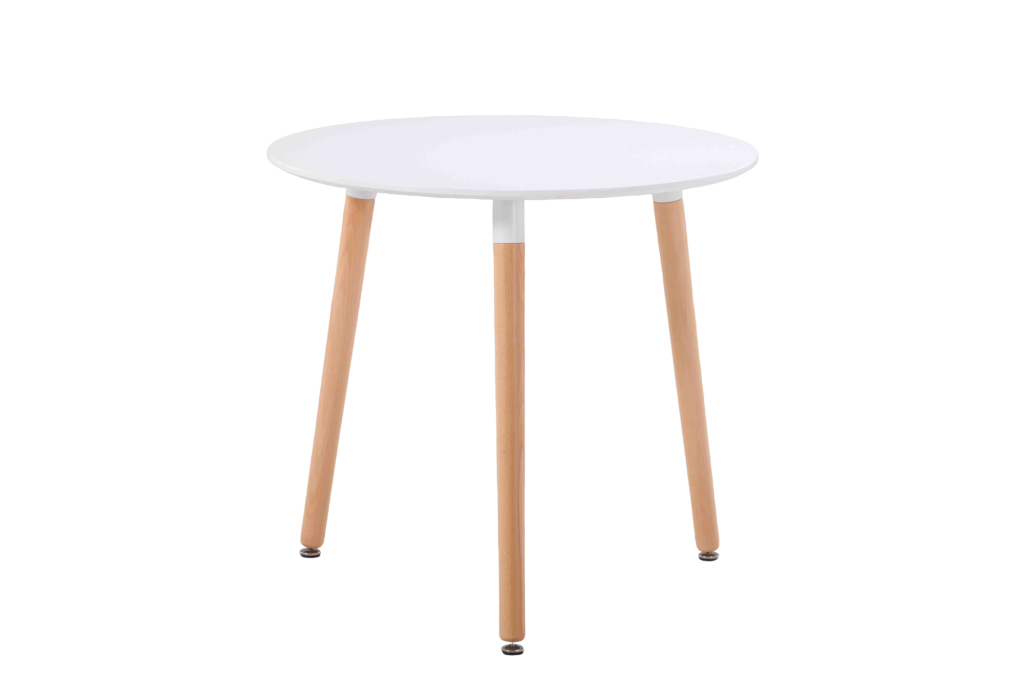

For a bulk furniture order, direct furniture wholesale can often give buyers more room on cost than retail purchasing. But the factory quotation is not automatically the cheapest final option.
A table may look inexpensive on a quotation sheet, then freight, packaging, warehouse space, inspection and replacement costs start adding up. So the useful comparison is the final cost of getting 50, 100 or 500 pieces into the warehouse, ready to sell or install.
If you are still comparing sourcing routes, this guide on reliable wholesale home furniture suppliers is a useful place to start.
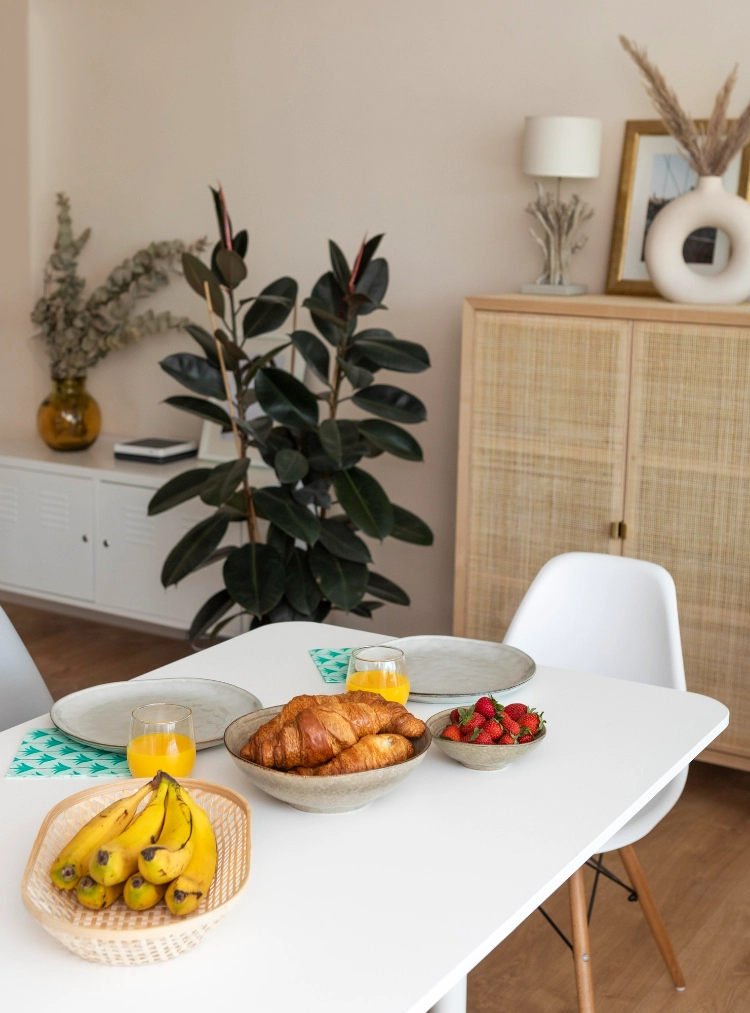
Wholesale and retail furniture move through different sales channels.
A retail table may pass through an importer, distributor, warehouse or store before reaching the final buyer. Each stage adds selling and operating costs.
Direct furniture wholesale starts closer to production.
A factory quotation normally reflects the product itself: material, labor, structure, finish, packaging, quantity and any custom requirement.
There may be fewer selling layers between the manufacturer and the buyer. That is one reason direct sourcing can make sense once the order becomes large enough.
Still, two factories may quote the same-looking dining table at very different prices because the actual specification is different. One may use thinner metal, lighter board, weaker fittings or cheaper packaging.
This is why experienced buyers do not compare two quotations only by looking at the last number.
Retail buying is useful when only a few pieces are needed quickly. Local stock, simple replacement and no factory MOQ can be worth the higher unit price.
The situation changes when a business needs 50 tables, 200 chairs or furniture for several locations. Paying retail-level margin on every piece may no longer make sense.
Factories plan materials and production by quantity. Batch production can make cutting, welding, painting, assembly and packing more efficient, and some setup costs are spread across more pieces.
But a lower unit cost is only useful when the buyer can actually use the quantity. A cheap 500-piece order is not cheap if 300 pieces sit in storage for a year.
No.
This is where many first-time bulk buyers make a mistake. The factory price may be lower, but the buyer still has to move the goods from the factory to the final market.
A simple comparison should include product cost, packaging, freight, import-related cost, inspection, local handling, warehouse cost and expected replacement cost. That is the real landed cost per unit.
The same logic appears in Hometree’s article on how furniture wholesalers balance design and cost without sacrificing quality. A low unit price is not very useful if packaging volume is poor or the product creates too many claims after delivery.
MOQ is often treated as if lower is always better. It is not that simple.
A low MOQ is useful for testing. A larger MOQ may improve production efficiency. But the right number depends on whether the buyer can actually sell or use the stock. An MOQ of 50 pieces may be easy for a fast-moving dining table and risky for an untested style.
The product price has not changed. The inventory risk has.
Furniture takes space, and space costs money.
This sounds obvious, but buyers still spend time negotiating one or two dollars off the factory price while ignoring carton volume.
Different packing structures can create very different freight costs. For bulk orders, carton size and cubic volume should be checked before the order is confirmed.
One loose fitting on a sample is annoying.
The same issue across 200 chairs is an after-sales problem.
Scratches, color differences, weak cartons, unstable legs and poor welding can all eat into the original saving.
That is why buyers should review the supplier’s product inspection process before treating a low quotation as a real cost advantage.
The answer depends on the buyer.
A retailer, hotel buyer and restaurant contractor may all buy 100 tables, but they do not look at cost in the same way.
Retailers usually work backward from the selling price.
If a dining table can realistically sell for a certain price in the target market, the buyer needs to know how much can be spent before the product reaches the store.
That amount must cover the table, freight, warehousing, local delivery, discounting and margin.
Direct furniture wholesale gives the buyer more control at the beginning of this calculation.
Buyers can also compare different models in the Hometree Dining Table collection instead of judging one SKU in isolation.
Commercial furniture orders are different from buying for one home.
A restaurant may need 60 matching tables, while a hotel may need replacement pieces months later. Commercial buyers therefore need to confirm materials, drawings, approved samples and inspection standards before bulk production.
A small color or finish difference may not matter much on one retail table. Across a complete restaurant or hotel project, it does.
The first factory order takes more work because samples, colors, materials and packaging need approval. Once those details are fixed, repeat orders can become much easier.
For retailers, distributors and private-label buyers, that repeatability can be more valuable than getting the lowest possible quotation on the first order.
A real product makes the pricing discussion easier.
Dining Table HTD0137 from HOMETREE is a useful example because the key order information is clear:
Those numbers give a buyer something practical to work with.
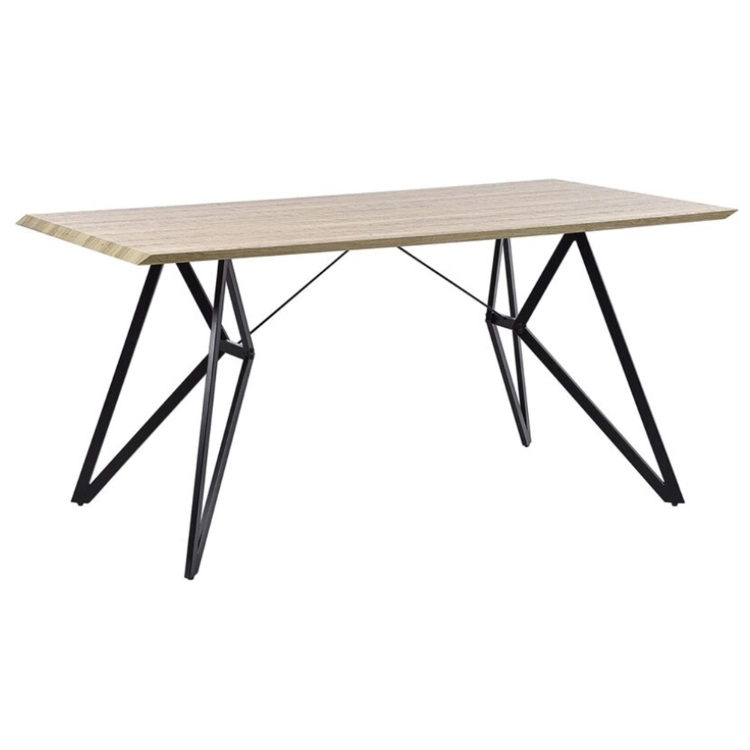
Suppose a retailer wants to add Dining Table HTD0137 to a new collection.
The first question should not be, “How low can the factory price go?” Start with the market instead.
What can this table realistically sell for? What margin is needed? How much freight and warehouse cost will be allocated to each table?
Once those questions are answered, the factory quotation becomes much easier to judge.
A buyer who knows the target retail price can work backward and see whether the landed cost leaves enough space for local selling costs and profit.
That is safer than choosing the cheapest quotation first and trying to make the sales numbers work later.
Dining Table HTD0137 uses MDF + Metal.
The tabletop and the metal structure are doing different jobs, so buyers should not judge material only by whether it sounds “cheap” or “premium.”
The useful question is whether the material fits the intended price level, construction and target customer.
Hometree’s furniture material information covers metal, wood, glass, PU, fabric and other options. For a bulk quotation, material needs to be fixed before prices from different suppliers can be compared properly.
HTD0137 has a listed volume of 0.087 m³.
That matters because two tables with a similar factory price can have very different shipping costs if one uses much more space.
For this reason, buyers should ask for carton details and shipping calculations before confirming a larger order.
Saving a few dollars in production does not help if the same product costs much more to move.
One common mistake is sending the same photo to several suppliers and comparing all the answers as if they refer to the same product.
Usually they do not.
One supplier may use thinner metal, another a different board, and another cheaper fittings or cartons. Until the specification is fixed, the price comparison is weak.
Confirm the material, dimensions, finish, color, metal thickness where relevant, hardware, packaging, test requirements and order quantity.
If the product is customized, approve the sample before bulk production.
The Hometree Advantage page explains its sample development and mass-production process. For wholesale buyers, the point is simple: the approved sample needs to stay repeatable when the quantity goes up.
Do not ask only for the “best price.”
Ask for realistic quantity levels, for example:
50 pcs, 100 pcs and 300 pcs.
This shows whether the unit cost changes enough to justify holding more stock.
Sometimes the difference between 100 pieces and 300 pieces is not large enough to justify the extra warehouse space and cash tied up in stock. That is something the buyer has to calculate rather than assuming bigger is always cheaper.
This causes confusion all the time.
One factory may quote EXW. Another may quote FOB. A local distributor may offer delivered pricing.
Those numbers should not be compared directly.
Put the offers on the same basis first. Then add any freight, import or local costs that are not included.
That gives a cleaner wholesale vs retail comparison.
Sometimes, yes.
If you need only a few pieces, retail may be the sensible choice.
It can also work well for urgent replacement items or a one-time small project. There is little value in taking on an MOQ, international freight and warehouse stock when the actual requirement is only a few tables.
Direct furniture wholesale makes more sense when the buyer has enough volume and can plan quantity, target price, delivery timing and product specification in advance.
Without that information, a wholesale quotation is just a number on a spreadsheet.
I would check four things.
The landed cost.
Whether quality can stay stable across the batch.
Whether the product can be reordered without major changes.
Whether the supplier can deal with problems after shipment.
Buyers can review Hometree’s furniture FAQs for common questions about products, customization, packaging, shipping and service.
For a specific quantity, destination or custom request, it is better to contact Hometree with real order details rather than asking only for a general price.
A useful inquiry should include the product, expected quantity, destination market, required material or finish and delivery timing. The more specific the order information is, the more useful the quotation will be.
Direct furniture wholesale is often better suited to bulk orders because the buyer purchases closer to the production source and has more control over product specification, quantity and cost.
Retail pricing offers something different: smaller quantities, local stock and easier short-term purchasing.
For bulk buyers, the useful comparison is not unit price alone.
MOQ, landed cost, carton volume, material specification, inventory turnover, quality consistency and repeat-order ability all matter.
Dining Table HTD0137 is a good example because its 50-piece MOQ, MDF + Metal structure and listed shipping volume give buyers real numbers to work with.
The better question is not “Which price is lower?”
It is:
“After I buy the full quantity, ship it, store it and sell it, which purchasing route leaves the business with the better margin and lower risk?”
Not always. The factory unit price may be lower for a planned bulk order, but buyers still need to include freight, packaging, import-related costs, inspection, storage and replacement risk.
For a very small order, retail may still be the cheaper and easier option overall.
Direct sourcing can remove some distribution layers and allow the factory to plan materials and production around a larger quantity.
The final saving still depends on MOQ, freight, packing volume and landed cost.
Wholesale price is normally offered to a business buyer purchasing at a required quantity.
Retail price is the selling price to the final customer and usually includes distribution, inventory, selling costs, local service and retail margin.
MOQ gives the factory a minimum quantity to plan production around.
A higher quantity may improve production efficiency, but buyers should not order extra stock only to reach a lower unit price. The saving needs to be compared with warehouse cost, cash flow and expected sales speed.
Landed cost is the total cost of getting the furniture to the required destination.
It can include the factory price, packaging, freight, import-related charges, inspection, local handling and other logistics costs.
Ask for the exact material, dimensions, finish, MOQ, packaging, carton information, lead time, inspection method and trade terms.
Without the same specification and quotation basis, two prices are difficult to compare fairly.
Dining Table HTD0137 has a listed MOQ of 50 pieces, uses MDF + Metal, measures 120 × 80 × 75 cm and has a listed volume of 0.087 m³.
These figures make it easier for retailers and other bulk buyers to review freight, stock requirements and target selling price before placing an order.